Physics-Informed AI
Simulation-quality insight with the speed and flexibility of AI
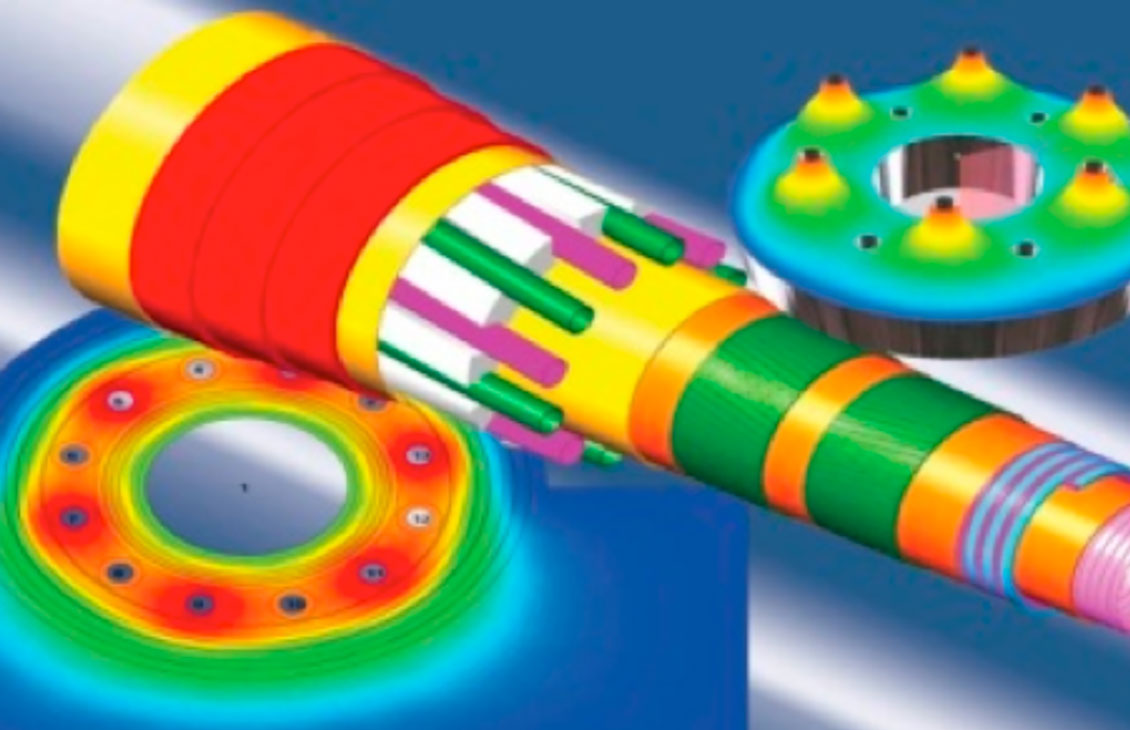
Physics-informed AI is a breakthrough hybrid model building technique, that fuses physics-based simulation and process data.
The Pipesim simulator offers the industry’s most comprehensive steady-state flow assurance workflows for front-end system design and production operations. The flow assurance capabilities of the simulator enable engineers to ensure safe and effective fluid transport—from sizing of facilities, pipelines, and lift systems, to ensuring effective liquids and solids management, to well and pipeline integrity. Shared heat transfer, multiphase flow, and fluid behavior methodologies ensure data quality and consistency between the steady-state and transient analyses.
Pipesim steady-state multiphase flow simulator enables production and flow assurance engineers design and optimize petroleum production systems by incorporating state of the art technologies in multiphase flow modeling, heat transfer and fluid behavior, all enabled by an intuitive user interface for reliable multiphase flow modeling. Using Pipesim, you can design and optimize individual well production or injection systems and combine any number of wells with the associated surface facilities.
The Pipesim simulator includes advanced three-phase mechanistic models, rigorous heat transfer modeling and comprehensive PVT modeling options, enabling simulation accuracy and better flow predictions . An ESRI-supported GIS map canvas helps deliver true spatial representation of wells, equipment and networks. Networks can be built either on the GIS canvas or automatically using a GIS shapefile. Rapid well model building and analysis are done with an interactive graphical wellbore, saving time and reducing errors in network setup thus enhancing productivity and allowing engineers focus on analysis rather than setup.
Pipesim simulator overview
Generate scenarios that show a clear path to performance optimization by maximizing production at lower cost, honoring facility constraints, maintaining asset integrity, and increasing reservoir recovery.
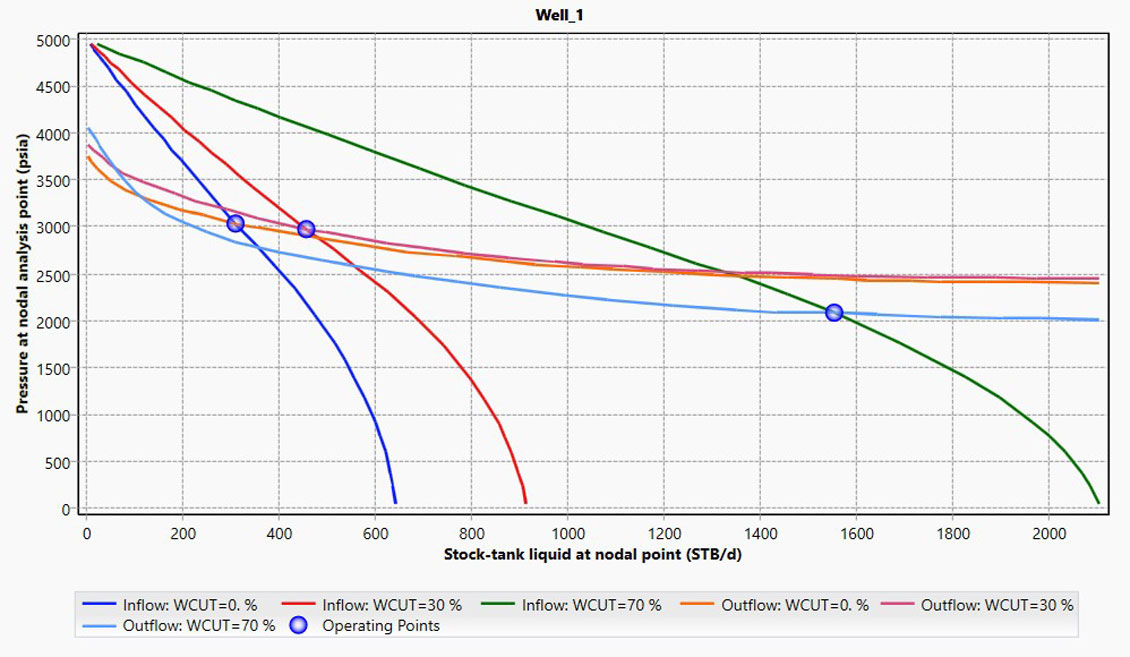
Pipesim simulator offers more than one well performance simulation workflow. The standard nodal analysis is used to visualize the inflow and outflow performance curves, demonstrate the impact of reservoir productivity and equipment deliverability, and analyze various intervention and “what-if” scenarios. On the other hand, the pressure/temperature profile (P/T profile) task is an iterative approach to directly solve for the operating conditions, starting from the reservoir, across the sand-face and up the tubing until it reaches the branch end, which is selected by the user. The P/T profile task is fast and robust to directly solve for the required inlet pressure (Pi) or outlet pressure (Po) for a given flow rate (Q), solve for Q given the Pi and Po, or solve for any specific parameter, for a given set of the three parameters Pi, Po and Q.
Supported well-centric simulation tasks include P/T profile, nodal analysis, system analysis (parametric studies), model calibration, vertical flow performance (VFP) tables, well curves, ESP design, gas lift deepest injection point, gas lift response, gas lift design, gas lift diagnostics and perforation design.
Pipesim simulator advanced well modeling Enhanced network design and optimization
To model production or injection systems with multiple wells, sources, sinks and surface facilities, Pipesim simulator offers the network perspective. You can easily switch between the well perspective and the network perspective with a click of a button. Under the network perspective, the network simulation task can be run with surface boundary conditions only. Users can specify surface pressure or flow rate values without considering the subsurface details, which simplifies the simulation task. Using the advanced well option, you can connect injection and production networks in one model or split well production into independent networks.
In addition to the network simulation task, network optimization allows users to maximize hydrocarbon production by distributing the required artificial lift quantities, such as gas lift rate or pumping frequencies to the wells, considering the individual well hydraulics and deliverability while honoring user-specified constraints on wells, flowlines, or global levels.
Advanced PVT and heat transfer modeling
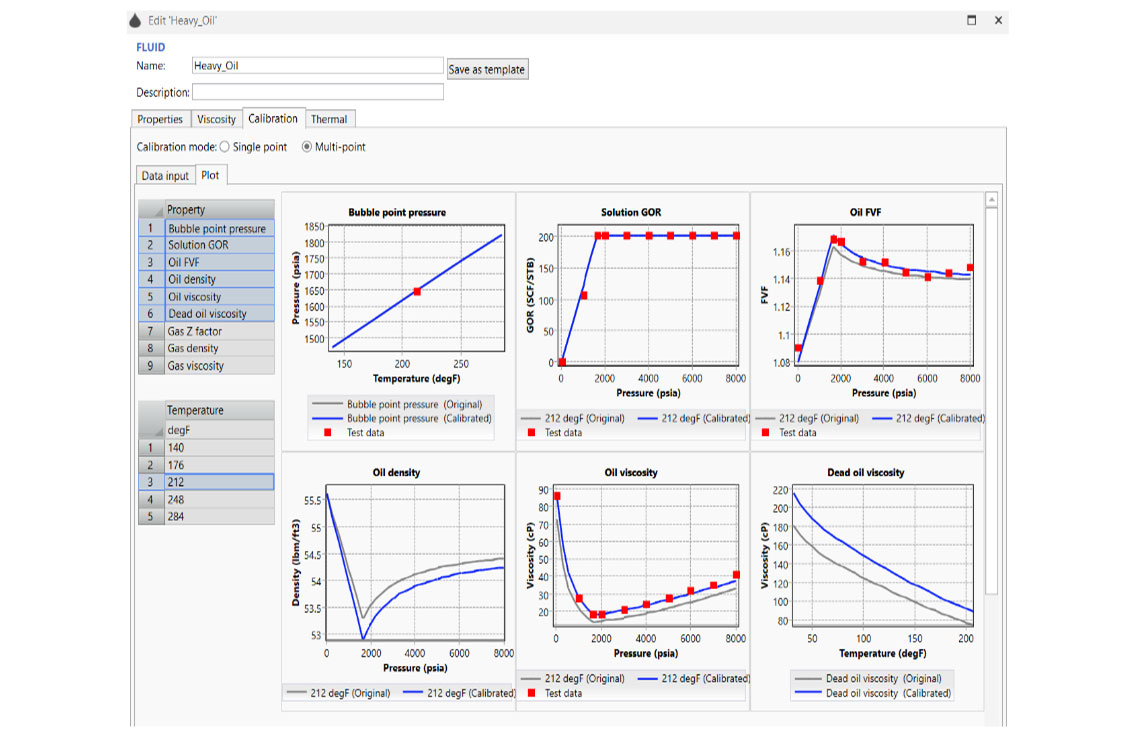
Pipesim simulator offers a wide range of fluid modeling options to facilitate modeling your assets in the most practical and accurate manner. Below are the various available fluid modeling options:
Safe and effective fluid transport
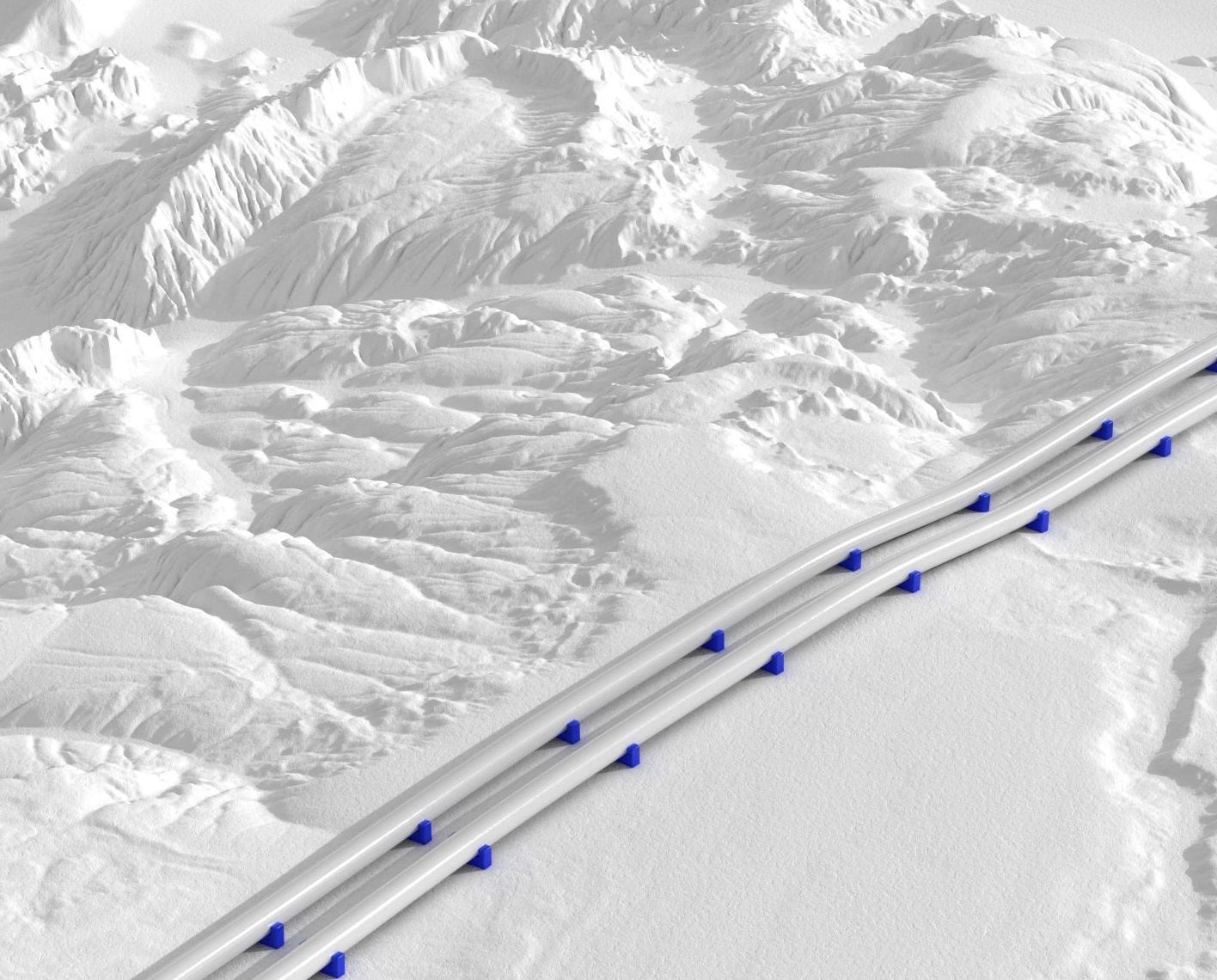
The Pipesim simulator equips engineers with robust tools to ensure the safe, efficient and reliable movement of multiphase fluids from the reservoir to processing facilities. It supports critical design and operational decisions, such as sizing pipelines, facilities and artificial lift systems while addressing key challenges like liquid loading, wax and hydrate formation, and solids deposition.
Steady-state flow assurance, from concept to operations
The Pipesim simulator empowers users to optimize flow performance from individual wells to complex production networks. By enabling accurate modeling of fluid behavior and system interactions, Pipesim simulator supports better design decisions, enhances operational efficiency, and maximizes the economic potential of assets throughout their lifecycle. This ensures that production systems are both technically sound and economically optimized delivering long-term value from concept through to daily operations.
Optimize system integrity and flow performance
The Pipesim simulator offers the industry’s most comprehensive steady-state flow assurance workflows for front-end system design and production operations. The flow assurance capabilities of the simulator enable engineers to ensure safe and effective fluid transport—from sizing of facilities, pipelines, and lift systems, to ensuring effective liquids and solids management, to well and pipeline integrity. Shared heat transfer, multiphase flow, and fluid behavior methodologies ensure data quality and consistency between the steady-state and transient analyses.
Design with confidence
The GIS map canvas provides an accurate spatial view of wells, equipment and networks, enabling users to build models directly on the map or automatically from GIS shapefiles. Additionally, the ability to add custom layers connected to internal enterprise map services allows users to overlay operational data, helping them to design more efficient and optimized network structure with greater context and confidence.

Pipesim 2026.1 comes with a new multi-test well calibration task. The optimization algorithm tunes up to 10 calibration parameters simultaneously to match measured well test conditions. This includes:

The list of available flow correlations in Pipesim™ is updated to include Olgas-S version 2025.1 with support for the high-definition model (HD). The HD model represents a step-change in the fidelity of multiphase flow modeling and is a result of over 15 years of industry-sponsored research.

The new sensitivity analysis workflow for the advanced well is designed to improve the user experience by enabling parametric analysis through the permutation of up to five variables. It generates a matrix of independently solved cases, which are then combined and visualized to deliver a quick and intuitive assessment for identifying optimal operating conditions.
Pipesim 2026.1 comes with Multiflash 7.6 installed by default. For more information, refer to the Multiflash user interface.

The rate constraint feature for the network simulation task has been extended to support intermediate branches. Previously, constraints could be set only for the terminal branches that have source/sink/well. Branches that have flowrate constraints defined must contain one or more chokes. When the network solves, the constraint is met by adjusting the bean size of the choke.

To consider the effect of heat exchange between production and gas lift injection fluids at the well head zone, a new temperature correction option has been added to gas-lift injection well system. Based on user selection, the temperature can be corrected at the well head or along the tubing from the specified depth.

The following enhancements are available in Pipesim 2026.1 for the PythonToolkit:

Learn about capabilities and best practice use of SLB flow assurance simulators
Explore
Pipesim access and versatility
Ensures fluid flow to maintain production—from pore to process
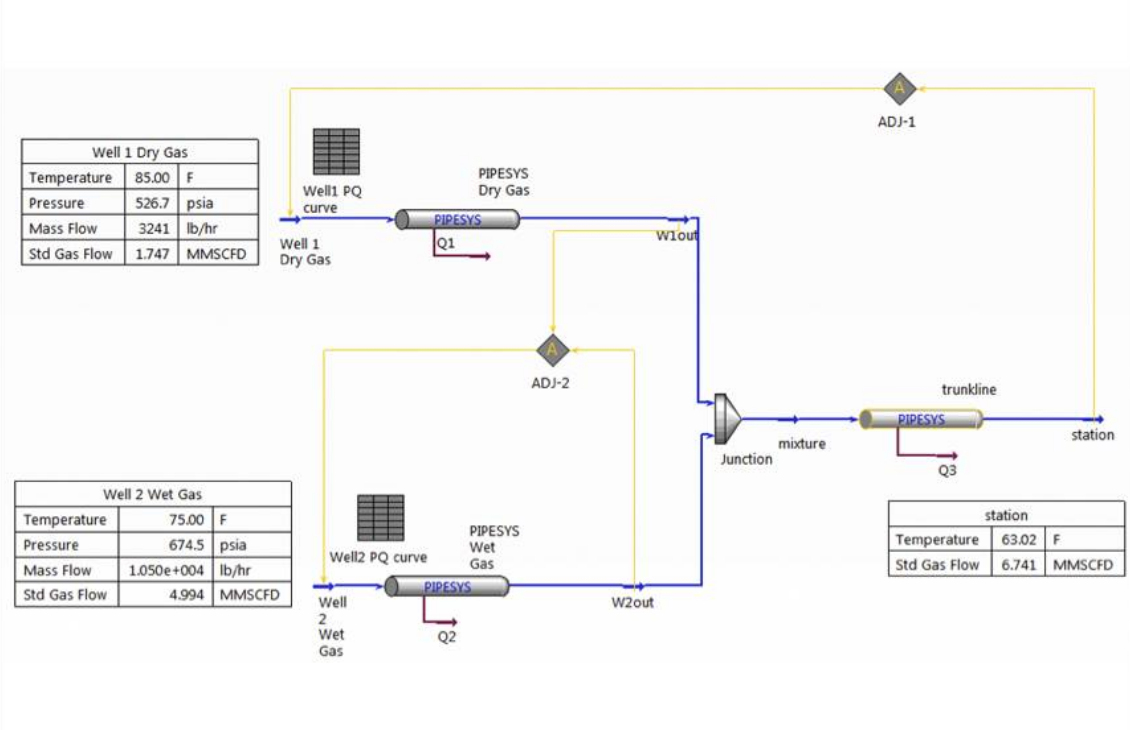
The foundation for steady-state multiphase flow analysis
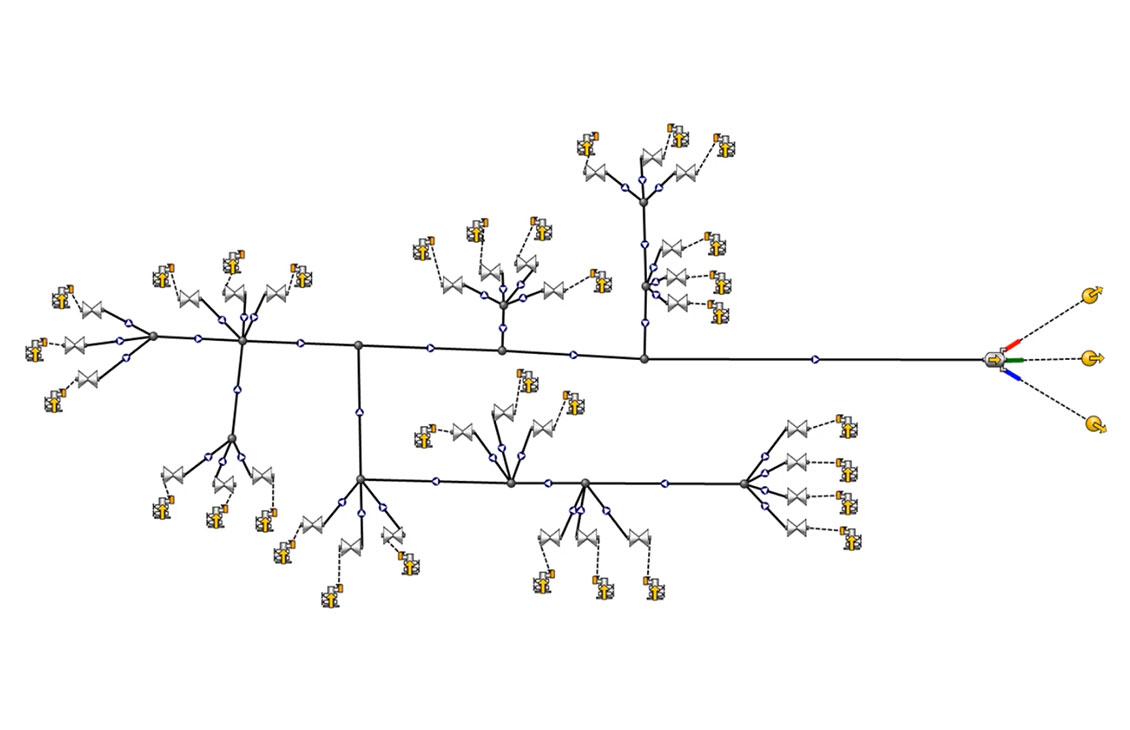
Advanced network simulation to analyze and optimize complex production and injection networks
Optimize well performance through comprehensive modeling of completions and artificial lift systems
Single-line multiphase flow model add-on to process simulators