Geothermal drill bits
Optimized for high-temperature, high-strength, and highly abrasive geothermal rocks


Overview
Geothermal drilling challenges bit life
Geothermal drilling exposes bits to extreme thermal and mechanical loading, combining high downhole temperatures, high-UCS igneous rock, abrasive mineralogy, and severe impact from fractured, heterogeneous intervals. These conditions accelerate thermal degradation, abrasive wear, chipping, and structural fatigue in conventional roller cone and PDC bit designs, shortening bit runs and increasing NPT.
Effective geothermal drilling requires bit architectures that maintain thermal stability, resist high-energy impact and abrasion, and sustain efficient rock-failure mechanics across these demanding environments. Based on decades of experience and a policy of continuous improvement, SLB has a portfolio of drillbit technologies to address these challenges.
Geothermal webinar series
Hear directly from our experts about solutions that optimize geothermal well construction.
Explore all webinarsEvolution of Cutting Structure Solutions for Geothermal Wells
Join Davide Fanti, product champion for Well Construction Drilling at SLB, as he explores the results of an extensive global review of the world’s largest drilling data repository of 1,200+ geothermal wells. He will discuss how the drill bit’s evolution over the last few decades has made a significant impact on lowering well construction costs.
Now available on-demand

Reshaping bit performance
What sets the SLB geothermal family of bits apart is that we begin developing bit designs based on where the bit meets the rock. And this approach is how we are reshaping PDC bit performance.
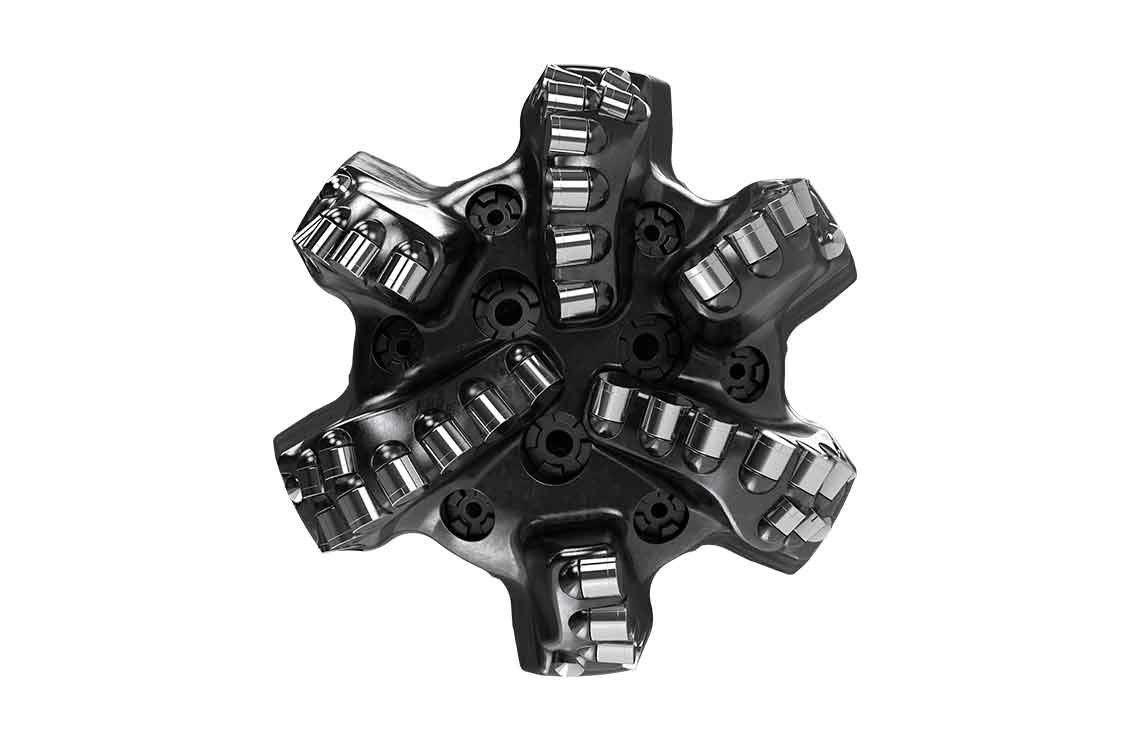
Our ThermoBlade™ thermal-resistant diamond element bit is the latest evolution of drill bits for high-temperature applications. It saves drilling time by reducing the need for costly bit trips because the bit integrates thermal-resistant diamond cutting elements that mitigate the effects of thermal degradation—cracking and chipping of the cutter surface—during geothermal well construction, increasing durability, extending bit life, and improving overall bit performance. Thermal stability has even been proved in conditions approaching 1,832 degF [1,000 degC].
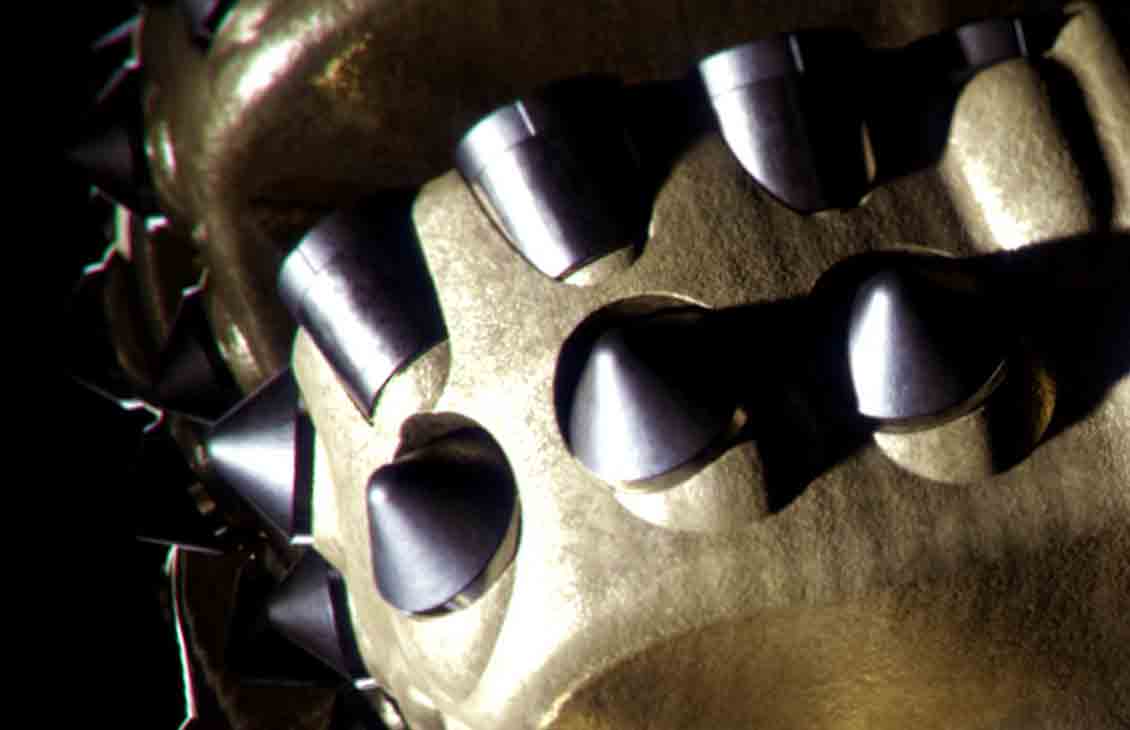
Our StingBlade™ conical diamond element bit integrates the Stinger™ conical diamond element, which concentrates a higher point load on the rock—literally putting performance on point. The Stinger element has a thicker diamond table, and the conical shape is well-known for its ability to withstand extreme compressive loads experienced while drilling high-impact formations that wreck conventional cutters. StingBlade bits provide a 55% increase in footage with a 30% increase in rate of penetration, enabling significant reductions in bit runs and increases in rig-time savings.

ThermoBlade thermal-resistant diamond element bit.
Heating up endurance
The contact-point approach for bit development is equally crucial to roller cone bits. In applications where roller cone bits drill hard and abrasive lithologies to access steam or hot rock in basement formations, they encounter temperatures in excess of 500 degF. That’s when standard 300-degF-rated elastomer seals and lubricating material degenerate, causing bearing failure and resulting in more bit runs.
When Xplorer Kaldera™ high-temperature seals are integrated into Xplorer™ premium roller cone drill bits, their proven durability in high-temperature applications withstands the conditions required for geothermal well construction—delivering longer seal life, lubricity, and load capacity at elevated temperatures. For example, in geothermal superheated steam applications where temperatures can reach 530 degF [277 degC], Xplorer Kaldera seals resulted in top performance.
Featured products