In this interview, Bjoern-Tore Anfinsen, well control advisor at SLB, sees the industry’s move from desktop well control tools to cloud-native platforms as a response to rising demands for faster, higher-quality well planning and more collaborative, consistent risk evaluation—especially for challenging wells with narrow margins.
As well control planning shifts into cloud-based, shared environments, Anfinsen argues the change is not only about speed and automation, but also about improving workflow continuity, enabling parallel simulation at scale, and supporting better-informed operational decisions with continuously updated models.
Bjoern-Tore, in your opinion, what’s driving the industry’s shift from desktop well control tools to cloud-native platforms?
BTA: Good question. I think that, essentially, the movement from desktop well control tools to cloud-native platforms is being driven by a combination of increasing well complexity, the need for faster and more collaborative planning workflows, and growing challenges around workforce experience.
Across the industry, operators are under pressure to reduce planning time while improving the quality and consistency of well designs. Cloud-based well planning environments have become central to that effort, enabling multidisciplinary teams in different locations to work together in a single, connected workspace.
At the same time, many of the wells being drilled today, particularly deepwater, HPHT, and extended-reach wells, operate within increasingly narrow margins where accurate well control analysis is critical.
Traditional planning workflows have often relied on simplified spreadsheet-based models that can be insufficient for these more demanding applications. While advanced well control solutions such as Drillbench™ dynamic drilling simulation software have long provided the required level of engineering rigor, their desktop-based nature created a disconnect within otherwise integrated digital planning workflows.
Cloud-native platforms address that challenge by bringing advanced well control capabilities directly into the broader planning environment. They enable stronger integration, automation, and data consistency across the workflow, reducing the manual effort associated with transferring data, configuring simulations, and handling results. This helps ensure calculations are performed in a consistent manner and makes it easier to compare scenarios, evaluate performance, and maintain standardized processes across teams.
Another important factor is the industry's changing workforce. As many experienced well control specialists approach retirement, operators are facing a growing shortage of operational expertise. Engineers entering the workforce often have less field experience than the generation they are replacing.
In that environment, greater automation, standardized workflows, and consistent cloud-based processes help reduce dependence on individual expert users while preserving engineering quality and supporting better decision-making. Together, these benefits are making cloud-native platforms the preferred foundation for modern well control planning.
How does cloud-based well control change the way engineers assess risk and make critical decisions?
BTA: I think the most important benefit is the enhanced collaboration. The entire team can access simulation progress and status in a single environment, where well information is set up, scenarios are built, and results are easily tracked.
It becomes much easier to assess risk because teams are no longer dependent on a single subject-matter expert (SME) for oversight. And critical results can be generated and acted on much faster, because of the ability to run multiple simulations simultaneously in the cloud.
A collaborative environment also allows local well control engineers and global experts to work from the same results in real time, eliminating file transfers and manual handoffs. Simulations can also be launched immediately to provide updated incident assessments as experts come together to evaluate the situation.
The added ability to evaluate a much broader range of scenarios also radically changes the quality of risk assessments. Instead of focusing only on a limited number of cases based on engineering judgement, teams can systematically explore a wider operating envelope and identify sensitivities that may otherwise be overlooked.
This increases confidence in decision making, allowing engineers to identify the most robust solution instead of simply selecting the best option from a limited number of scenarios.
Beyond the gains in speed, how does cloud-based well control transform collaboration and decision making?
BTA: For me, the biggest change is the ability for experts across different locations to work from the same data and simulation environment. This allows global SMEs to quickly review and validate work completed in different geographies, without the delays associated with file transfers or rerunning simulations.
We can also execute new simulations with the latest well data, and have them running while gathering expert support. Because recalculations are so straightforward, decisions can be made using up-to-date information, freeing engineers to concentrate on situation assessment, risk evaluation, and identifying the optimal response.
Having everyone work from the same continuously updated model also improves operational consistency from project to project. Standardized workflows, shared assumptions, and common reporting ensure that engineering teams across different regions assess risks using the same methodology. This not only strengthens safety performance but also makes it easier to transfer work between teams, engage additional experts when required, and maintain continuity throughout the well lifecycle.
Cloud-native platforms are often associated with automation, but engineering expertise remains essential. How do you strike the right balance between automation and human judgment?
BTA: So, I think automated simulations are particularly valuable because they bring consistency and ease of use to well control workflows. Engineers can quickly run advanced simulations through standardized processes that align with corporate procedures, improving efficiency while preserving the accuracy and quality required for sound engineering decisions.
But automated workflows are not a panacea. Not every well control challenge fits a standard workflow. Advanced planning studies or operational scenarios with unique histories can require greater flexibility. Recognizing this need, we decided to create Simulation Designer, providing experts with the flexibility to develop tailored simulation sequences for more complex or specialized studies, while fully leveraging the underlying simulation engine.
Running in the cloud also means simulations can be scaled and executed in parallel, providing the computational power needed for more demanding studies. Workflows can then be shared, copied and adapted to other scenarios, helping teams reuse expertise, improve efficiency and collaborate more effectively.
This balance between standardization and flexibility is particularly important because engineering challenges change all the time. Automation should eliminate repetitive work and reduce the potential for human error, but it should never limit an engineer's ability to investigate unexpected behavior or unique well conditions.
By combining automated workflows for routine tasks with full access to advanced simulation capabilities, organizations can achieve both consistency at scale and the flexibility needed to solve complex engineering problems.
Bjoern-Tore, final question here. Looking ahead, what role do you think cloud-based well control play in supporting emerging applications such as carbon capture, utilization, and sequestration (CCUS), CO₂ storage, and geothermal operations?
BTA: Moving into CCUS and geothermal applications introduces a new set of well control challenges. Unlike conventional hydrocarbon systems, CO₂ and steam exhibit very different flow behaviors and thermodynamic properties, meaning many established well control practices can’t be applied directly.
Differences in phase behavior are particularly important and require engineers to rethink how risks are assessed and managed. In CO₂ wells, for example, rapid fluid expansion can lead to significant cooling through the Joule-Thomson effect, creating unique operational considerations. Geothermal wells present their own challenges, including the management of extreme temperatures, superheated fluids, and the potential for steam blowouts.
While these phenomena can be accurately modeled, they require simulation approaches specifically configured for CO₂ and water systems, rather than traditional hydrocarbon-based workflows.
As industry knowledge of CO₂ injection, storage integrity, and geothermal well behaviour continues to advance, operators will have to evaluate a broader range of scenarios and continuously refine their methodologies. I think cloud-based well control platforms are especially valuable in these emerging areas.
The cloud environment provides the scalability needed to support this work while making specialist expertise easier to capture, share, and apply consistently across projects, helping organizations establish best practices as these industries continue to grow and mature.
Bjoern-Tore, thank you for your time and insights today, that’s been a really great rundown of the emerging cloud well control space.
BTA: Glad it was useful! Thanks a lot.

Advisor Well Control | SLB
Bjoern-Tore Anfinsen graduated with master’s degree in petroleum technology from University of Trondheim (1988) and has 38 years of experience. Bjoern has followed Drillbench™ dynamic drilling simulation software from its start as a research project to its current position as industry trusted, commercial well control software. He has been a subject matter expert and advised in many challenging well control projects. Bjoern joined SLB in 2012, through the acquisition of SPT Group, and is now responsible for the transitioning of well control to new, efficient cloud-based solutions as Well Control Advisor
Related resources
-

DrillPlan
Coherent well planning solutionCollaborative cloud-native well planning software that connects drilling and subsurface data with essential/critical well engineering workflows, enabling teams to create validated programs faster.
-
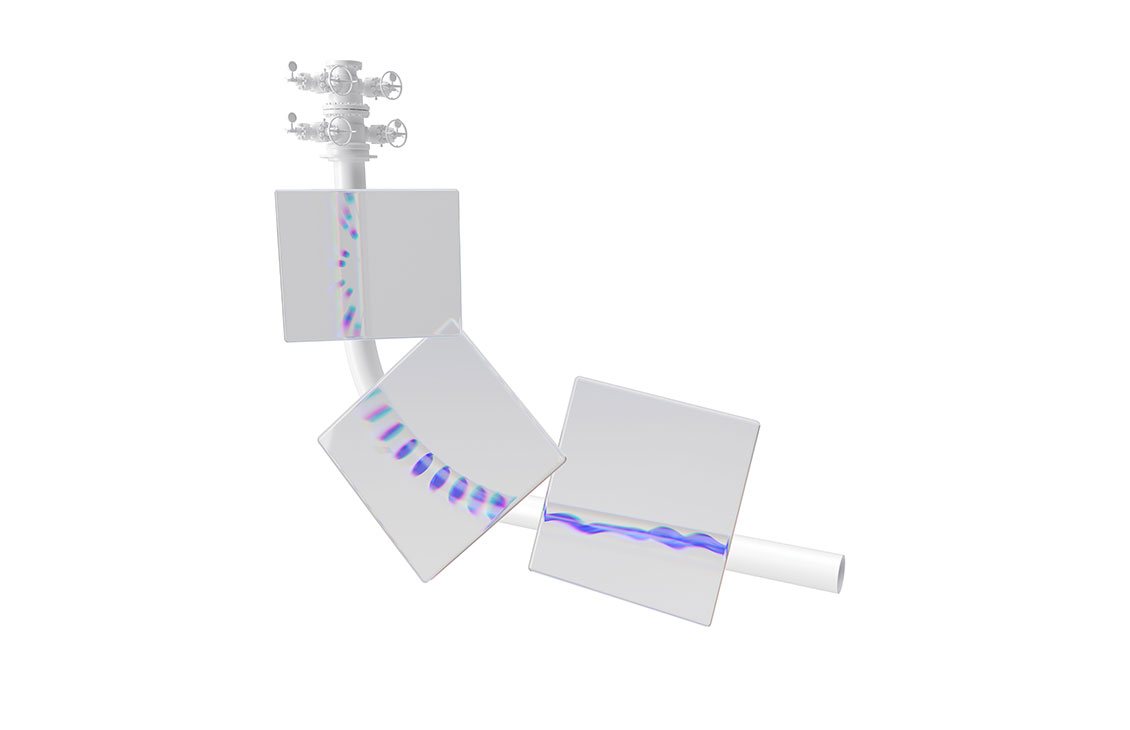
Drillbench dynamic drilling simulation software
Dynamic drilling simulations for pressure control, well control, blow out control, managed and underbalanced operationsDynamic drilling simulations for pressure control, well control, blow out control, managed and underbalanced operations.
-

Olga dynamic multiphase flow simulator
The industry-standard tool for dynamic multiphase flow simulationThe industry-standard tool for dynamic multiphase flow simulation.
