How it works: Optical absorption spectrometry and fluorescence measurement
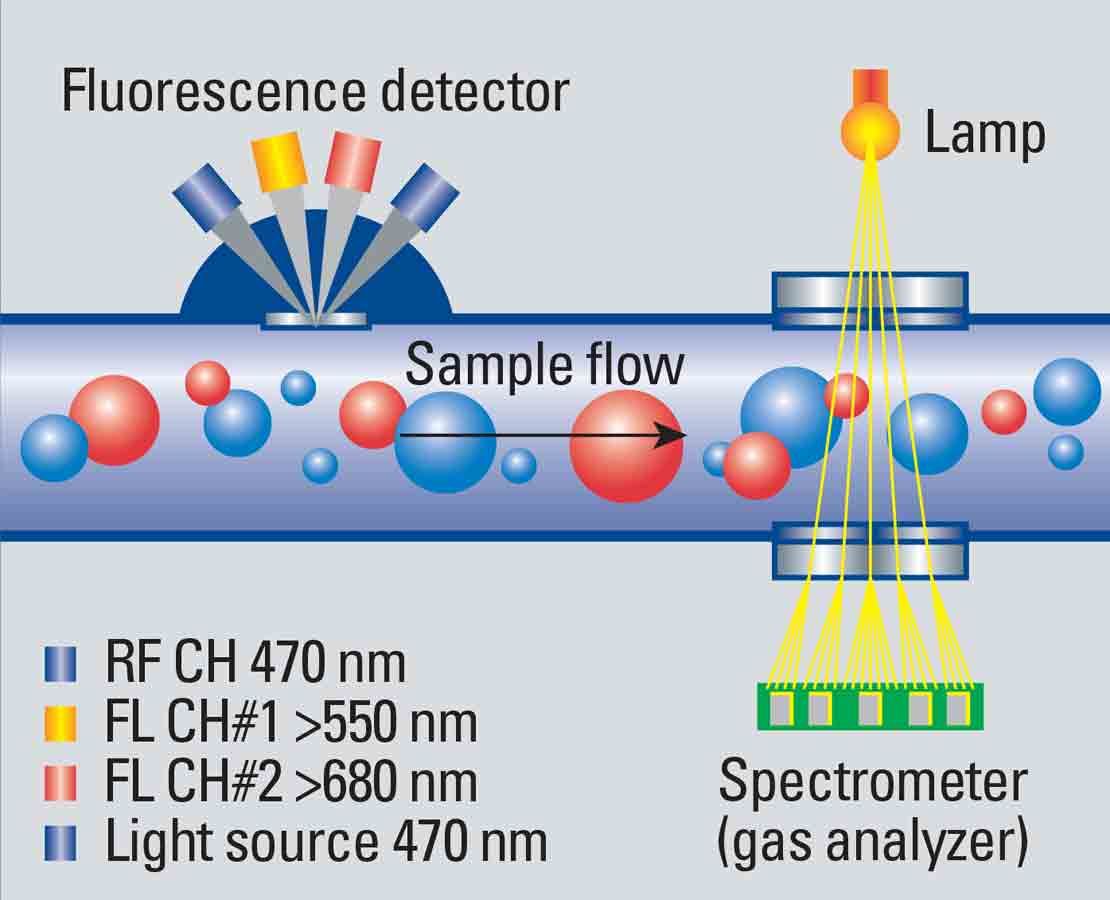
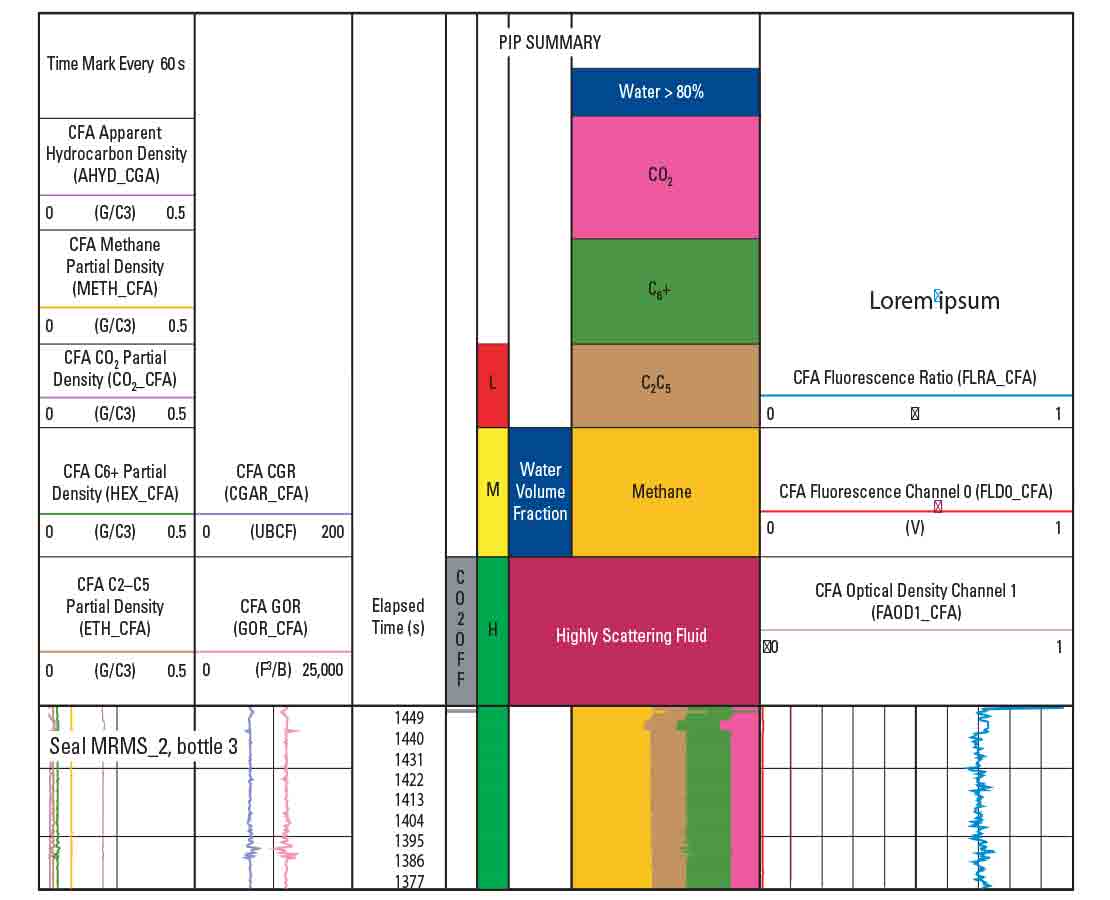
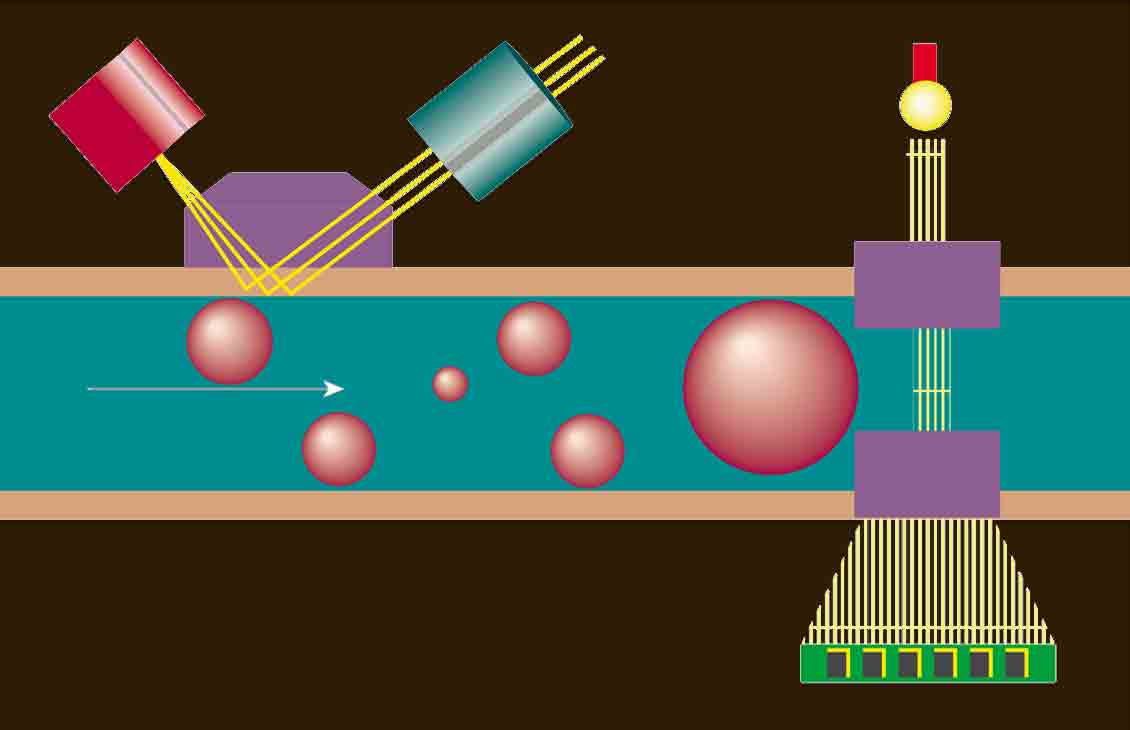
As single-phase reservoir fluids flow through the CFA analyzer, optical absorption spectrometry of visible and near-infrared light determines concentrations in the gas phase in real time:
- methane (C1)
- ethane, propane, butane, and pentane (C2–C5)
- heavier hydrocarbon molecules (C6+)
- CO2
- H2O.
This compositional information also gives you the condensate yield, or gas/condensate ratio (CGR), which is the inverse of the GOR. Simultaneous measurement of fluorescence emission identifies the fluid type and ensures that samples are single phase, acquired above the gas condensate dewpoint.