FracCAT-X
Fracturing computer-aided treatment system
Next-generation stimulation, job execution, and real-time monitoring software.

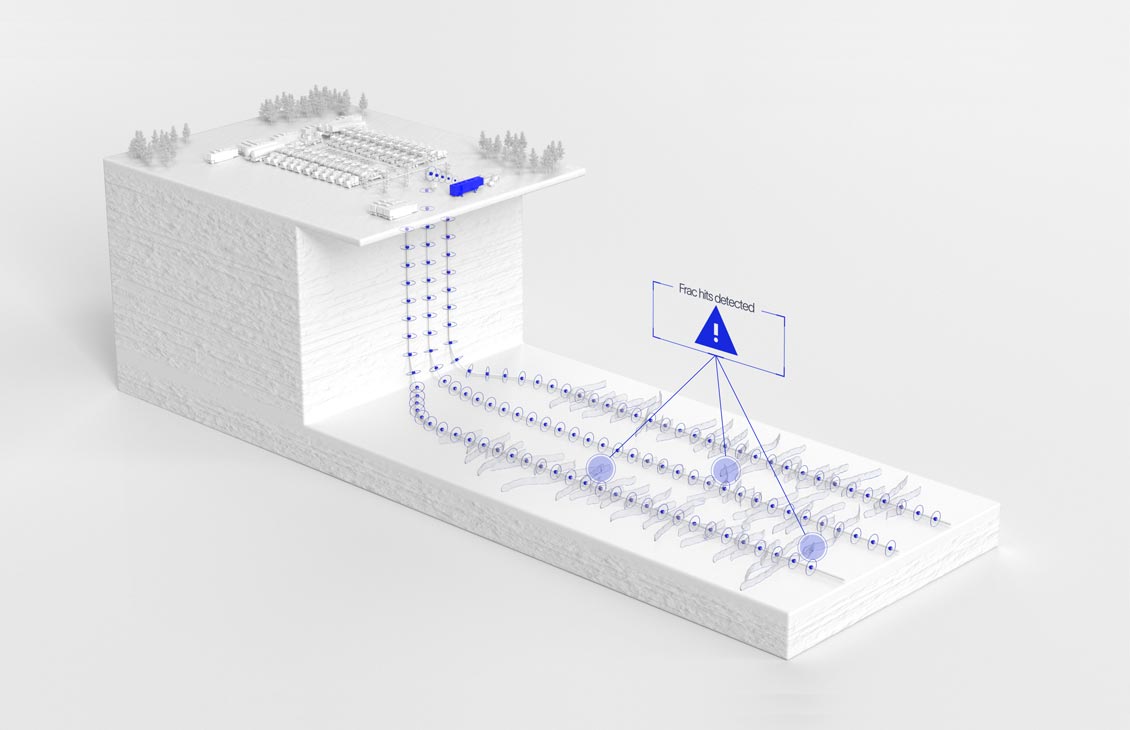
BroadBand Shield™ fracture-geometry control service is designed to minimize the risk of fracture-driven communication with neighboring wells and the unintended fracture growth into undesirable zones. The service delivers engineered stimulation treatments that constrain fracture height and length through far-field diversion.
By using a composite fluid system with a proprietary engineered far-field diversion pill, BroadBand Shield service helps operators maintain fracture growth within the designed reservoir area while reducing the risk of fracture hits.
BroadBand Shield service is applied during hydraulic fracturing treatments in closely spaced wells and in reservoirs that are predisposed to unrestricted fracture growth. It is suitable for both initial completions and refracturing operations, where fracture geometry control is critical to protect offset wells and optimize reservoir development.


The BroadBand Shield service reduces the risk of undesirable direct communication with nearby wells and helps limit fractures to the designed reservoir area. By optimizing fracture geometry, the service helps improve reservoir drainage in pad drilling developments and increase reservoir contact within targeted zones.
These effects help ensure stimulation energy is focused within the intended drainage area, without extending fractures beyond design limits.
BroadBand Shield service combines engineered diversion materials with flexible deployment options to help operators control fracture growth during stimulation. The service is designed to integrate seamlessly into existing fracturing designs, support safe and efficient execution on location, and perform reliably across a wide range of reservoir conditions.


BroadBand Shield service uses a composite fluid system that includes an engineered far-field diversion pill pumped ahead of conventional proppant stages. The diversion particles are designed to pass through perforations and propagate into the created fractures, rather than acting only near the wellbore.
Once the particles reach the fracture tip, they bridge and restrict further fracture height and length growth. This approach keeps fractures within the designed reservoir area, reduces the risk of well-to-well communication, and maintains fracture conductivity because the diversion material is placed only before proppant stages.
Conventional diversion typically acts near the wellbore using larger particles that bridge perforations. BroadBand Shield service uses smaller, engineered particles that travel to the fracture tip, where they directly control fracture height and length growth.
Yes. By limiting uncontrolled fracture growth and keeping fractures within the designed reservoir area, the service reduces the risk of well-to-well communication and frac hits.
No. The diversion material is pumped ahead of conventional proppant stages, ensuring that it does not compromise conductivity in the propped fracture.