ACTive Xtreme
CT real-time rugged downhole measurement tool
Use real-time downhole data to optimize coiled tubing interventions in extreme well conditions.

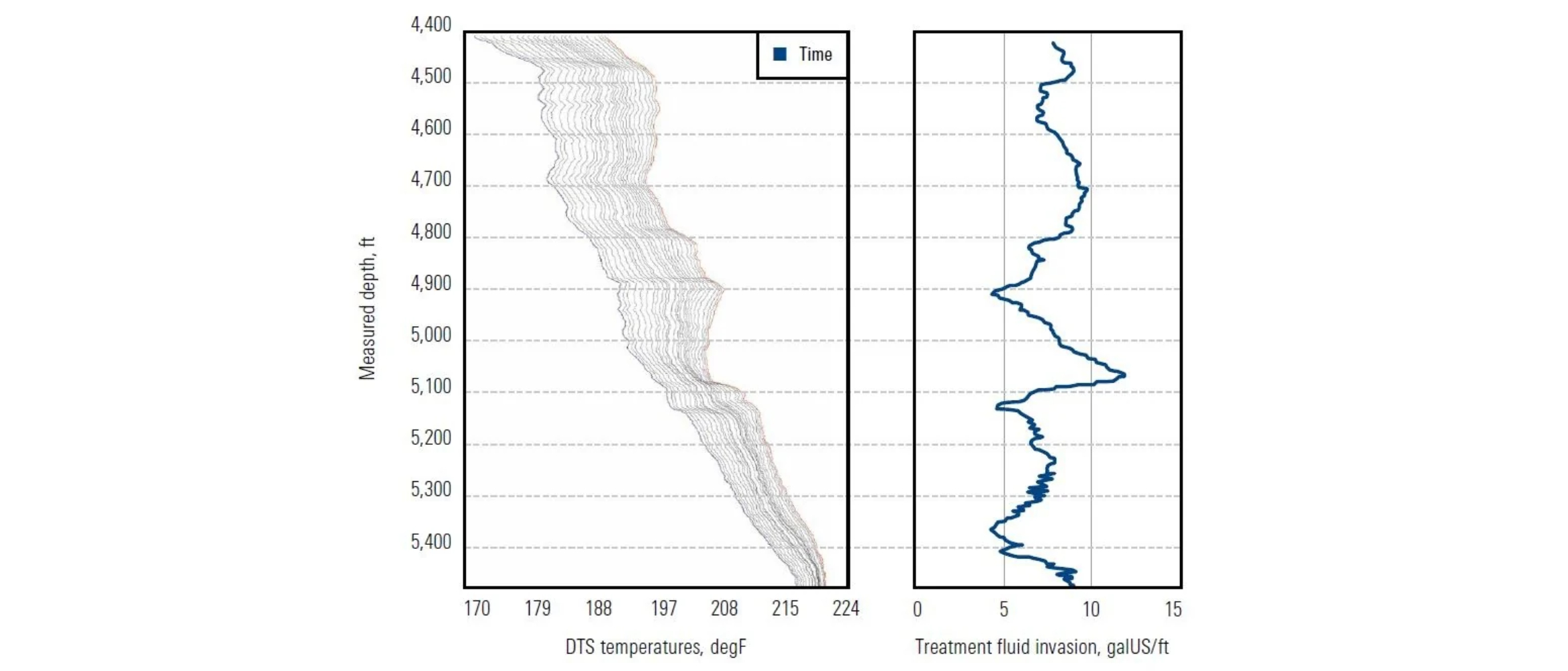
The distributed temperature sensor (DTS), part of ACTive™ real-time downhole coiled tubing services, uses continuous wellbore temperature measurements acquired during real-time CT interventions to provide insight into fluid placement and zonal coverage. By tracking temperature changes during pumping and shut-in periods, engineers can identify how the reservoir responds as fluid moves along the wellbore.
ACTive DTS analysis applies inversion analysis to these measurements, together with key treatment and reservoir parameters, to convert qualitative temperature responses into a quantitative fluid invasion profile across a selected interval. This helps engineers determine treatment fluid intake along the wellbore and better evaluate treatment performance.
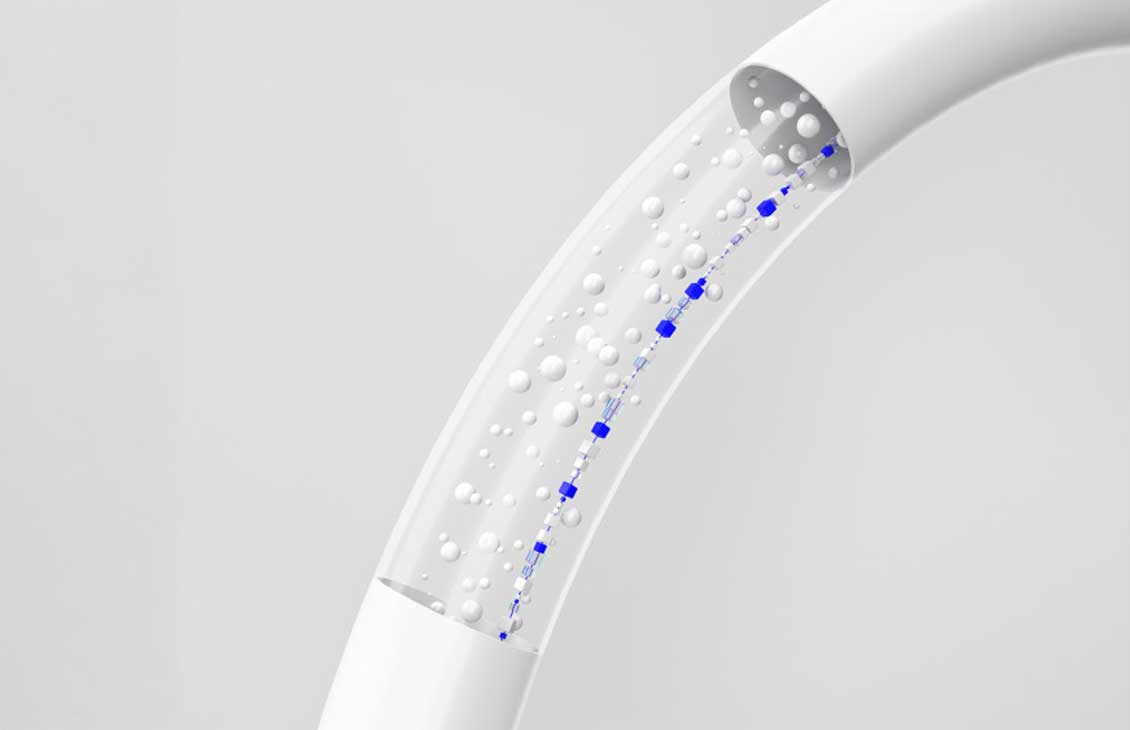
During an ACTive services intervention, fiber-optic DTS collects continuous temperature profiles along the well. Temperature evolution is monitored during pumping and shut-in periods to capture the thermal response associated with fluid movement.
The inversion analysis uses the evolution of the DTS measurements together with key treatment and reservoir parameters. Detailed inputs account for reservoir properties and zonation, while flexible simulation parameters support sensitivity analysis.
The DTS inversion process calculates the fluid invasion profile—expressed as volume per unit length—across a selected interval for the pumping stage preceding DTS acquisition. The analysis can evaluate multiple-injection treatments and quantify how fluid enters different parts of the wellbore.
Results can be saved in LAS digital data format and opened in Techlog software for further analysis, supporting interpretation of treatment fluid placement and zonal performance.