Our Approach to HSE
Reflecting best practices and lessons learned
Modernized HSE management approach
The SLB HSE Management System serves as the cornerstone guiding our global operations in health, safety, and environment (HSE) as well as security. Our management ensures widespread awareness of our global QHSE policy—HSE philosophy, priorities, objectives, and requirements among employees, customers, contractors, and other associates. Across all operations, our global HSE standards are rigorously enforced, with each SLB geography, domain, and function expected to demonstrate positive evidence of adherence to our HSE Management System.
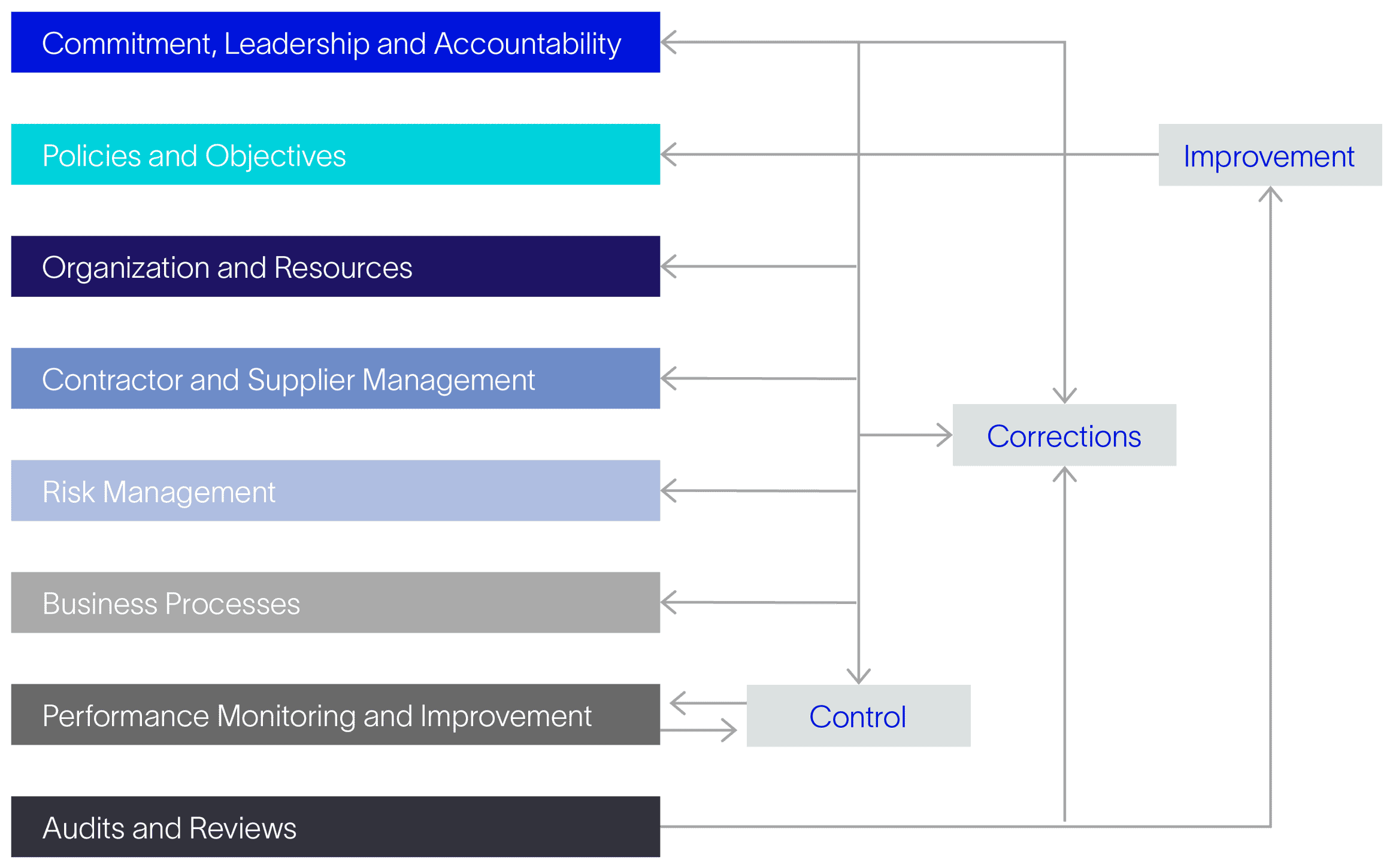
Key components of our HSE Management System
- Continuous improvement: We strive for ongoing enhancement of our HSE outcomes through regular conformance checks on day-to-day standards and procedures, management system assessments, and necessary modifications for improvement.
- Risk-based approach: Embracing a risk-based approach, we focus resources on locations, activities, and services with higher risk profiles. This enables us to develop clear, concise, and easily monitored HSE standards, ensuring effectiveness and compliance.
- Standard components: Each risk-based HSE standard includes a statement of intent, objective, scope of application, implementation controls, responsibility statements, and criteria for performance and compliance monitoring.
- Global consistency: Our HSE management system imposes prescribed control measures applicable to all SLB sites, activities, and employees, including contractors under our operational control. Specific risk-based controls are developed by considering country, domain, and location-specific assessments.
- Ongoing improvement: An assigned owner oversees each SLB HSE standard globally, regularly updating it to reflect our commitment to continuous improvement, industry best practices, and lessons learned.
Annual HSE management review
Every year, SLB convenes senior HSE managers globally and corporate HSE personnel for a comprehensive review. This meeting focuses on refining our HSE management system, aligning with emerging regulatory changes, and identifying opportunities for improvement. Performance objectives, including leading and lagging indicators, are set, existing HSE standards are reviewed, and new standards and initiatives are developed to further our commitment to HSE excellence.
Auditing
We uphold a robust auditing program designed to evaluate and enhance the effectiveness of our management system continually. This program aims to identify strengths, weaknesses, and areas suitable for improvement, fostering a culture of continuous enhancement in system performance.
Our systematic approach includes an annual internal audit schedule that covers the entire management system scope across all geographies and domains. This risk-based process determines the frequency and prioritization of audits, ensuring comprehensive coverage within three years for all assets and activities or as required to meet industry standards.
Reviewing the management system occurs at various organizational levels—corporate, geography, and domain—ensuring that senior management has a comprehensive understanding of system performance and providing opportunities for ongoing improvement.
Our dedicated auditors, equipped with a blend of relevant education, training, and experience, lead these assessments. Importantly, lead auditors maintain independence from the areas they audit, promoting objectivity in their evaluations.
Communication is a cornerstone of our auditing process. Findings and observations are promptly and effectively communicated and recorded, empowering responsible individuals to take appropriate actions and drive meaningful improvements. Our commitment to a proactive auditing program reflects our dedication to maintaining a high standard of operational excellence and continual advancement.
Design for HSE
Design for HSE projects at SLB integrate health, safety, and environmental principles into the design phase to eliminate hazards, reduce lifecycle risk, and enhance operational resilience. By embedding human performance factors—including ergonomics, intuitive interfaces, cognitive load reduction, and fail-safe systems—these projects create human-centered designs that anticipate error and promote safe, efficient operations. This approach supports ESG commitments and sustainability goals through measurable improvements in worker well-being, resource efficiency, and environmental stewardship, while reinforcing a strong safety culture and regulatory compliance.
In 2025, over 100 projects were completed. Visual AI helped us identify systems, tools, and work environments where engineering could reduce hazards, minimize errors, lessen fatigue, enhance ergonomics, and eliminate repetitive tasks.
