Fostering a Strong SLB Safe Culture
A robust HSE culture empowers individuals to champion safety, creating a collective responsibility for well-being
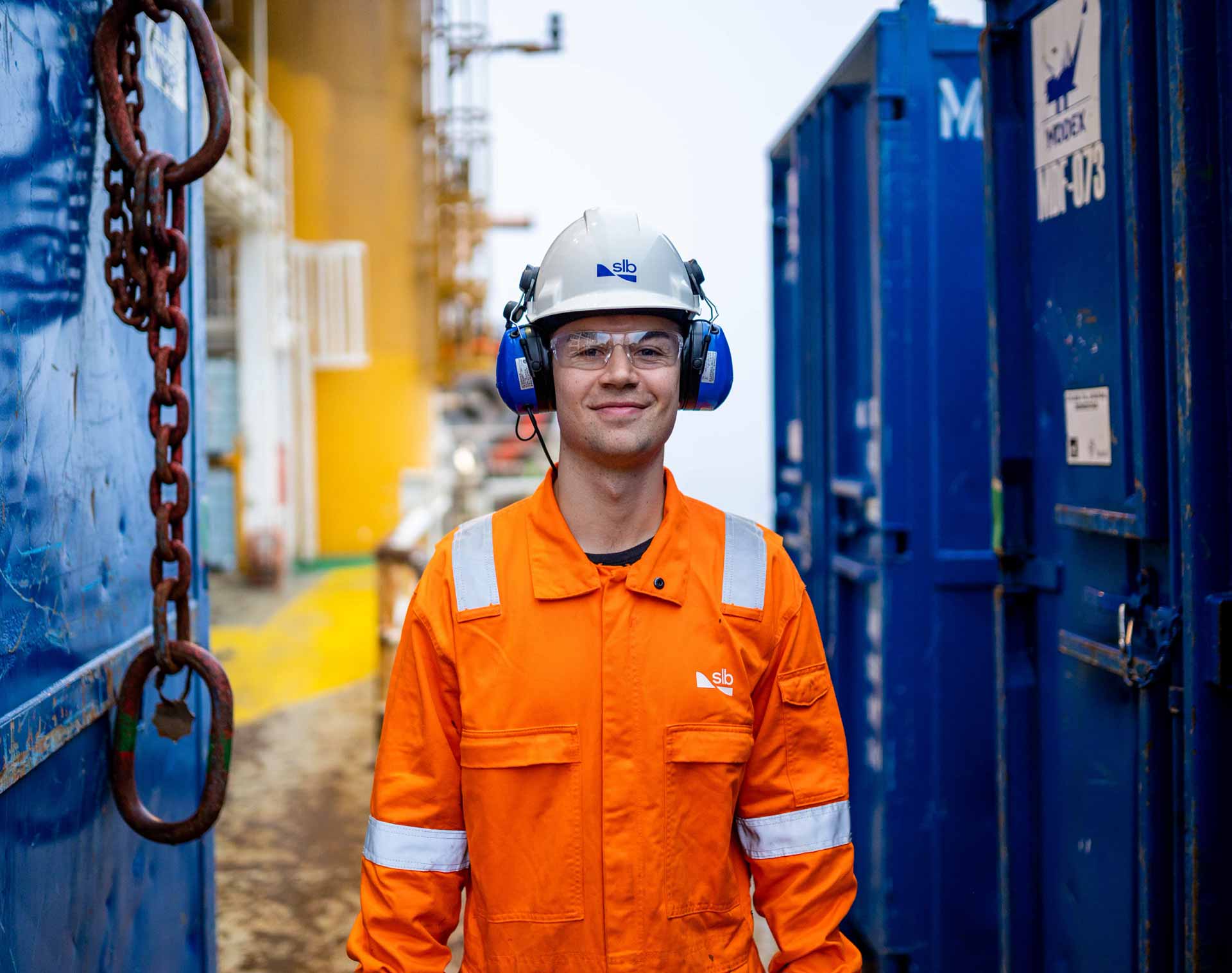
Championing safety excellence together
A robust health, safety, and environment (HSE) culture has contributed to reducing injuries. This culture empowers individuals to champion safety, creating a collective responsibility for well-being. Our unwavering commitment to HSE excellence is evident through a proactive approach, including a mature reporting process, targeted initiatives, and the integration of ergonomic principles into our daily operations.
Our strong SLB Safe culture has been evolving through impactful programs, technological advancements, and training and competence development. We have integrated the SLB Safe culture among our employees and families, as well as our contractors, customers, and other third parties. We proactively collaborate to share best practices and initiatives, focusing on incident-free operations.
Key initiatives driving HSE excellence
Comprehensive safety training: We offer rigorous safety training for employees, contractors, and stakeholders to heighten awareness and knowledge of potential risks and safety procedures.
Our learning and competence development initiatives focus on two critical human factors: situational awareness and decision making. Additionally, in partnership with our customers, we actively promote human performance principles and psychological safety. We focus on human performance because safe, reliable, and high-quality outcomes depend on systems that recognize human capabilities and limitations. We see human performance as an evolving journey and are embedding it into our culture, and governance. A key emphasis is building understanding and capacity in how we interpret and respond to error and non-compliance, with leadership behaviors and psychological safety central to this shift. We are integrating human performance principles into investigations, risk management, and learning from events to support fair and effective decision-making. In parallel, we are strengthening learning from normal work through approaches such as walk-through talk-throughs (WTTTs) and learning teams, to better understand how daily work is executed to improve performance, reliability, and safety.
| Training | Population Targeted | Participants | Training Hours |
|---|---|---|---|
| Training New employee SLB training | Population Targeted Newcomers, including contractors | # Participants 16,654 | # Training Hours 399,700 |
| Training SLB Safe for supervisors (HSE level 2) | Population Targeted Field supervisors and operational junior leaders | # Participants 3,568 | # Training Hours 57,088 |
| Training SLB Safe for leaders
(HSE level 3) |
Population Targeted SLB managers | # Participants 512 | # Training Hours 8,192 |
| Training Fatalities reflections | Population Targeted Operational population | # Participants 97,645 | # Training Hours 29,200 |
| Training Decision making and situational awareness | Population Targeted Operational population | # Participants 950 | # Training Hours 285 |
| Training Driving light vehicles | Population Targeted SLB drivers | # Participants 4,545 | # Training Hours 109,000 |
| Training Driving heavy vehicles | Population Targeted SLB drivers | # Participants 3,385 | # Training Hours 135,400 |
| Training HSE for youth | Population Targeted SLB and community kids | # Participants 2,000+ | # Training Hours 9,500+ |
Proactive incident reporting and investigation: Our meticulous process for reporting and investigating incidents and high-potential events identifies root causes, enabling the implementation of corrective actions to prevent future injuries.
To promote continuous improvement, SLB personnel are actively encouraged to report hazardous situations and near misses, as well as highlight cases of observation and intervention. Our HSE reporting application enables personnel to create and submit reports to our global system in real-time using company-enabled mobile devices.
Our emphasis is on cultivating superior reporting standards, initiating interventions that encompass both positive actions and corrective measures, and ensuring comprehensive feedback loops to inform reporters about the actions taken based on their insights and observations.
Crafted to resonate authentically, this initiative delivers impactful messages promoting safe behavior in all aspects of life, inside and outside the workplace. The global campaign, a collaboration between HSE and the business, focuses on creating concise, impactful videos for all the Life-Saving Rules. Each topic is delivered monthly, complemented by communication materials such as safety meeting content and digital or print posters, ensuring easy sharing across our locations. Featuring SLB employees and their families, this project has garnered extensive adoption and active participation worldwide, not only internally but also among our customers.
SLB Empowerment Team (SET): SETs play a pivotal role in ensuring continual HSE improvement at work sites by identifying risks, suggesting improvements, cultivating positive HSE attitudes, and enhancing personnel engagement. Comprising three subgroups–talk group (engaging in HSE), see group (ensuring HSE situational awareness), and check group (monitoring HSE compliance)–SLB boasts over 4,500 SET members. Their active involvement has been instrumental in the successful global rollout of key HSE campaigns.
Addressing personal injuries: Analysis of our annual HSE data reveals that around 50% of personal injuries involve hands, arms, and fingers, leading sometimes to high severity outcomes. To address this, we introduced the Hands Clear technique in 2025 as part of our SLB Injury Prevention Program (SIPP). This initiative includes hands-free work strategies implemented globally and reinforced by our 8 Hands Safety Commitments, significantly reducing direct exposure to hands and fingers across diverse tasks.
Beyond hand safety, we prioritize ergonomic design of workstations, tools, and equipment to lower the risk of musculoskeletal injuries, improving worker health and safety. Our approach also mitigates fatigue and stress, creating alert, productive teams and reducing accident rates.
By integrating human factors analysis, smart PPE, and AI-driven monitoring, we embrace a holistic HSE strategy that considers both employee well-being and environmental impact. This commitment enhances operational efficiency, supports ESG goals, and strengthens our safe culture, ensuring a safer, more responsible future for all.

Reducing musculoskeletal injuries
Proper ergonomic design of workstations, tools, and equipment has effectively reduced the risk of musculoskeletal injuries, enhancing the overall health and safety of workers.

Mitigating fatigue and stress
Ergonomically designed workspaces and tasks have minimized physical and mental fatigue. Less fatigued and stressed employees are more alert, make fewer errors, and are less prone to accidents.

Approaching HSE holistically
Work-related ergonomics not only focus on the physical well-being of employees but also considers the environmental impact of work processes and equipment. This holistic approach has led to a safer, more productive, and environmentally responsible work environment.

