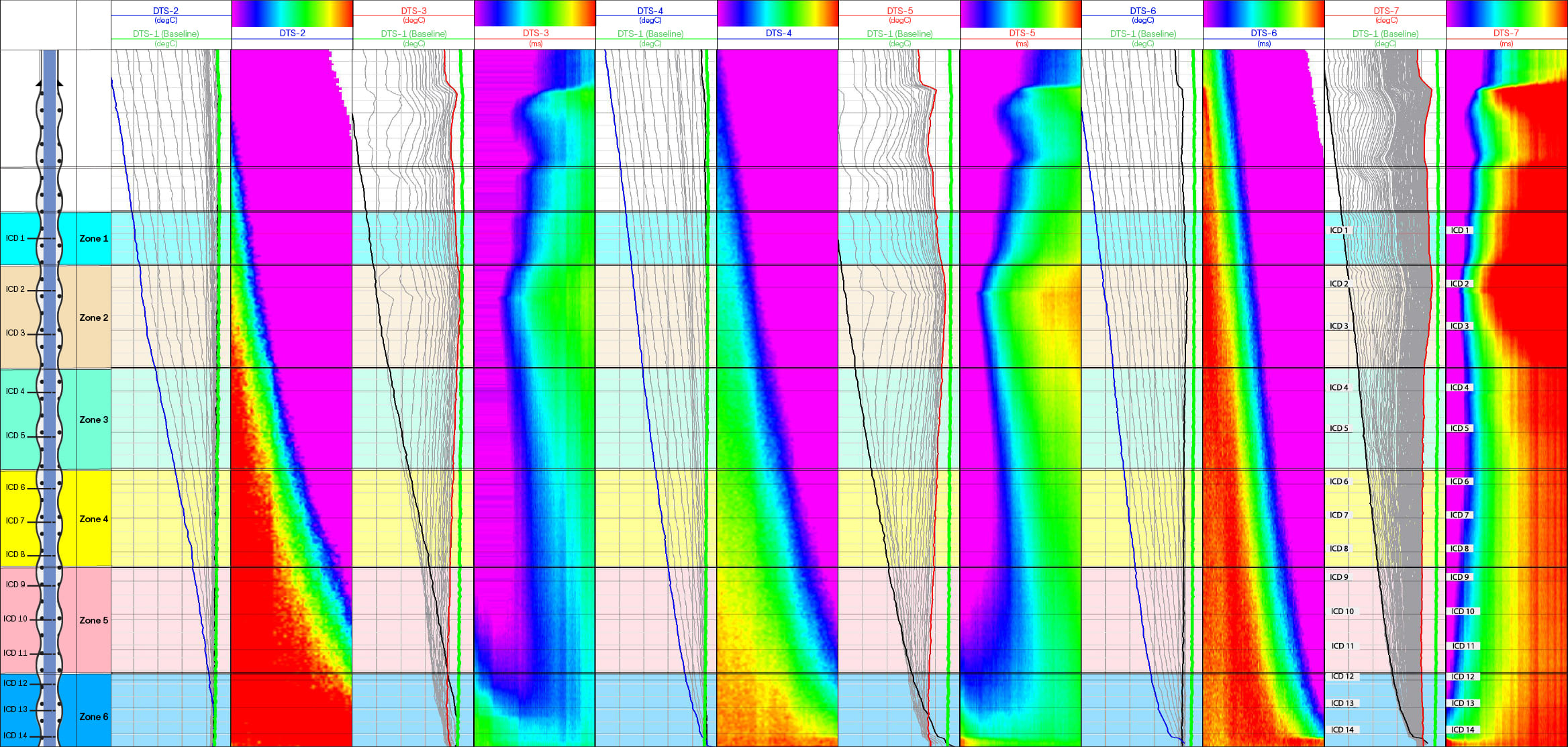
Quantify the intake profile of treatment fluid along the wellbore.
Real-time monitoring enables efficient inflow control device shifting to increase oil production
An oil operator operating an onshore field in the United Arab Emirates used SLB advanced intervention technologies to shift ICDs. Real‑time downhole monitoring enabled precise ICD manipulation, reducing water production by 479 bbl/d and increasing oil production.
An oil operator operating an onshore field in the United Arab Emirates faced challenges shifting two ICDs in a horizontal well. The objective was to close ICDs #2 and #3 to achieve mechanical water shutoff.
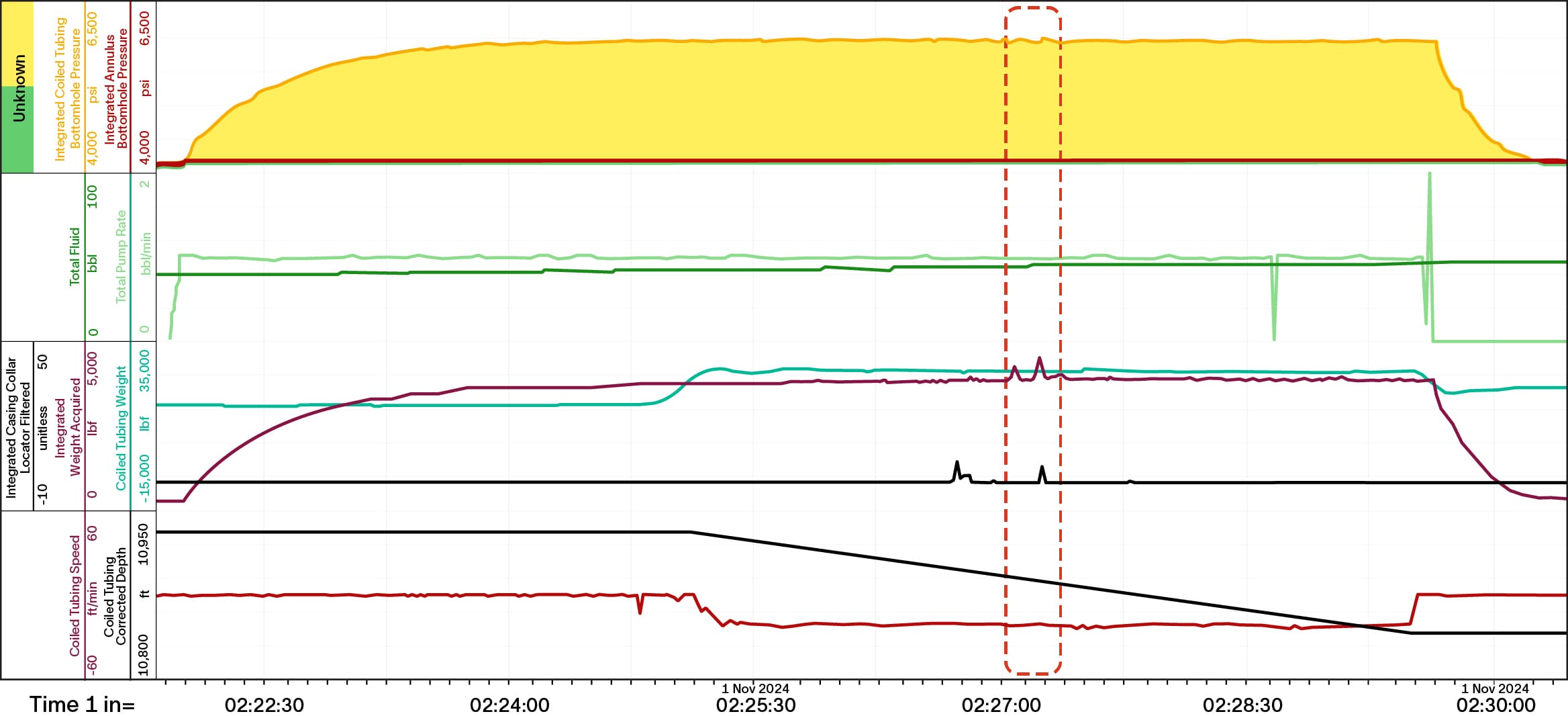
Key challenges included accurate depth correlation for ICD sleeve engagement, precise control and measurement of downhole forces during ICD manipulation, and evaluation of the impact of ICD shifting within a single coiled tubing run. The operator required a reliable solution with real-time downhole monitoring to improve intervention efficiency and increase the likelihood of success.
SLB addressed these challenges using the distributed temperature sensor (DTS) of ACTive™ real‑time downhole coiled tubing services with Jet Blaster™ engineered high‑:pressure jetting service.
Before shifting, P132 organic dissolver and 15% HCl were pumped to clean the ICD sleeve pockets. A hydraulic shifting tool was then deployed on coiled tubing equipped with fiber-optic and downhole sensors. Real-time DTS monitoring provided high‑resolution temperature profiles, enabling accurate evaluation of ICD shifting operations.
This approach delivered the following outcomes:
- Successful ICD closure—ICD #2 and ICD #3 were shifted to the closed position as planned, achieving mechanical water shutoff.
- Reduced water production—Formation water production decreased by approximately 479 bbl/d, lowering water cut from 47.3% to 11.5%.
- Increased oil production—Effective water shutoff improved oil recovery and overall well performance.
- Real-time operational insight—DTS data enabled precise evaluation of ICD shifting and informed decision making during the intervention.
- Rapid return on investment—The operator achieved a positive return on investment within five days based on incremental oil production.
- Pathway for future interventions—The successful application demonstrated the value of fiber‑optic‑equipped CT for future ICD manipulation campaigns in the region.
This case study demonstrates how real-time downhole monitoring and advanced intervention technologies can overcome operational challenges and improve production outcomes.