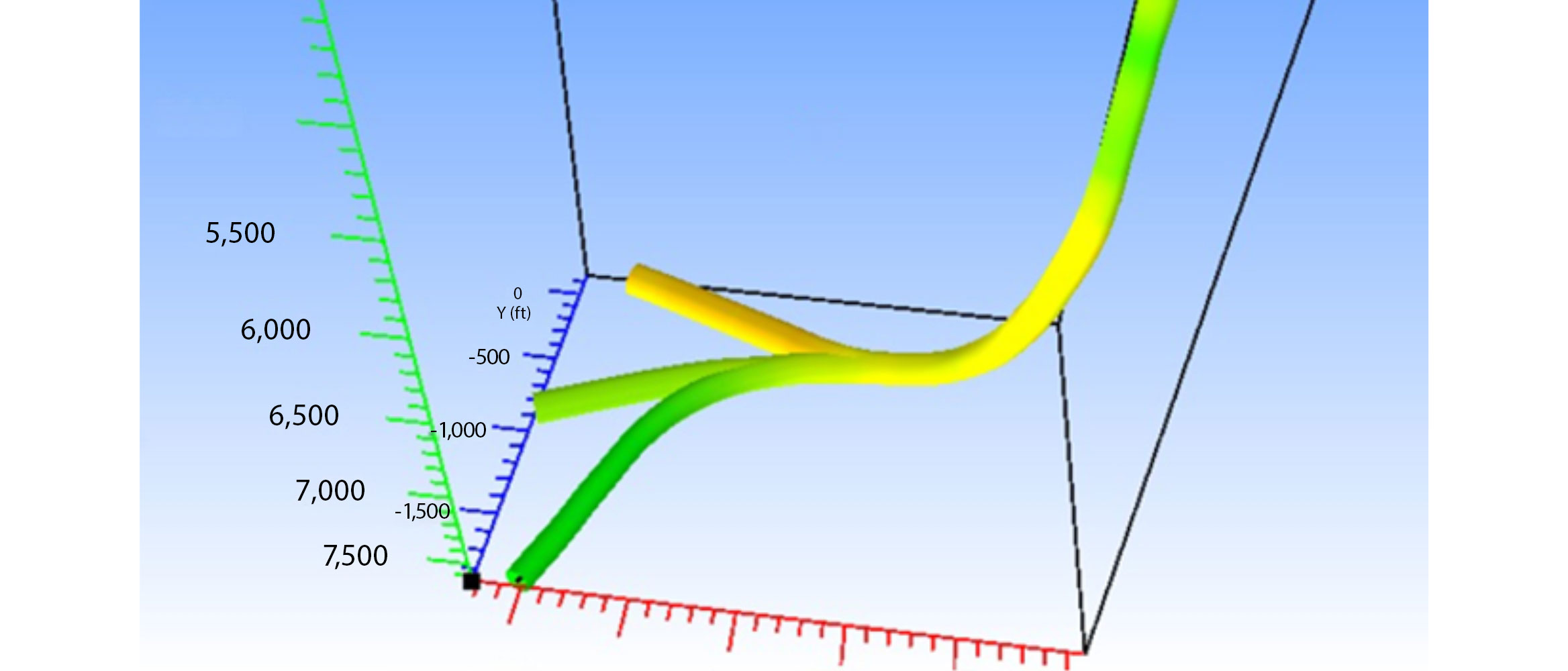
SLB designed and executed an integrated intervention using the ExaCT access service. The workflow used the ExaCT direction and inclination (D&I) module together with the electrical multilateral module (eMLT) to deliver real-time wellbore navigation, branch identification, and positive lateral-entry confirmation. Continuous downhole power and telemetry enabled operators to make decisions from live measurements rather than memory data or indirect surface indications.
The first intervention run established repeatable access to all three laterals. Real-time directional feedback enabled branch mapping and entry in approximately 10 to 20 min per lateral, significantly reducing the time required to identify and reenter targeted branches. The workflow provided a consistent depth reference and positional certainty across all trajectories.
A subsequent production-logging run using a Flow Scanner™ horizontal and deviated well production logging system identified the source of water production at the lateral level. Analysis revealed that one lateral contributed approximately 65% of the well's total water production while delivering limited oil, whereas another lateral contributed approximately 55% of total oil production. This information enabled selective remediation instead of a broad isolation treatment that could have jeopardized productive intervals.
Using the same access framework, SLB navigated an openhole straddle packer assembly to the identified water-producing interval and selectively placed an approximately 850-bbl water shutoff treatment. Real-time depth correlation, pressure monitoring, and tool response verification helped maintain treatment-placement accuracy throughout the operation.
The integrated workflow reduced water cut by approximately 20 percentage points and increased oil production by about 505 bbl/d, resulting in production of approximately 1,200 bbl/d. The complete diagnose-to-remediate operation was executed in three CT runs under a single rig-up, saving an estimated 96 h compared with a conventional execution method. The project also established a repeatable workflow for diagnosing and remediating water production in complex multilateral wells.