It’s never been more autonomous than this

Well planning has always been one of the most underestimated challenges of field development.
On paper, it looks like a straightforward engineering exercise. But in reality, it’s a complex, high-stakes process that requires aligning subsurface uncertainty, drilling constraints, operational risk, cost, and safety, often across multiple disciplines working in silos, on different tools, and under constant time pressure.
For much of the past, planning a well involved stitching together inputs from geology, geophysics, drilling, completions, and operations—each using their own standalone software and datasets. Version control issues, manual data transfers, and late-stage design changes were common.
Having worked as a field engineer for many years (and now in a supervisory role), I’ve seen firsthand how minor planning issues can snowball into nonproductive time, wellbore quality issues, or missed reservoir targets once execution begins.
That’s why digital well construction planning solutions, like DrillPlan, stand out as a genuine step change. They mark a true breakthrough in how wells are designed and prepared for execution.
By integrating advanced data management, collaborative workflows, and robust engineering algorithms, a solution like DrillPlan streamlines the planning phase while significantly improving accuracy and confidence in the final design. Multidisciplinary teams can work simultaneously on a single, authoritative plan—reducing handoffs, eliminating rework, and accelerating decision making.
The impact isn’t theoretical. DrillPlan, for example, has cut the duration of our well planning phases by more than half across several integrated projects in Ecuador. Not to mention, it integrates directly with DrillOps, which enables us to automatically transfer well plans to operations and achieve that seamless transition from planning to execution.
The result? Fewer manual interventions and reduced risk of data loss.
And that’s still not the best part.
By enhancing consistency and minimizing the need for human oversight, a digital planning solution is what empowers new-age innovations like autonomous directional drilling and autonomous geosteering (AGS).
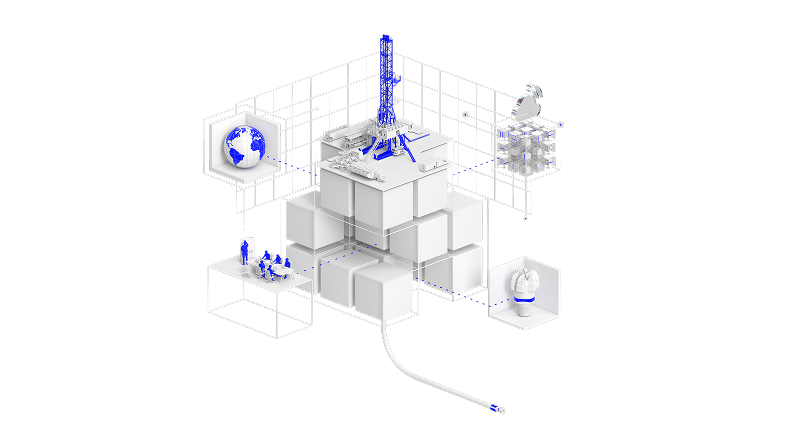
In fact, it was DrillPlan that contributed to the world’s first successful Neuro AGS run in Ecuador, where 2,392 feet MD were successfully geosteered—the third longest horizontal section drilled in the country.
That well ended up becoming the top oil producer in Ecuador! It demonstrated the effectiveness of AGS workflows and established a precedent for fully automated geosteering services.
It’s a milestone I’ll never forget. After all, it set a new global standard for the oil and gas industry. Things haven’t been the same since, and as SLB embarks on another century of innovation, I’m looking forward to seeing where digital enablement takes us next.
Any ideas?

