Learning to lead, one team at a time

No one teaches you in engineering school how to lead 11,000 people. And when I started my career, I never imagined I would need to know.
My first job was designing subsea boosting and multiphase measurement systems in Norway. It was demanding technical work, and it taught me some important lessons: to be disciplined, stay accountable, and never forget that the smallest details can have a very big impact.
At the time, I thought I was learning how to become a better engineer. Now I know those experiences were only part of the story.
My perspective began to change when my career took me to Abu Dhabi and Kuala Lumpur. I had always been interested in how culture shapes business, and experiencing different ways of working brought that to life.
Having started my career in Norway, I was used to people being direct and comfortable sharing their views. I soon realized that other cultures could have very different ways of communicating and building relationships, and that I needed to adapt my own approach. I also learned the importance of listening, which is often the best way to build trust and work effectively with others.
As my career progressed, I gained a greater appreciation for how the culture of the organization itself impacts employee performance. One book in particular has stayed with me: “The Fearless Organization” by Harvard professor Amy Edmondson. It clearly conveys something I have seen many times: people perform better when they feel safe to challenge assumptions, experiment, and learn from mistakes.
While not always easy to put into practice, I’ve seen how creating what Edmondson calls the “right kind of wrong” can contribute to stronger and more resilient teams. Not because failure is the goal, but because learning is.
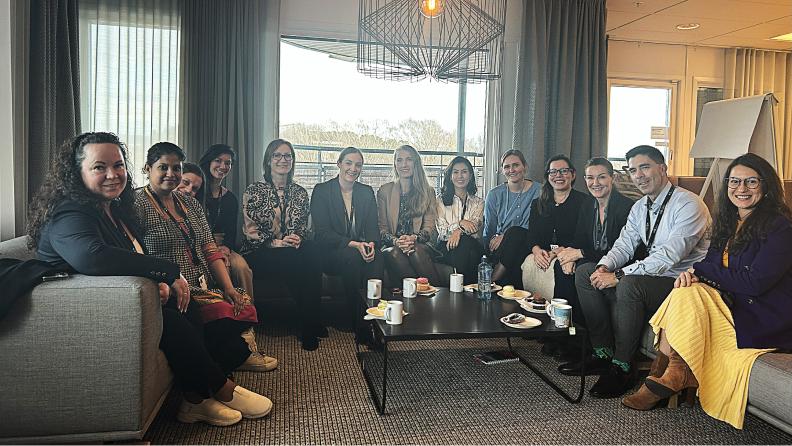
That’s not always easy to do. But when it happens, you can feel the difference. People move faster because they trust each other. They’re more willing to challenge ideas, simplify where they can, and work together to solve problems.
I couldn’t have predicted this path when I was a young engineer in Norway. But I’m grateful for it, because I’ve come to understand that leadership, like engineering, is something you must continue to refine.
Today, what motivates me most is working with talented people and knowing that the technologies we deliver contribute to something meaningful: providing energy to the world. My role now is to help create an environment where people can learn, do their best, and succeed as one team.
SLB is celebrating a century of success thanks to the dedicated people who built this company with that same mindset. I believe it will also define our next 100 years, as we continue to solve some of the most complex challenges in energy—and deliver lasting impact, together.

