Years of design, testing, and iteration—validated

Nearly 15 years ago, when we began developing the Ora™ Intelligent Wireline Formation Testing Platform, we had an ambitious goal: to fundamentally expand formation testing capabilities and help the industry address the challenges it was facing. Challenges such as high-pressure and high-temperature environments, low-permeability reservoirs, and the need for new measurements, such as deep transient testing (DTT), far beyond the wellbore.
Having spent more than two decades in formation evaluation and wireline tech development (including earlier innovations such as formation pressure-while-drilling systems), I saw firsthand how reservoir characterization was evolving—and where it was still constrained.
The global development team I was part of, along with our formation testing experts and wireline management, agreed that an incremental upgrade simply wouldn’t do. We wanted a step-change platform that could bring multiple innovations together at once. It had to stand out from earlier generations of tools that had evolved by gradually adding sensors and modules.
Our conclusion? The Ora platform had to be conceived as a fully integrated system from the outset.
This vision made developing the Ora platform both one of the most ambitious and most challenging programs I’ve been a part of. It brought together hardware, automation, and digital workflows into a single unified platform like never before.
But it's that first field deployment that will forever remain a defining moment for me.
Monitoring it remotely from Houston after years of development, I watched as the system delivered exactly what we had set out to achieve: a clean formation sample captured in roughly a third of the time compared to conventional technologies, validating years of design, testing, and iteration.
Since then, the Ora platform and DTT have played a pivotal role in multiple discoveries across West Africa, particularly in Congo, Côte d’Ivoire, Angola, and Namibia. In many of these cases, conventional approaches would have required significantly higher investment, longer testing campaigns, and greater environmental impact to reach the same level of subsurface certainty.
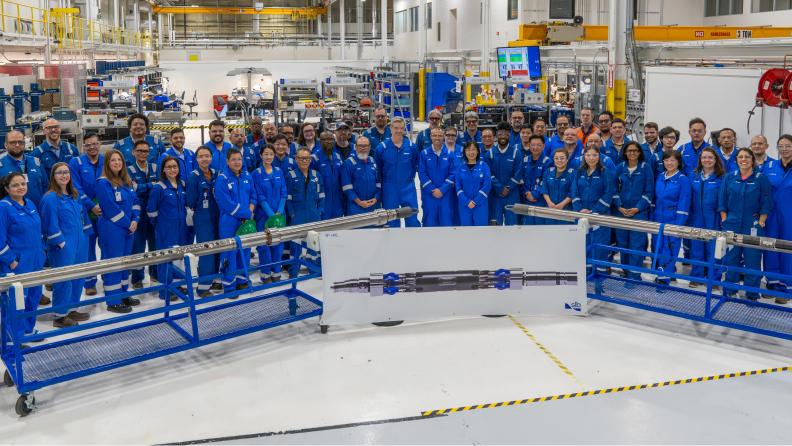
As exploration activity in the region continues to grow to meet both local and global demand, the Ora platform remains a key enabler in identifying new resources. And in shaping the next chapter of SLB’s 100-year impact on the world.
I’m particularly excited about the next wave of technology we’re deploying, along with extending the impact of the Ora platform into the production and recovery phases of the reservoir lifecycle.
If you’re a wireline engineer or a downhole tool design engineer who’s been around the block (like me), you know the rate of progress in recent years has been truly amazing. But I have a feeling the upcoming century will be even more groundbreaking…
Wouldn’t you agree?

