The basic function of a pipeline valve doesn’t change. Whether the medium is natural gas, hydrogen, or CO2, the valve needs to control flow and provide reliable isolation.
What does change are the conditions the valve must withstand.
Hydrogen presents particular challenges around sealing and material compatibility. These are important differences, but they don’t necessarily mean starting again with valve technology.
In many cases, decades of experience with established valve designs can provide the foundation. The challenge is understanding what needs to change, then testing and qualifying those designs and materials for the new service conditions.
Same function, different demands
Hydrogen is a much smaller molecule than natural gas, making effective sealing particularly important. Materials must also be suitable for long-term exposure to hydrogen, while soft materials need to be qualified for factors such as aging and rapid gas decompression.
Fugitive emissions performance is another consideration. Hydrogen has a wide flammability range and low ignition energy, making effective sealing particularly important. Valve designs for hydrogen service therefore need to demonstrate their sealing performance, alongside requirements such as fire-safe performance and anti-static design.
The valve still performs the same fundamental task. But understanding the properties of hydrogen and its operating conditions becomes critical to selecting the appropriate materials, seals, and qualification requirements.
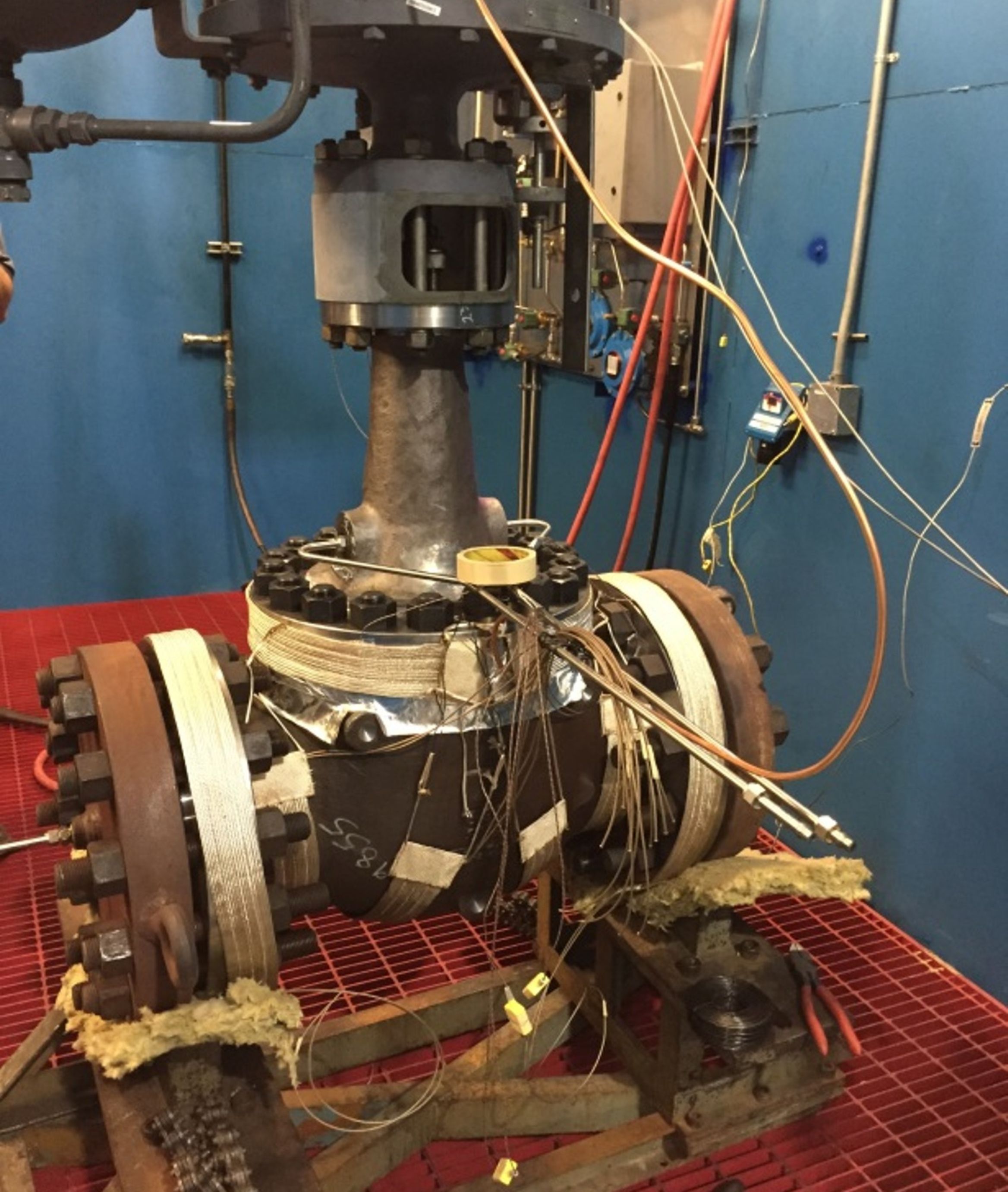
Building on proven technology
When hydrogen began receiving greater attention, one obvious question was whether entirely new valve technology would be required.
In my view, that isn’t necessarily the case.
At SLB, our approach has been to built on valve designs and materials that have already performed for decades in natural gas service, then undertake the additional testing and qualification required for hydrogen.
There is an important distinction here between proven technology and technology proven for a particular application.
A valve design may have operated reliably for decades, but that history alone doesn’t qualify it for hydrogen. Equally, a newly developed valve can successfully complete a qualification program but won’t have decades of field performance behind it.
SLB’s approach combines established designs and accumulated field performance with the additional material testing and qualification needed for hydrogen service.
Qualification needs standards
As operators began asking more questions about the suitability of valves for hydrogen, another challenge became apparent: there was no dedicated industry standard defining the requirements.
SLB began carrying out additional testing and qualification work, but we also saw the need for an agreed industry approach.
We proposed the development of hydrogen-specific valve requirements to the American Petroleum Institute (API), and I subsequently became co-chair of the task group established to develop them.
That work brought together end users, valve manufacturers, seal manufacturers, test centers, and other subject-matter experts to establish requirements that could be applied consistently across the industry.
The resulting requirements were published in 2024 as Annex M of API Specification 6D, covering valves for hydrogen gas service. Annex M provides a common basis for assessing valve technology against requirements that reflect the characteristics of hydrogen service, rather than relying on assumptions carried over from natural gas.
What about existing infrastructure?
The question of technology readiness becomes particularly important when considering the potential repurposing of existing natural gas infrastructure.
There is significant interest in using existing pipeline networks for hydrogen and CO2 rather than building entirely new infrastructure, making it increasingly important to understand the suitability of installed equipment.
Not every existing valve will automatically be suitable for a different medium. Materials, seals, design, condition, and operating parameters all need to be considered.
Changing the medium doesn’t necessarily mean replacing everything.
The industry has decades of knowledge about how existing pipeline equipment behaves in service. Combining that experience with appropriate assessment, testing, and qualification can help determine what can continue to be used, what needs to be adapted, and what needs to be replaced.
And the decisions being made about new infrastructure today should take that possibility into account. If an asset may ultimately be required to handle hydrogen or CO2, considering those future requirements during initial specification could make subsequent adaptation considerably easier.
Experience matters when the application is new
The transition to new media creates an interesting challenge for our industry.
With conventional oil and gas applications, we have accumulated decades of field experience. We know a great deal about how materials, seals, and valve designs behave over long periods in real operating conditions.
We don’t yet have the same depth of field history with hydrogen.
That doesn’t mean the valve technology itself is immature. In many cases, we are starting with designs and materials that are already well understood. What matters is identifying where hydrogen creates different demands, then demonstrating through appropriate qualification that the technology can meet them.
The objective is to use the knowledge we already have, add the qualification the new application requires, and change what genuinely needs to change—not innovate for its own sake.


