In the oil and gas industry, well control has always been a niche technical domain, with a heavy dependence on subject matter experts (SMEs) and simplified calculations. As a result, critical complexities are often overlooked, leading to outcomes that do not accurately reflect real well conditions.
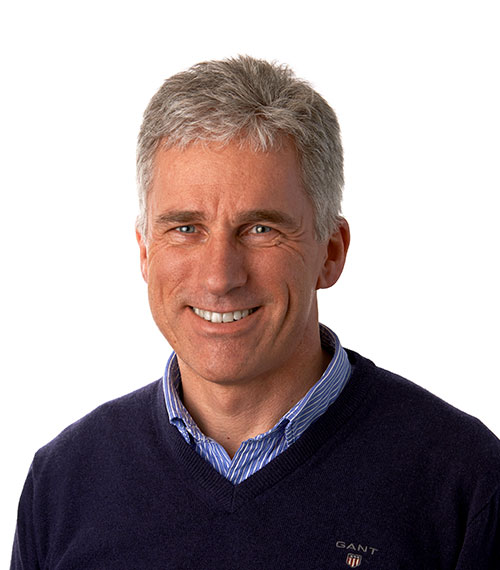
In this interview, Bjoern-Tore Anfinsen, well control advisor at SLB, explains how shifting well control engineering to the cloud can address these baseline issues, enhancing accessibility, performance, and scalability through automated workflows.
SLB: Bjoern-Tore, well control is often described as a specialist subject. What has historically made it difficult to scale beyond the reliance on SMEs?
Bjoern-Tore Anfinsen: The domain has long relied on deep specialist knowledge to execute and interpret calculations, and outside of that human-centric expertise, the industry has leaned heavily on the single-bubble methodology. That approach has known limitations—most notably that it does not account for dissolved gas and phase transition effects—so it can generate outcomes that are not realistic for decision-making in safety-critical contexts.
SLB: When you point to limitations like “unrealistic results,” what gap are you trying to close—technical accuracy, usability, or both?
BTA: It is both. The underlying question is whether we can expand access to the engineering process so that users with different levels of experience can perform accurate well control calculations more easily—without being constrained by oversimplified methods or by the practical bottlenecks that arise when expertise is concentrated in a small number of specialists.
SLB: Why does the cloud become the inflection point for that shift, in your opinion?
BTA: I think that moving to the cloud is framed as a critical step for improving performance, efficiency, and scalability in well control solutions. Cloud deployment changes what is practical—it supports broader accessibility to engineering workflows and enables computational approaches that are difficult to deliver reliably with traditional, desktop-bound tools.
The example here is Drillbench XD™ dynamic drilling simulation software, described as the latest generation of well control software built for the cloud. A distinguishing element is the incorporation of the Olga™ dynamic multiphase flow simulator, which enables the development of automated workflows—specifically including dynamic well control—within a cloud-native simulation environment.
SLB: You emphasize “automation” there. What does automation change in the way well control work is actually carried out?
BTA: Simply put, cloud-based well control enables automation of complex procedures that have traditionally depended on SME expertise and manual execution.
By embedding domain knowledge and control logic into automated workflows—such as dynamic well control using the driller’s method—the workflow becomes more consistent and repeatable. The intent is to reduce variability, reduce reliance on individual interpretation, and ensure best-practice engineering processes are applied consistently across wells and teams.
SLB: Beyond repeatability, what does the cloud change about the scale and speed of analysis?
BTA: For me, the key shift is the ability to run computationally heavy simulations in parallel, which is typically impractical with traditional desktop-based tools.
By leveraging cloud-based dynamic multiphase flow simulation through the Olga simulator, multiple sensitivities and scenarios can be evaluated simultaneously. This parallelization is positioned as a driver of improved performance and efficiency, and it enables faster decision-making when teams need to test uncertainty and variability.
SLB: Where do you see that faster decision making mattering most in well control engineering?
BTA: I think it is most effective for the critical evaluations where decisions must be made accurately and at pace—specifically, well design sensitivity studies and dynamic kill planning. The ability to scale compute resources on demand supports those evaluations by making broader scenario exploration feasible within operational timelines.
SLB: Traceability and governance are not always associated with engineering simulation. Why are they central here?
BTA: In well control, transparency and confidence in results are essential. Cloud-native solutions can provide full traceability of inputs, assumptions, and results, and every change to a model can be captured.
That makes it possible to understand how decisions evolve over time and to re-run scenarios when designs change. This governance dimension matters because auditability and confidence support regulatory compliance and operational assurance.
SLB: How does this approach reduce risk in operational terms, as opposed to simply improving the sophistication of models?
BTA: The risk argument is tied to replacing simplified methodologies—such as single-bubble models—with dynamic, physics-based simulations that better represent transient and multiphase behavior. In addition, automated workflows are proven to limit manual data entry and calculation errors.
Together, these elements reduce the likelihood of incorrect responses during well control incidents and improve overall well integrity.
SLB: Large organizations often struggle with consistency across assets and teams. What does the cloud enable in terms of standardization?
BTA: In essence, centralized cloud platforms make it easier to enforce corporate standards and engineering guidelines across projects and business units.
The combination of standardized workflows, validated simulation methods, and common datasets supports analyses that align with company-approved practices. Consistency is really important for global organizations managing diverse well portfolios, because it focuses teams around uniform safety and engineering principles.
SLB: Lastly, Bjoern-Tore, what differences have you noticed in project teams when collaboration is integrated into everyday work instead of being treated as something extra?
BTA: I think the most tangible benefit I’ve seen is that cloud-based solutions allow multiple users to work simultaneously on the same models, regardless of location.
Engineers, well planners, and well control specialists can review, update, and validate simulations collaboratively, which improves knowledge sharing and decision quality. As a result, you get reduced siloing, shorter feedback cycles, and decisions informed by a broader range of expertise—it’s a win-win scenario for everyone.
SLB: Bjoern-Tore, thank you so much for your time today.
BTA: Thank you, my pleasure.