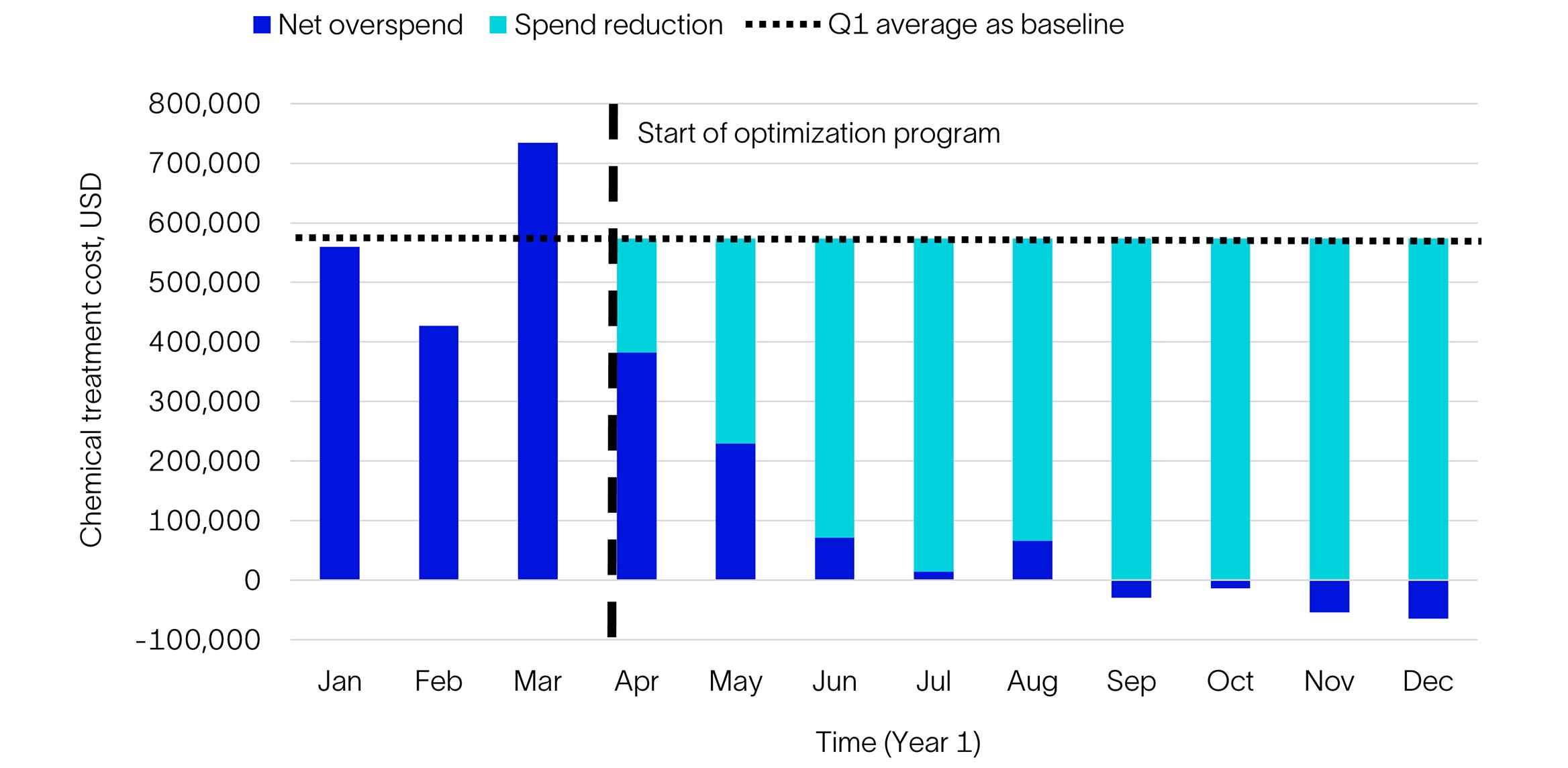
Sensor-based intelligent chemical injection saved operator USD 4.4 million across 9 months and 1,400 wells


SLB helped a major Permian Basin operator transform production chemical management by using a remote, intelligence-driven approach that improved effectiveness, reduced operational inefficiencies, and delivered measurable cost, safety, and environmental benefits.
A major operator in the Permian Basin was seeking to optimize its chemical injection program, encompassing nearly 1,400 producing wells spread across a vast geographical area. Manual inventory management, inconsistent treatment accuracy, and frequent field visits were increasing opex, environmental impact, and production risk.
The operator required a solution to enhance operational efficiency and reduce expenses, while maintaining asset integrity. The objective was to transition from a reactive, labor-intensive model to a predictive, intelligence-driven system with real-time visibility, proactive exception management, and optimized resource allocation.
SLB implemented a production chemical optimization program, combining advanced sensor technologies, centralized analytics, and AI-driven insights to transform chemical management operations. Pump monitor controller (PMC) units were deployed at all continuous injection locations while tank-level monitor (TLM) units were installed at noncontinuous injection locations. Real-time data ingestion and machine learning models enabled early anomaly detection, prediction of injection issues, and optimized treatment dosages.
Centralized workflows, including weekly operational reviews, ensured alignment with production targets. Remote recalibration and adjustments combined with AI-driven prioritization reduced unnecessary field interventions while maintaining treatment performance and asset integrity.
Impact
This integrated approach delivered significant improvements in performance, cost efficiency, safety, and environmental impact. It
- reduced manual inventories by 88%
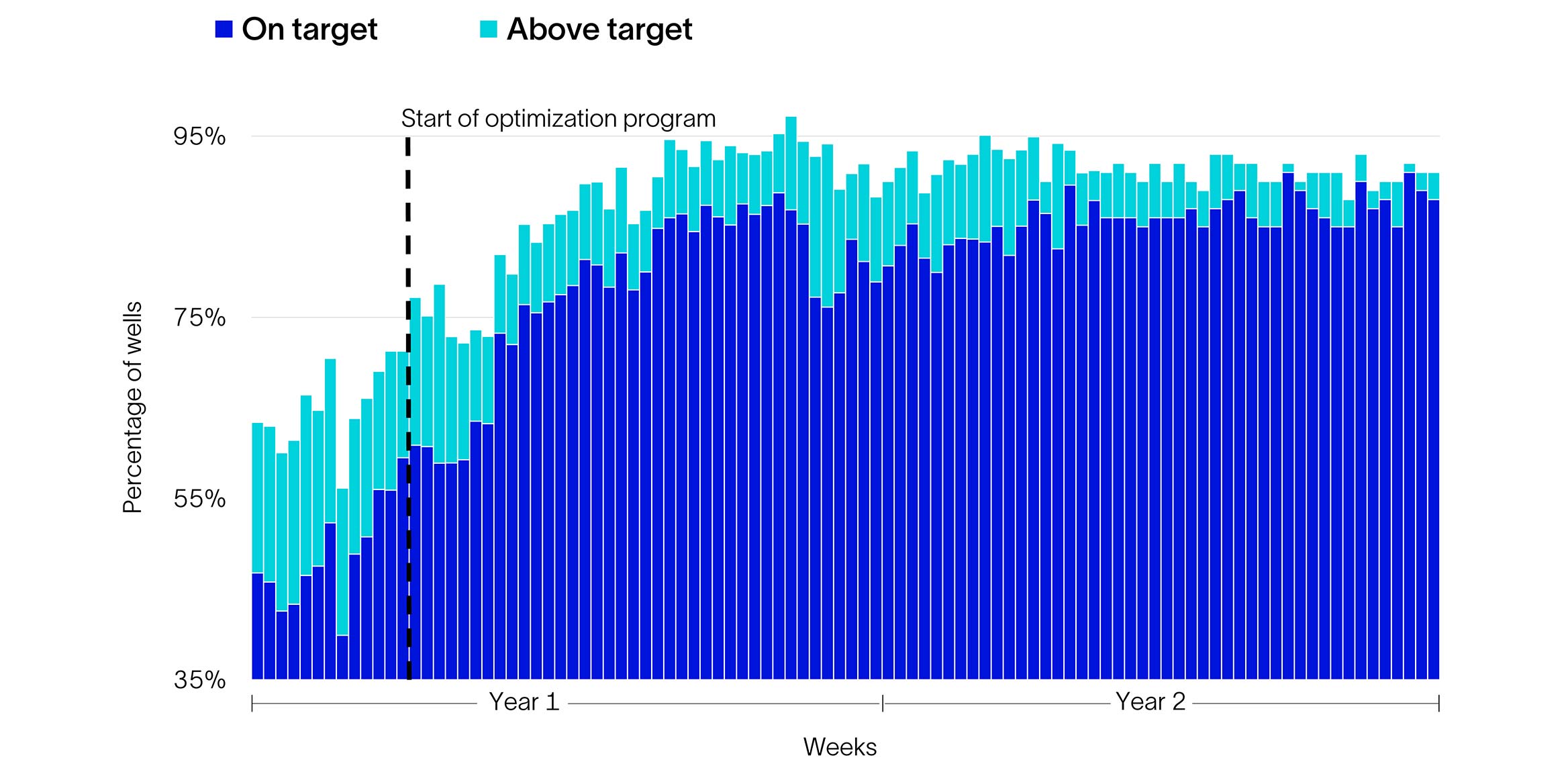
- increased on- or above-target injection performance from 63% to 92%
- achieved USD 4.4 million in net savings in the first 9 months through reduced chemical spend
- decreased HSE risk by eliminating ~942,000 miles of driving annually
- lowered emissions by avoiding 47,113 truck rolls/year.
By integrating real-time monitoring with predictive analytics and remote interventions, SLB enabled the operator to optimize chemical spend, improve treatment consistency, and enhance operational confidence across the asset base.