SLB provided end-to-end solutions from presurvey modeling to data
acquisition, processing, and interpretation, delivering the following:
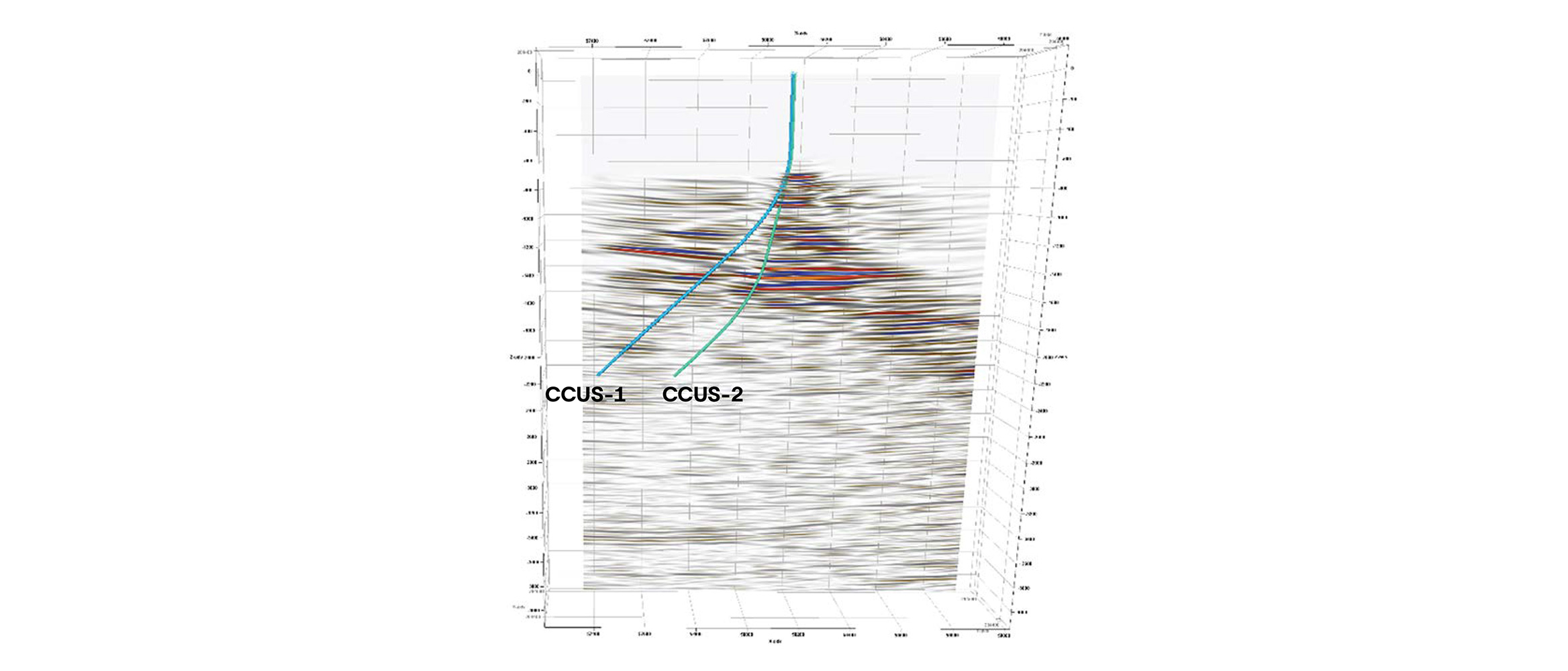
Vertical seismic profiling (VSP): Optiq Seismic™ fiber-optic
borehole seismic solution was employed to acquire zero-offset
VSP and walkaway VSP datasets simultaneously from two wells.
This hybrid acquisition strategy—utilizing both land-based vibrator
sources and river-deployed mud guns—ensured comprehensive
subsurface coverage. By leveraging fiber-optic acquisition,
an estimated 90% reduction in both operating time and CO2
emissions could be avoided (based on SLB and industry benchmarks
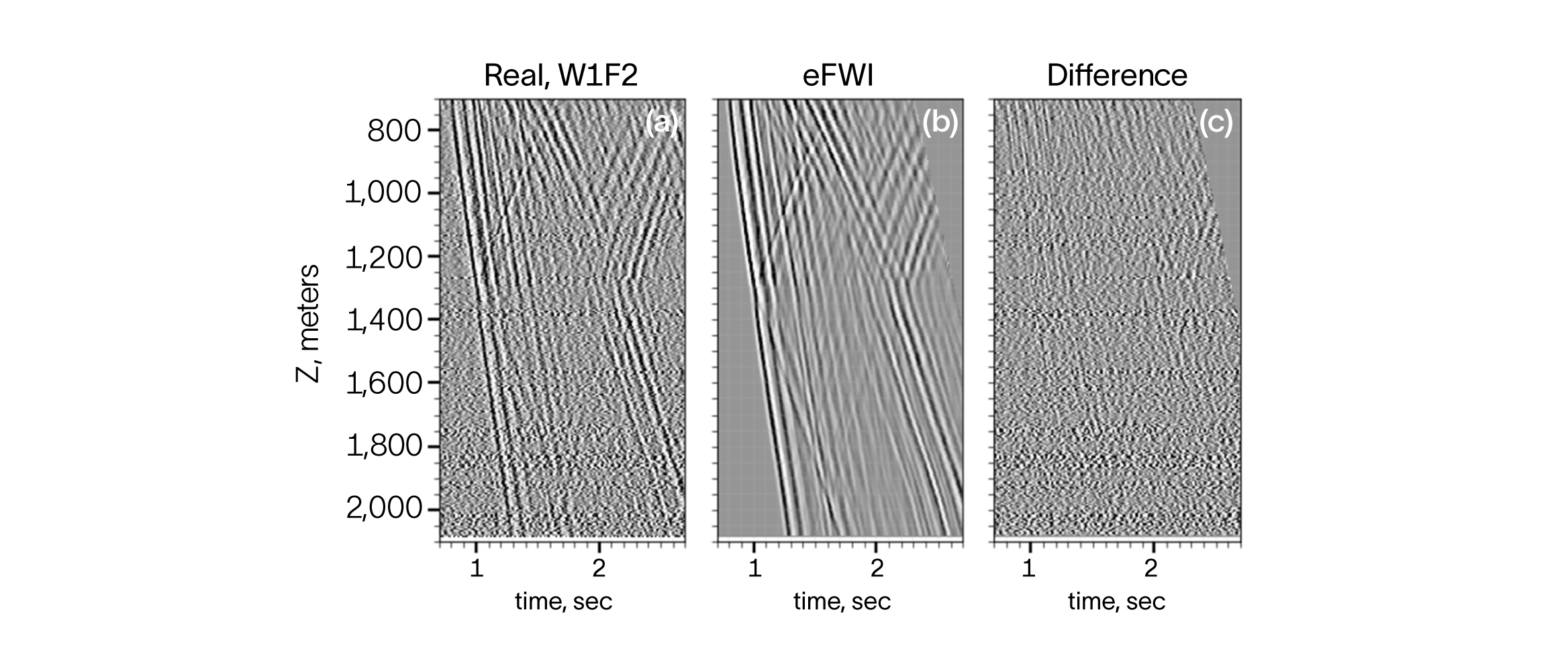
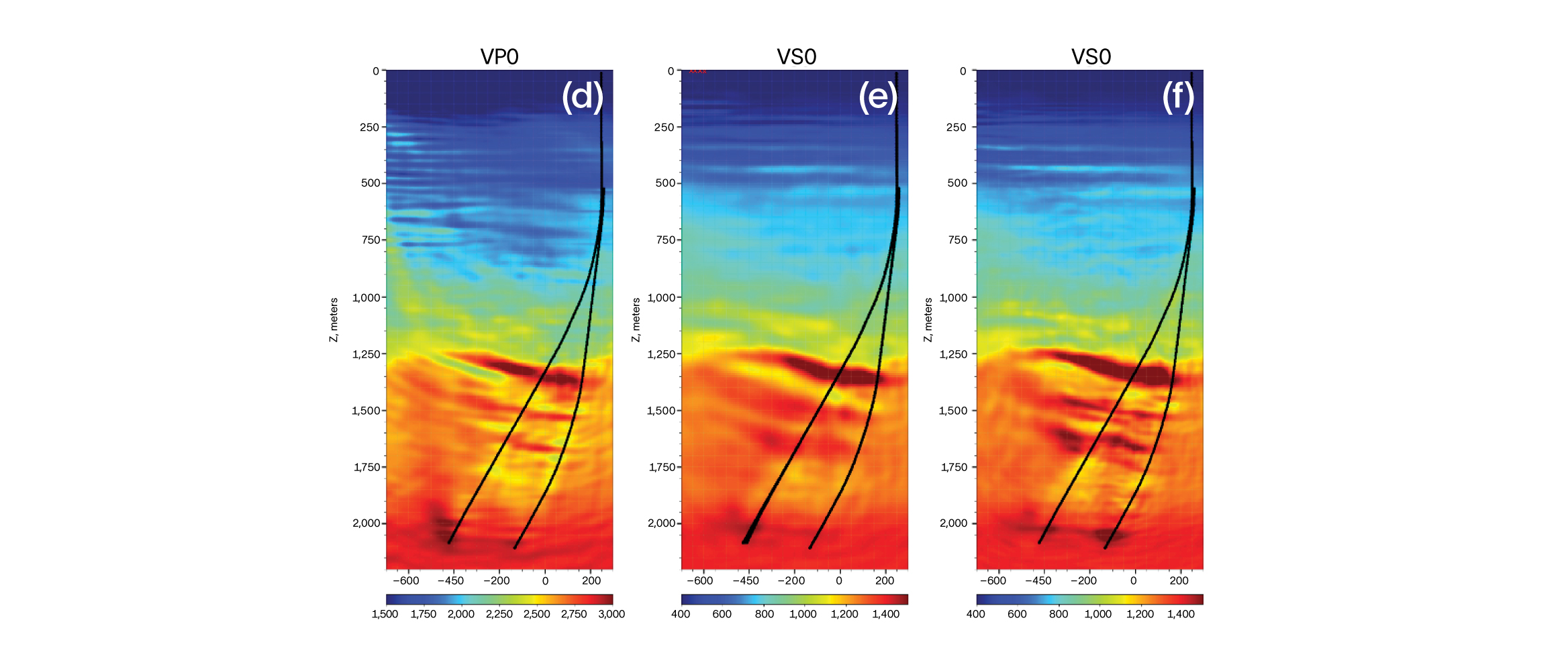
for fiber-optic DAS vs. geophones). The recorded datasets were
processed using the new automated elastic full-waveform inversion
(eFWI) workflow, resulting in high-resolution subsurface images
delivered with high fidelity in hours as opposed to days with
manual processing.
Crosswell seismic acquisition: The project marked the first
worldwide implementation of DAS in crosswell seismic data
acquisition. By using the DeepLook-CS™ crosswell seismic imaging
service, we achieved enhanced resolution in subsurface imaging
and reservoir characterization. This innovative approach
demonstrated the potential of DAS technology in pushing the
boundaries of seismic imaging techniques.
Microseismic monitoring: the Real-Time Induced Seismicity
Monitoring (RT-ISM) was utilized for continuous microseismic
monitoring during CO2 injection. Automated event detection
algorithms enabled real-time identification and extraction of seismic
events, which were then transmitted to processing centers for
immediate analysis without the need of manual processing
and personnel on site.
Injection profiling: Fiber-optic technology facilitated precise
monitoring of CO2 injection processes by providing real-time
DTS along the borehole.
This capability allowed operators to assess reservoir integrity,
optimize injection rates, and mitigate risks associated with CO2
migration. The use of low-frequency DAS data further enhanced
reservoir characterization efforts, aiding in the selection of suitable
injection sites and validation of storage capacity.
Throughout the entire project, the fiber-optic DAS data was
recorded with the latest generation of optical generator, ONYX™
peta by Sintela. Sintela is a technology development organization
that designs and delivers world-leading fiber sensing systems
for industrial markets, including energy, power, rail, road, security,
telecoms, and urban monitoring. SLB and Sintela entered into
an agreement in 2022 to codevelop distributed fiber-optic sensing
(DFOS) solutions, enabling simpler, cost-efficient fiber-optic
interrogators and digital workflow deployment. Overall, the Minami-Aga
pilot project demonstrated the SLB Optiq Seismic solution offers
a cost-effective, scalable solution for comprehensive subsurface
monitoring in CCS projects.
By revolutionizing traditional approaches, our integrated full
offering of fiber-optic sensing technologies contributes
to optimizing operational efficiency, ensuring environmental safety,
and supporting informed decision-making in the pursuit
of sustainable climate mitigation strategies.