Perform wellbore cleanouts including sand lift, tubing-scale removal, sand screen cleaning, and near-wellborn skin removal.
Novel coiled tubing cleanout restores flowline capacity, avoiding costly replacement
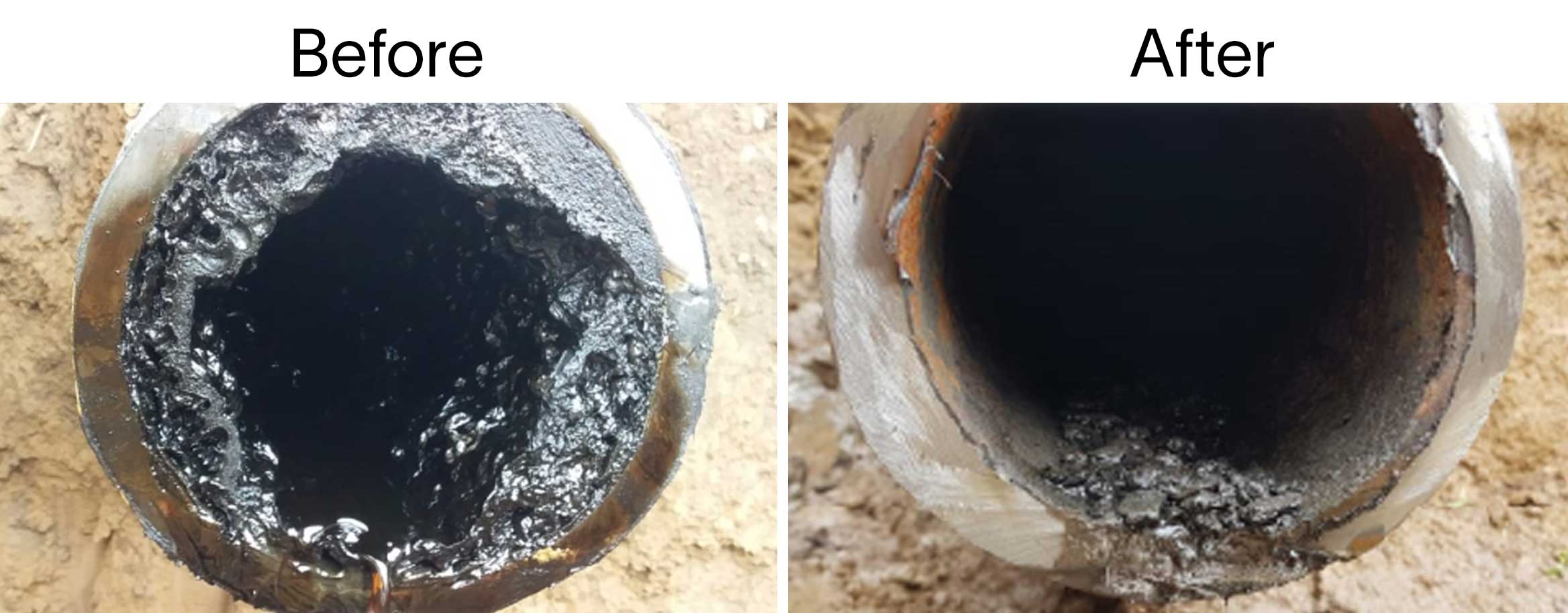
To restore the injectivity of surface flowlines, SLB engineers developed a novel coiled tubing (CT) cleanout method, adapting both the surface and downhole CT equipment to mechanically recover the flowline capacity. This approach eliminated the need for the operator to replace the flowlines, resulting in significant cost savings.
An operator in Ecuador operates mature onshore fields where large amounts of formation water are produced together with oil and gas. This water is routed through surface flowlines from producer wells to injector wells, where it is reinjected into subsurface aquifers. Despite treatment with scale inhibitors, corrosion inhibitors, surfactants, and biocides, deposits of paraffins, asphaltenes, and scale still form inside the flowlines. Over time, these deposits restrict flow, reducing injection rates and causing bottlenecks that limit production and revenue.
Eventually, the clogged sections of the flowline must be replaced, which involves significant capital costs. The operator wanted an alternative solution that would avoid these costly replacements while maintaining flow rates for transporting formation water. Additional water treatment, filtration, and flocculation had been considered, but developing the various facilities was uneconomic.
SLB engineered a novel CT cleanout method that remediated the flowlines and restored injectivity. Both surface and downhole CT equipment was used to recover the flowline capacity mechanically. This included a base to horizontalize the injector head, tubing force models to predict reach and plan access points, a BHA for mechanically removing blockages, and hydraulic simulations to ensure proper activation of the BHA.
As a result of this solution, the operator saved significant flowline replacement costs, increased asset utilization, and reduced downtime of the injection flowlines.
For more information, read SPE-206215-MS.