SLB deployed the ExaCT access service, an electrically enabled CT access solution integrating a real-time downhole CT measurement system, an electrical multilateral module (eMLT), a direction and inclination (D&I) module, and the multicycle system for actuated response (MSAR). This solution replaced conventional hydraulic workflows with an electrically controlled, data-driven approach that improved lateral access and confirmation.
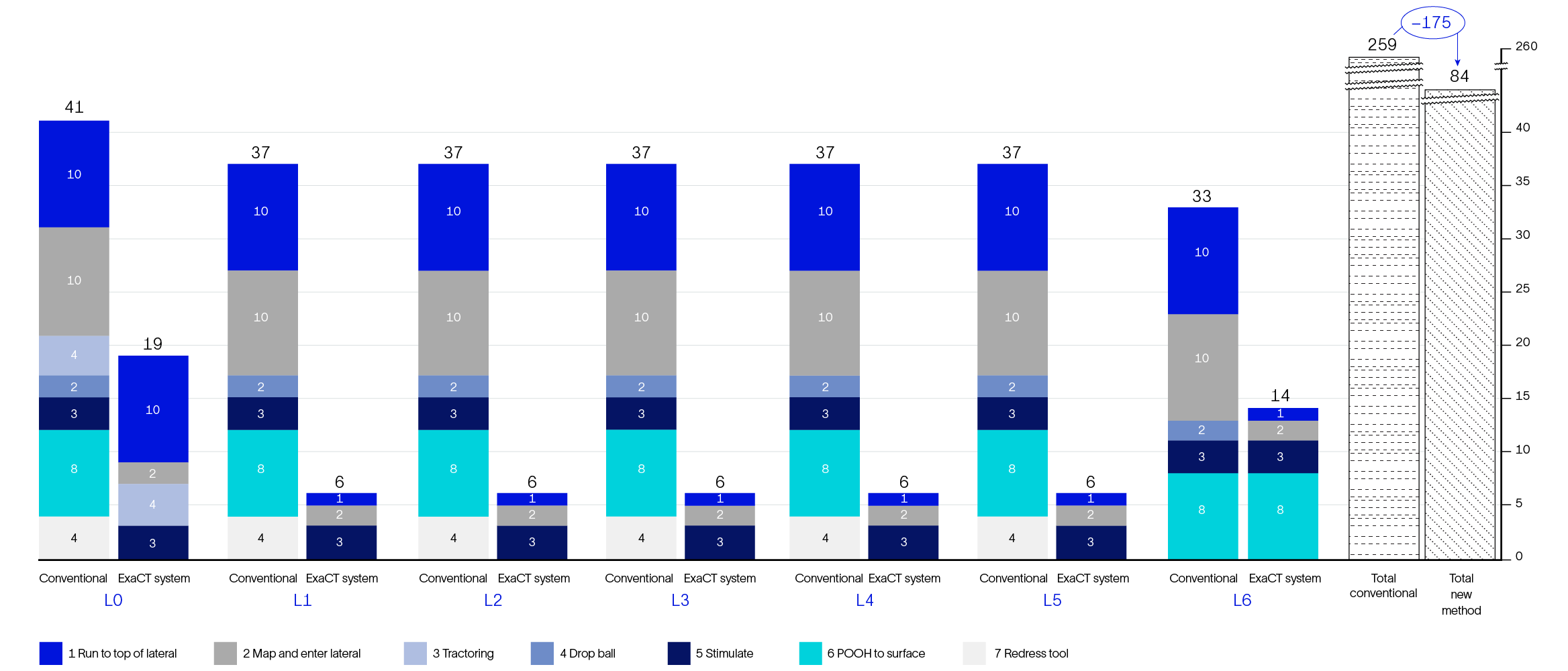
The electrically actuated system enabled lateral profiling and confirmation within 15 to 20 minutes per lateral, compared with several hours using conventional methods. Real-time measurements, including gamma ray, pressure, depth correlation, and tool orientation, provided clear confirmation of lateral entry without requiring the tool to reach total depth.
The MSAR enabled on-command, selective actuation of the hydraulic tractor, as well as redirecting the CT flow to the CT annulus to pump the stimulation treatment in an uphole direction, thus avoiding hydraulic isolation of the CT tractor and negating multiple CT runs.
Electrical telemetry delivered continuous power and high-quality real-time data throughout the operation, eliminating the limitations of battery-powered systems. Selective electrical actuation enabled seamless transitions between intervention modes without isolating any part of the BHA. This capability maintained compatibility with a hydraulic CT tractor used to extend reach in deeper laterals.
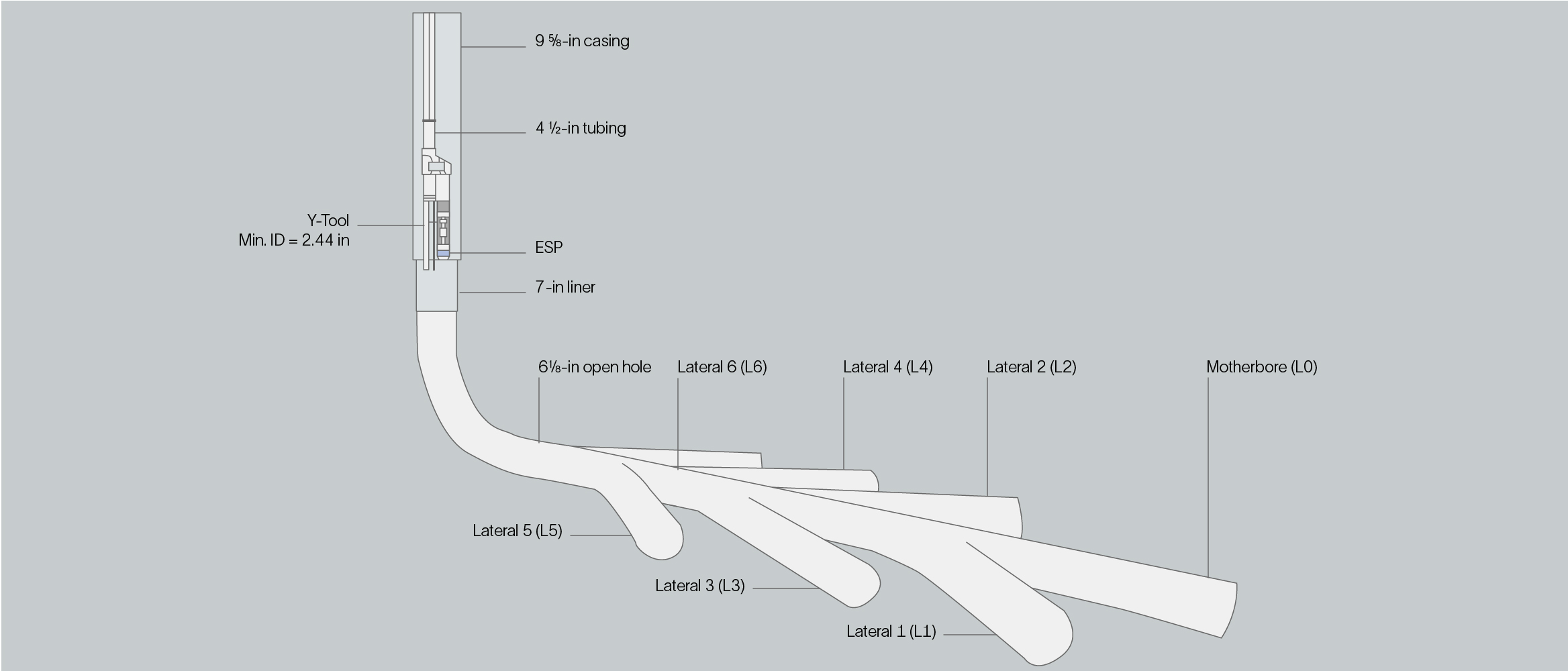
The operation accessed and stimulated six openhole laterals and the motherbore, achieving approximately 21,200 ft of reservoir contact. The full intervention was completed in two CT runs, reducing the number of runs typically required with conventional techniques. The operation saved more than 175 hours of offshore rig time and reduced water consumption by over 3,000 bbl by eliminating fluid-intensive hydraulic processes.
The ExaCT access service established an efficient approach for multilateral well intervention, enabling faster execution, reduced resource use, and improved reservoir connectivity.