Electrically actuated cleanout restores offshore production

minus
Norway, Europe, Offshore

Aker BP restored production in a depleted offshore well affected by tubing blockages that limited access to total depth. SLB deployed the cleanout service of ExaCT™ electrical downhole CT control system, combining electrically actuated flow control with real‑time downhole measurements to enable condition‑based cleanout. The operation reduced intervention time by 30% and lowered liquid and nitrogen consumption by about 20%.

The operator needed to remove multiple chalk-induced tubing blockages and restore production in a depleted offshore well while maintaining continuous underbalanced conditions. The well had extended horizontal sections, low reservoir pressure, and a large ID completion, increasing the risk of fluid losses and CT sticking.

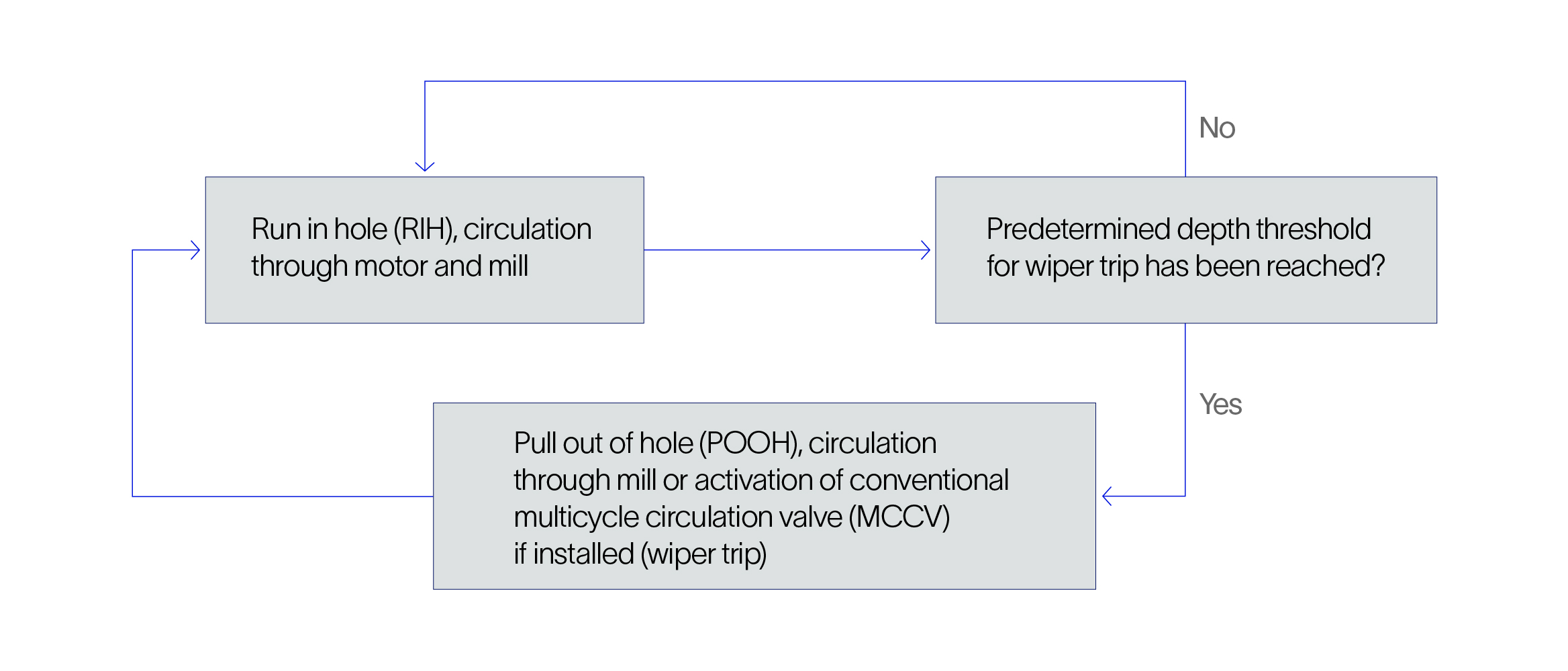
Previous cleanout methods relied on nitrified fluids exiting the motor and mill continuously during the operation, hindering accurate top-of-solids detection. These approaches required fixed, depth-based workflows that did not reflect actual downhole conditions and offered minimal optimization. As a result, operations required excessive circulation, high nitrogen consumption, and longer intervention times. These limitations also reduced operational flexibility and increased risk.

SLB deployed the ExaCT cleanout service to convert the cleanout into a condition-based workflow. The service integrates the multicycle system for actuated response (MSAR) tool with electrical telemetry. On first use, the ExaCT cleanout service delivered adaptive flow control and continuous downhole visibility.

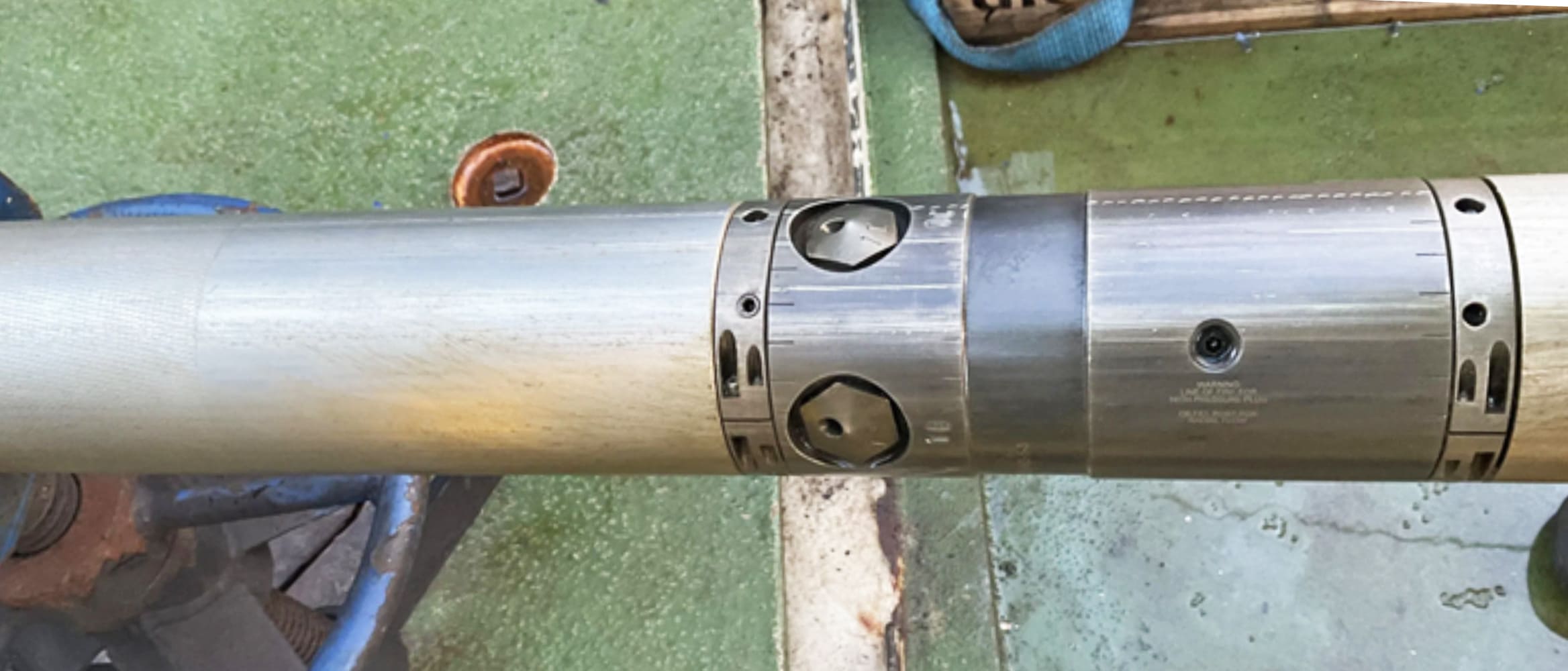
The MSAR tool enables operators to switch flow between milling and circulation modes on command without stopping pumps or cycling pressure. This capability maintains continuous pumping and supports operation in nitrogen-assisted environments where conventional hydraulic systems cannot shift reliably.

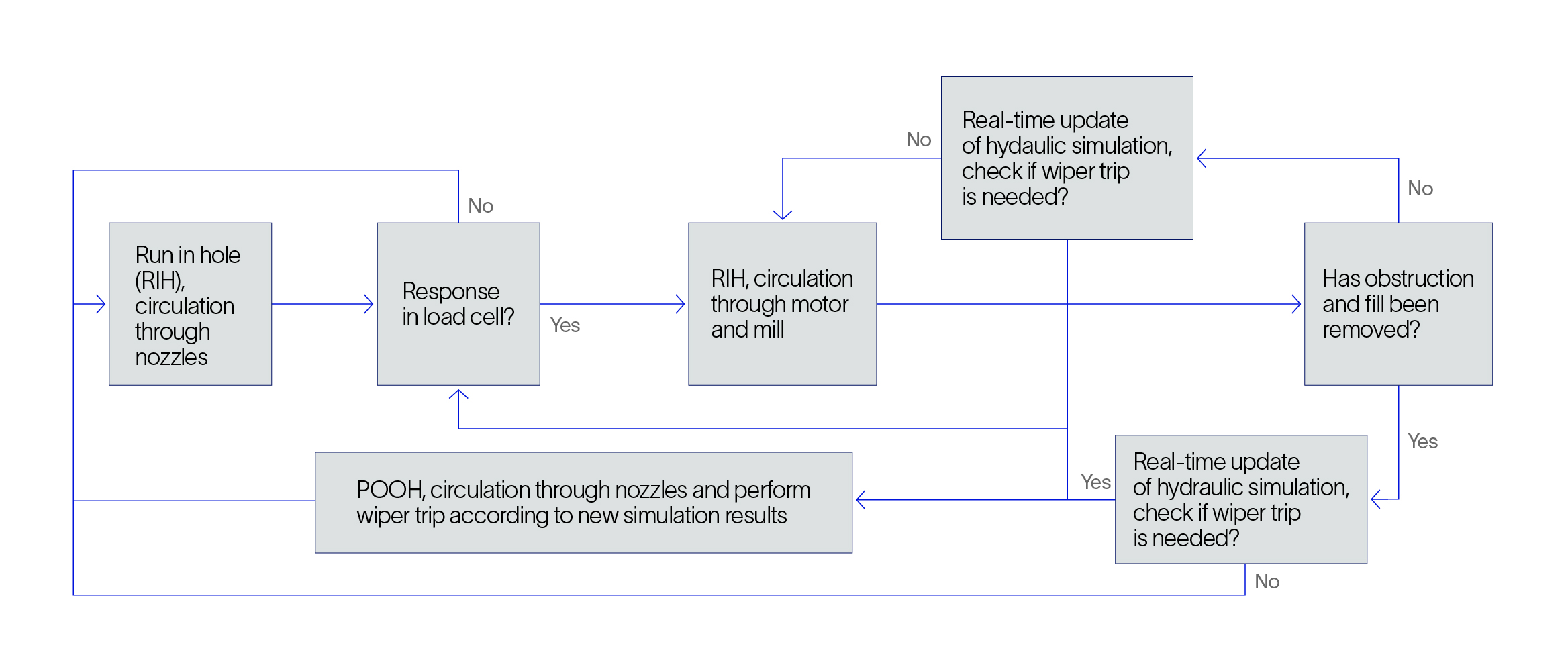
The ExaCT cleanout service provides real-time measurements of torque, weight, pressure, and motor response. These measurements helped identify obstruction type and location. The operator directed flow through the motor only when required to mill restrictions, then immediately switched to optimized circulation once the wellbore cleared. This approach reduced unnecessary tool exposure and improved efficiency.

The condition-based workflow replaced fixed cleanout programs and eliminated redundant circulation cycles. The operation finished about 30% faster than similar wells, saving approximately 12 hours of offshore intervention time. Liquid and nitrogen consumption decreased by about 20%, improving logistics and reducing overall resource use.

The well was cleaned to total depth, restored to full access, and returned to production within the expected performance range. The operation established a repeatable workflow for similar depleted offshore wells.

Graphic showing the dynamic workflow after ExaCT cleanout service.
Dynamic workflow after ExaCT cleanout service.
Graphic showing the static workflow before ExaCT cleanout service.
Static workflow before ExaCT cleanout service.
Photo of the MSAR tool showing the cleanout ports.
MSAR tool showing the cleanout ports.

For more information, read SPE-231393-MS.

Products Used