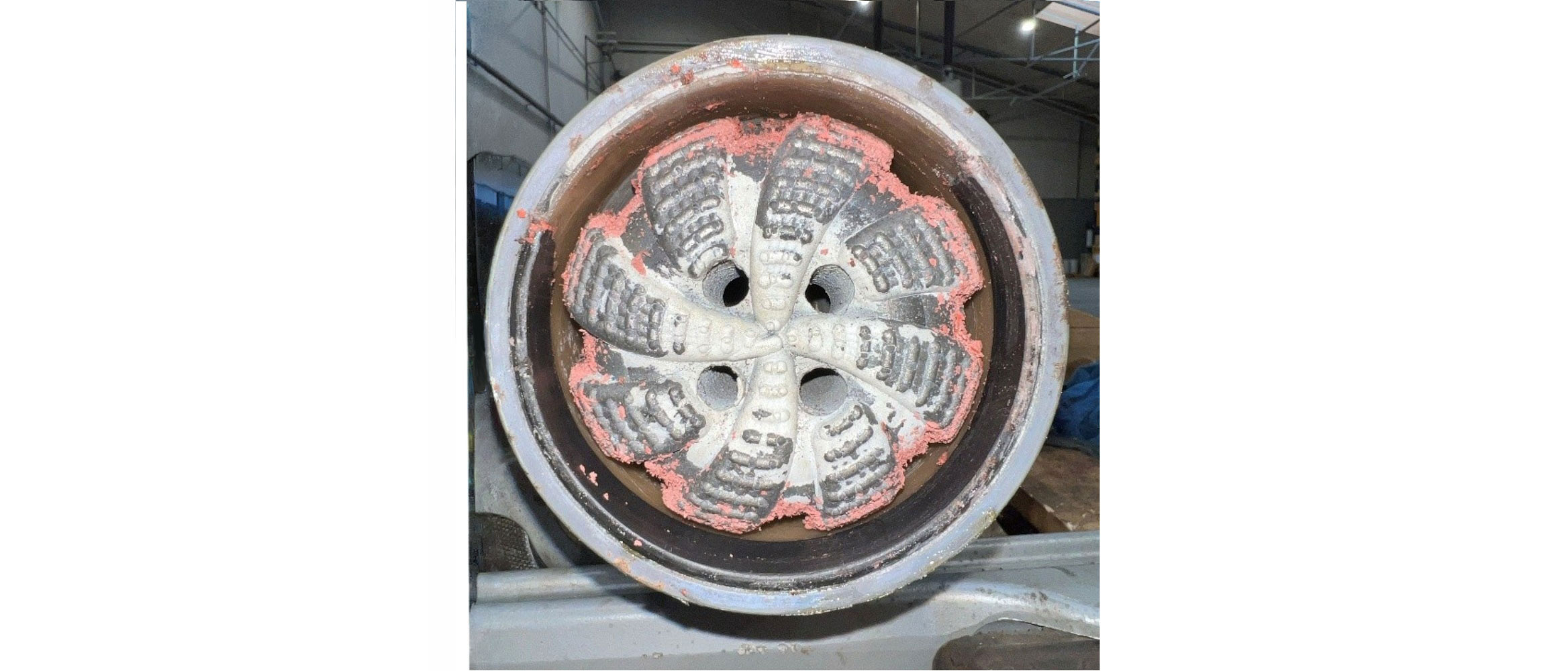
Working with the wireline team, SLB initially tested a tractor-conveyed milling configuration to remove the restrictions. However, rapid tractor movement prevented effective machining of the corrosion barrier rings.
To achieve controlled material removal, SLB deployed the ReSOLVE machining tool together with anchor and stroker tools and a high-speed MDX diamond bit. Prior to the operation, a dedicated system integration test (SIT) was performed to determine the optimum anchoring force required to maintain stability while protecting the GRE tubing from damage. This testing established a repeatable operating window that could be applied confidently throughout the intervention.
During milling operations, real-time measurements of penetration rate, WOB, torque, and pull force enabled continuous monitoring and optimization of performance. The controlled anchoring and stroking process ensured that the corrosion barrier rings were gradually machined away rather than displaced into the wellbore. Operational parameters, including bit speed and stroker force, were continuously adjusted to maximize efficiency and maintain consistent milling performance.
SLB successfully removed all 24 damaged corrosion barrier rings using an automated and repeatable process that averaged approximately 10 minutes per restriction. After each machining sequence, tool passage was confirmed in both directions to verify complete removal of the obstruction and unrestricted access through the tubing. The operation restored full wellbore access for future intervention activities in approximately two days, minimized the risk of damage to the GRE lining, and established a proven methodology for future corrosion barrier ring remediation campaigns. Key technologies included the ReSOLVE machining tool, ReSOLVE anchor and stroker tools, and the MDX diamond bit.