Restoring geothermal production with an extreme-high-temperature expandable steel patch

minus
Asia Pacific, Philippines, Onshore

Energy Development Corporation (EDC) was seeking to revive a high-value geothermal well that had been offline for >6 years. SLB used its Saltel extreme-high-temperature (extreme-HT) expandable steel patch to seal off a persistent cold water inflow and restore production while minimizing internal diameter (ID) reduction—a key requirement.

The Philippines is the world’s third-largest geothermal power producer, and EDC is the country’s largest geothermal operator, with nearly 1,255 MW of installed capacity. The company’s mature asset base includes a number of wells that are nonproductive because of well integrity issues—such as casing collapse, corrosion, or parted casing—that restrict or prevent flow.

EDC engaged SLB to restore production from a high-value geothermal producer in Leyte that had been offline for more than 6 years. The target well was drilled and completed in 2014 and achieved a peak output of 15 MW in 2018. In early 2019, a 13 3/8-in casing collapse and break forced the well offline. A subsequent relining operation installing a 9 5/8-in string to ~800 m and cementing through a DV tool reduced the effective flow area and led to a 50% production decline.

When attempts to redischarge the well failed, diagnostics revealed a persistent cold water inflow through the cementing port. The DV tool had not sealed properly after the cement job, enabling sustained leakage and creating a temperature inversion. As a result, the well remained shut in for more than 6 years, representing an estimated USD 10 million annual production loss.

SLB was tasked to

  • permanently isolate the cold water inflow
  • reestablish well integrity while minimizing loss of ID
  • enable discharging the well and restoring geothermal production
  • demonstrate a scalable solution for patching geothermal wells across EDC’s broader asset portfolio.
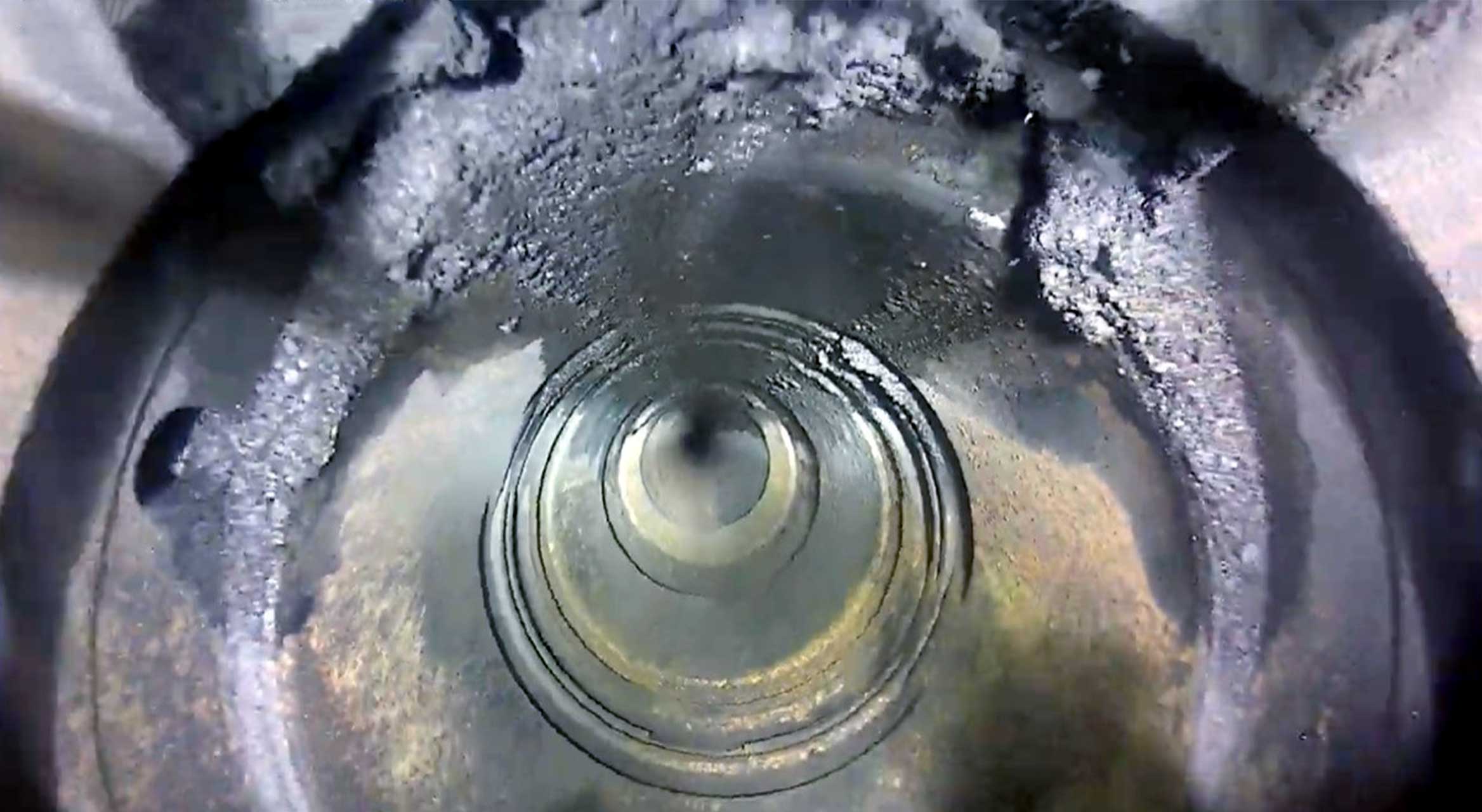
 Internal view of wellbore with a camera during leak investigation.
Internal view of the wellbore during the leak investigation revealed an issue with cement integrity at a depth of about 786 m.

To address the challenge, SLB installed a 9 5/8-in Saltel extreme-HT expandable steel patch, an ideal solution for high‑temperature geothermal well repair where mechanical robustness, corrosion resistance, and minimal ID reduction are essential.

The thin-walled patch had little impact on casing ID, enabling up to 8-MW equivalent production. A 7-m patch length ensured full coverage of the leaking cementing ports, while the controlled, top-down expansion sequence maximized operational reliability. The patch was expanded in just 3.5 hours, drift tested, and verified before retrieving the running tool. A downhole video camera run confirmed correct placement and complete sealing of the leak.

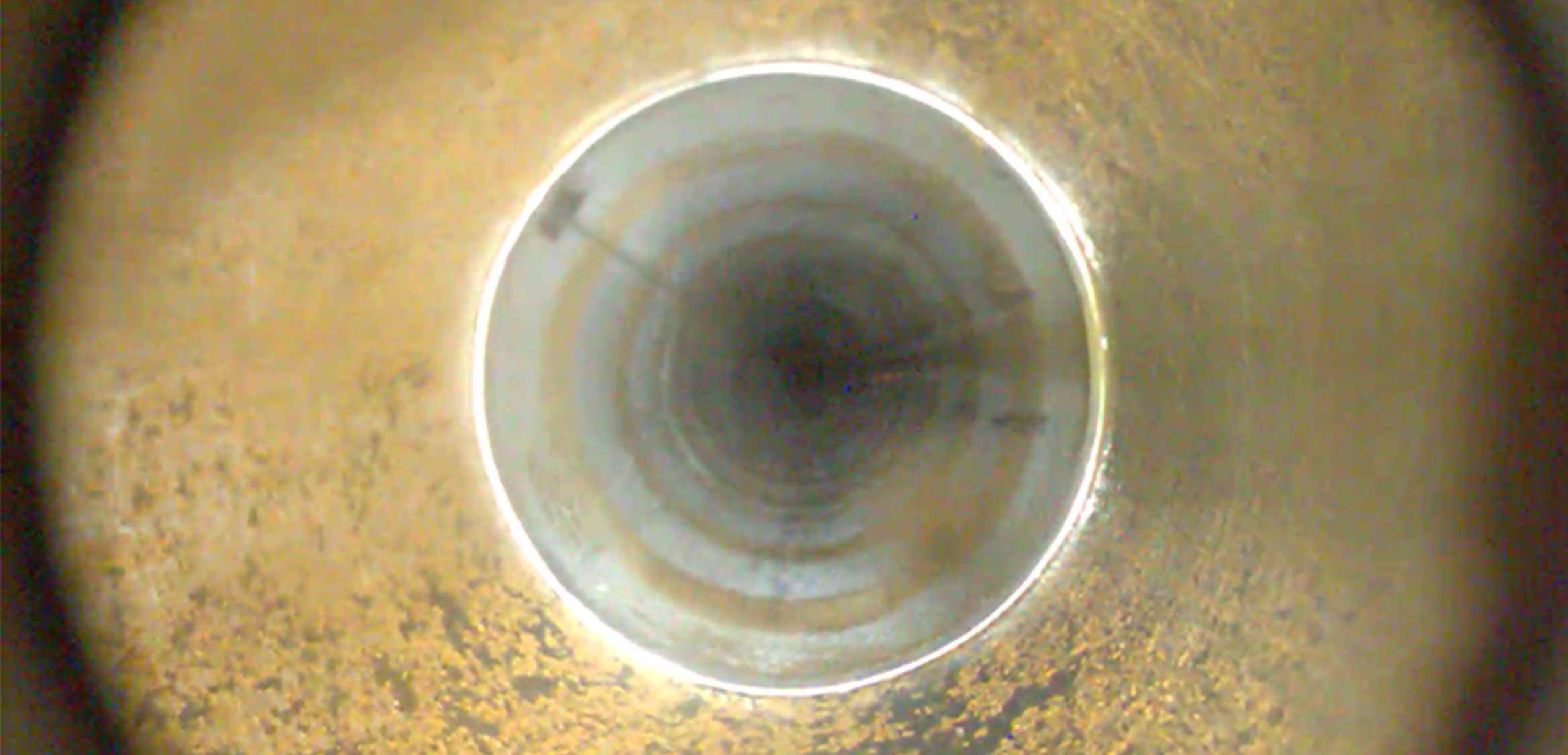
Internal view of expanded casing patch with the camera positioned just above it.
Internal view of expanded steel patch from the top end showed that it fully sealed off the leak.

Permanently sealing off the cold water inflow enabled restoring the thermal profile required for geothermal discharge after 6 years of being offline. EDC was very pleased with the geothermal production recovery achieved and intends to leverage SLB geothermal expertise and advanced expandable technology for other wells that are experiencing similar casing integrity issues and thus support the Philippines’ long-term geothermal energy strategy.

Products Used