25 years spent perfecting a piece of software

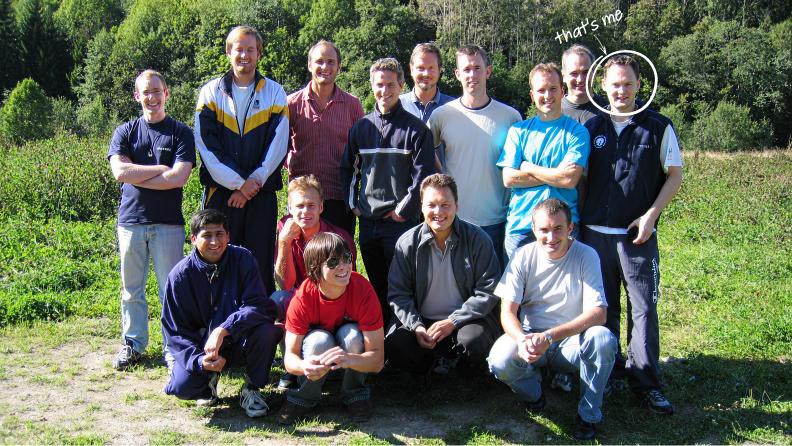
I’ve spent my entire 25-year career in the oil and gas industry and at SLB working on one piece of software: Petrel.
I joined when it wasn’t yet a platform or the industry standard for subsurface modeling; just a small, ambitious product built by a handful of engineers at a company called Technoguide in Norway.
In those early days, subsurface modeling was slow, fragmented, and not optimized for the average user. Interpretation, gridding, and simulation preparation lived in separate tools, often owned by different disciplines.
Our goal was simple: bring everything into a single shared earth model and let users see the subsurface as they built it. That idea reshaped workflows across the industry and laid the foundation for modern integrated modeling.
Today, subsurface modeling is undergoing another profound shift driven by artificial intelligence (AI).
As someone who uses AI on a daily basis, what excites me most isn’t just how it improves productivity, but how it’s beginning to democratize subsurface modeling and simulation.
Petrel has always been highly capable. However, like any large, complicated piece of software, leveraging its capabilities came with a steep learning curve. AI-assisted workflows are changing that by helping users understand data, derive insights, and automate setup tasks that once took months or years of experience to master.
For early-career geoscientists and engineers, this means spending more time thinking about why a model behaves the way it does, rather than struggling with how to build it.
This shift has also influenced how Petrel itself is built.
When we introduced the Ocean API in 2006, it marked a turning point from a closed application to an extensible platform. Ocean enabled customers to embed their own plug-ins directly into Petrel workflows, a bold shift that only a company comfortable with disruption could make.
Today, that same openness allows AI-driven tools—often built by small teams or individual developers—to integrate seamlessly and reach users far beyond their original creators.
If you ask me, the real transformation from AI isn’t speed, it’s accessibility. We’re moving toward a future where subsurface software can interact with and guide users as they look to make reservoir decisions.
After decades of developing Petrel, it’s deeply rewarding to see the software continue to remain relevant and become even more powerful in the age of AI. Not unlike SLB itself, don’t you think?
