Bringing game-changing innovation to Ecuador

Acquiring high-quality borehole formation images has always posed difficulties for operators. It’s a challenge I know all too well, having spent the last 20+ years working as a drilling engineer across various fields in Central and South America, along with the Middle East.
Limitations tied to mud type, borehole size, and post-drilling conditions, like formation washout, frequently compromise data quality. Traditional imaging solutions also require the use of additional tools in the bottom hole assembly (BHA), resulting in extra trips and tubulars, which increases complexity, rig time, and operational risk.
For decades, drilling engineers have accepted (albeit begrudgingly) that these issues are unavoidable—just “something you have to deal with” when performing borehole imaging.
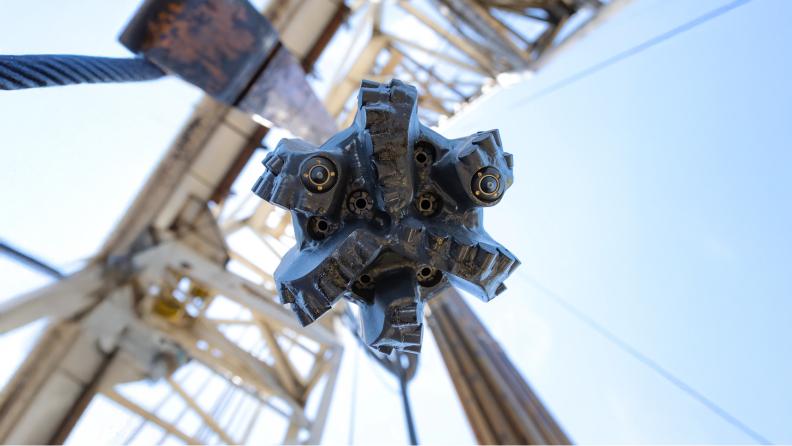
But that all changed when we introduced the Retina at-bit imaging (ABI) system, a breakthrough that embodies SLB’s strength in designing advanced tools that simultaneously withstand extreme downhole conditions and deliver precise data in real time.
Retina ABI captures high-frequency cutter force data (independent of drilling environment) and converts it into azimuthal measurements to produce high-resolution borehole images. Which means formation characterization and rock property evaluation can now be achieved directly from the bit, without adding extra tubulars.
Our client in Ecuador immediately recognized the game-changing benefits of this revolutionary technology:
- Universal applicability across any borehole size, BHA, or mud type
- Imaging while drilling, eliminating dedicated logging runs
- Reduced stuck-pipe risk by avoiding extra tubulars that require stabilizers, which limits the annular clearance.
Across other field deployments in South America and abroad, Retina ABI has consistently exceeded customer expectations.
Compared to offset well data, the clarity and richness of the images has provided unprecedented insights into formation properties (e.g., bedding dips, layers characterizations, textural variations, etc.).
If you ask me, Retina’s existence marks the beginning of a new era—one without limitations. High-resolution imaging is now possible in any environment, while saving rig time and reducing operational risk.
I’m excited to be at the forefront of such a disruptive innovation and truly believe the technology has the potential to advance the drilling industry in a meaningful way. So, if you’re an engineer who’s tired of saying “it’s just something we have to deal with,” then I’m empathetic.
Drop me a line and let’s talk!
