Energy optimization assistant
Tela™ agentic-AI assistant in OptiSite™ facility, equipment, and pipeline solutions

Overview
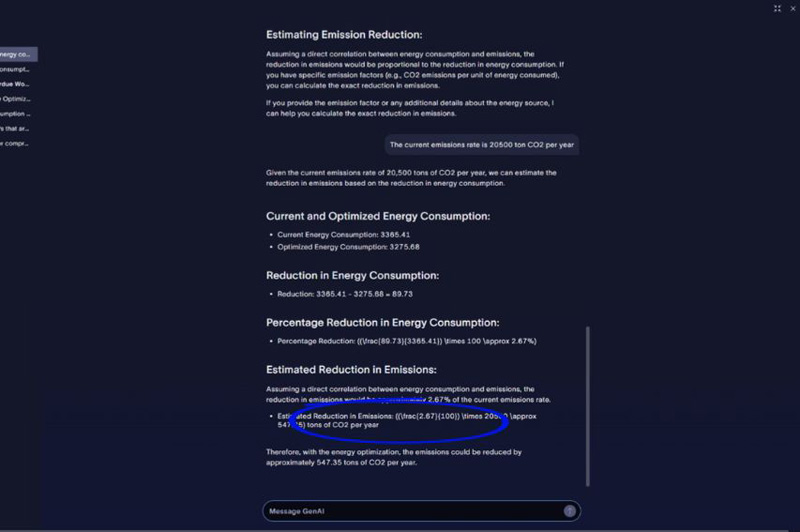
Tela in OptiSite solutions helps operators improve facility energy performance through AI-driven insights, process simulation, and real-time monitoring. By combining OptiSite solutions with physics-informed AI and Symmetry™ software process twins, the Energy Optimization Assistant continuously identifies inefficiencies, recommends corrective actions, and supports proactive energy management.
Challenges
- Energy performance data is often distributed across multiple facility subsystems.
- Identifying inefficiencies can require extensive manual monitoring and analysis.
- Optimization opportunities may go unnoticed until performance has already degraded.
- Limited visibility into real-time energy performance can delay corrective actions.
- Higher energy consumption increases operating costs and reduces overall efficiency.
Solution
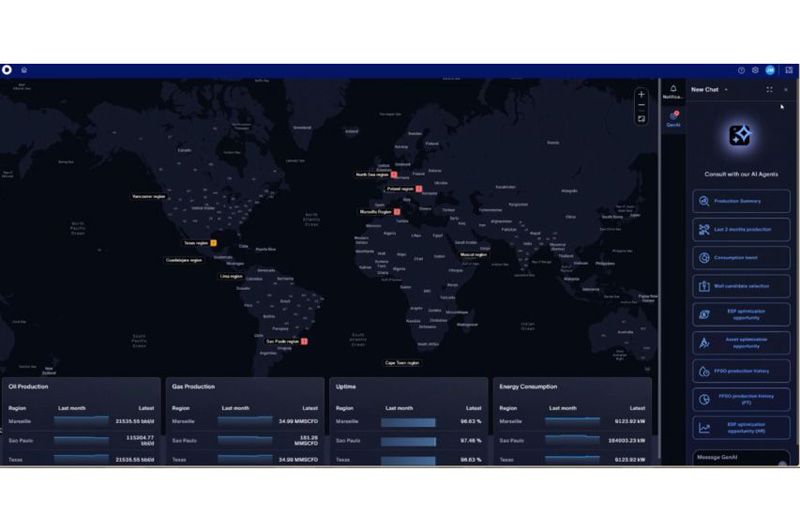
- Provide continuous visibility into facility energy performance.
- Combine physics-informed AI with process twins powered by Symmetry software.
- Analyze real-time operational data to identify inefficiencies and optimization opportunities.
- Deliver actionable recommendations to improve energy performance.
- Enable operators to move from reactive energy management to proactive optimization.
Features
- LLM-Powered Agents – Analyze real-time energy data and recommend optimization actions.
- Simulation Integration – Combine Symmetry software process models with AI reasoning to support precise optimization strategies.
- Data-Driven Insights – Leverage physics-informed AI models and domain knowledge to assess process efficiency and identify deviations.
Benefits
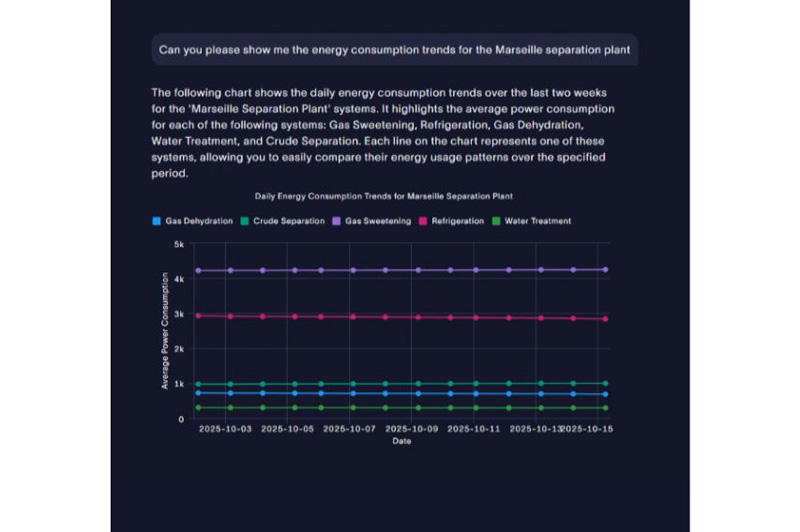
- Real-Time Performance Monitoring – Maintain continuous visibility into energy consumption across facility subsystems.
- Rapid Detection of Inefficiencies – Identify performance deviations and optimization opportunities as they emerge.
- Reduce Energy Use and Operating Costs – Receive recommendations that help minimize waste and improve operational efficiency.
- Automated Reporting – Generate contextual, natural-language outputs that reduce manual analysis and reporting effort.
- Proactive Energy Management – Act on insights sooner to improve facility performance and sustain efficiency gains.
