Innovative PDC bit combining Stinger conical diamond element and hydraulic port structure to optimize ROP
Hydraulically enhanced bit prevents bit balling while doubling ROP offshore
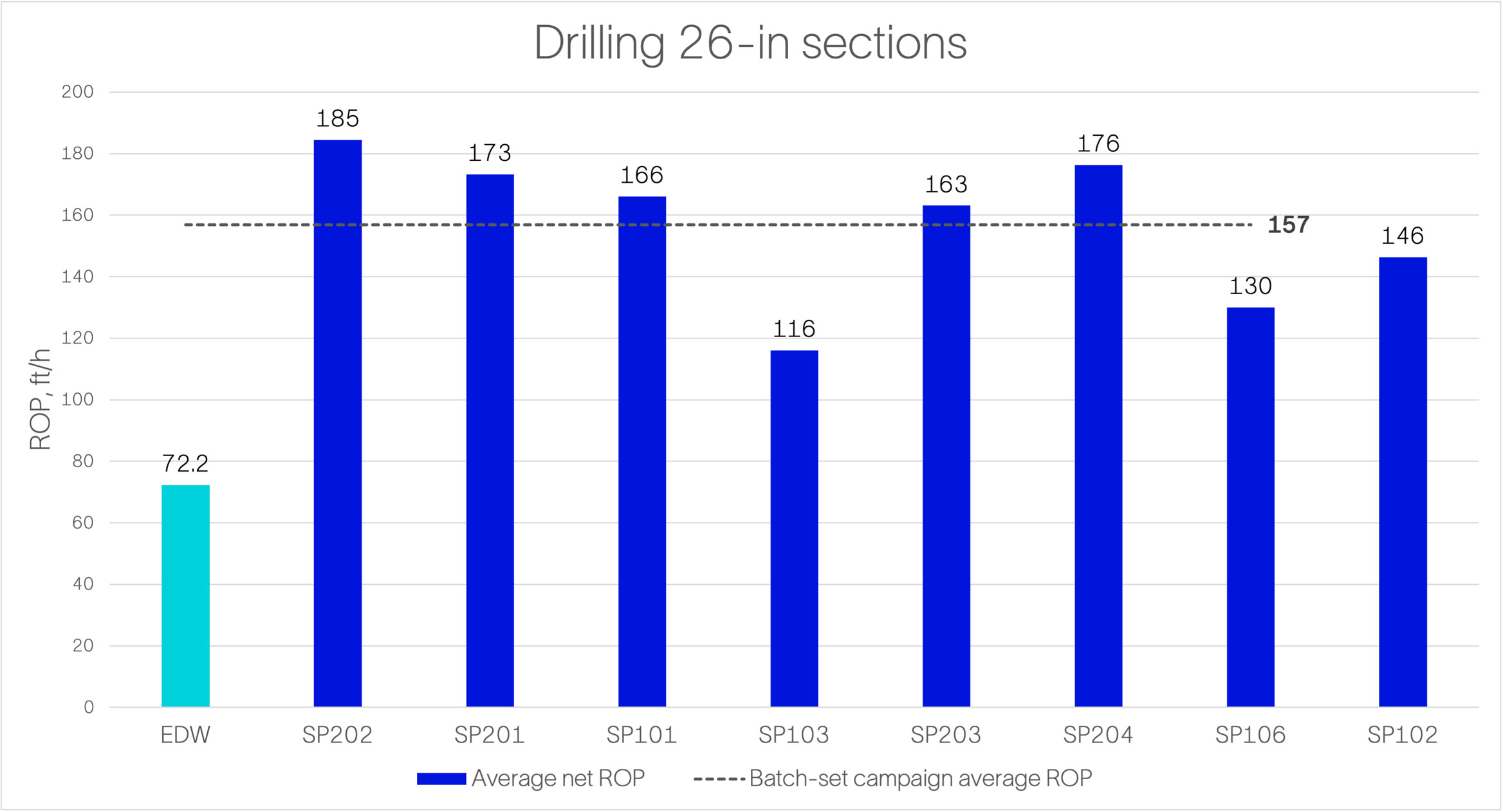
By deploying the CenterFlow™ hydraulically enhanced bit, Shell successfully prevented bit balling in a deepwater gumbo environment in the Gulf of Mexico, doubling the ROP from 72.2 ft/h to an average of 157 ft/h. NPT caused by mud shortages was prevented, and drilling fluid consumption was reduced while using the pump-and-dump technique, saving an estimated 2.8 days. This approach enabled efficient drilling of eight 26-in sections without any mitigation actions, establishing a new performance benchmark for similar fields.
While drilling a 26-in section in the Gulf of Mexico’s deepwater gumbo formations, Shell faced significant challenges. The primary issue was bit balling while drilling sediments above the salt—clay adhering to the drill bit—which reduced ROP from 200 ft/h to as low as 60 ft/h. This caused higher surface torque, increased standpipe pressure, and a reduced annular diameter, resulting in reduced ROP from 200 ft/h to as low as 60 ft/h, leading to excessive mud consumption and NPT delays. Previous mitigation efforts, such as adjusting drilling parameters, cycling mud pumps, and using sweeps, failed to produce consistent results. To drill the section in a single run at the highest possible ROP while conserving drilling fluids and minimizing downtime, a more effective solution was required.
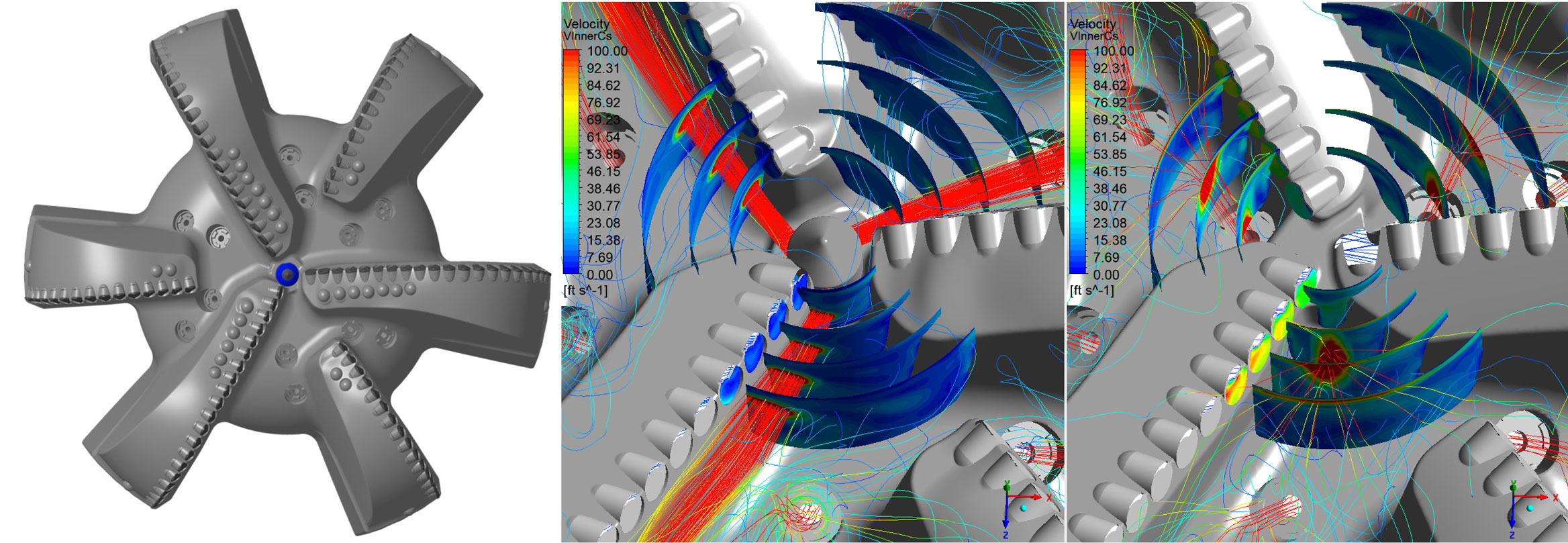
To address bit balling, Shell deployed the SLB CenterFlow bit. This technology’s innovative design enhanced fluid distribution through the bit’s cutting structure, improving cutter cleaning, cooling, and evacuation of cuttings stuck between the bit teeth and blades, preventing the accumulation of clay and gumbo that impedes drilling performance. The bit also features an optimized blade count—reduced from eight to six—which further improved fluid flow distribution and upflow efficiency. Unlike the offset well which required extensive mitigation measures, where extensive mitigation actions were required, the new bits eliminated the need for such measures. Even in the presence of massive gumbo at the wellheads, the bits maintained high performance, achieving an average ROP of 157 ft/h—more than double the 72.2 ft/h achieved on the offset well. Drilling-fluid use remained within planned limits, with 292,400 barrels of drilling fluids consumed across all eight wells. No NPT occurred due to mud shortages, and the estimated time savings from the CenterFlow bit totaled 2.8 days for the entire campaign.