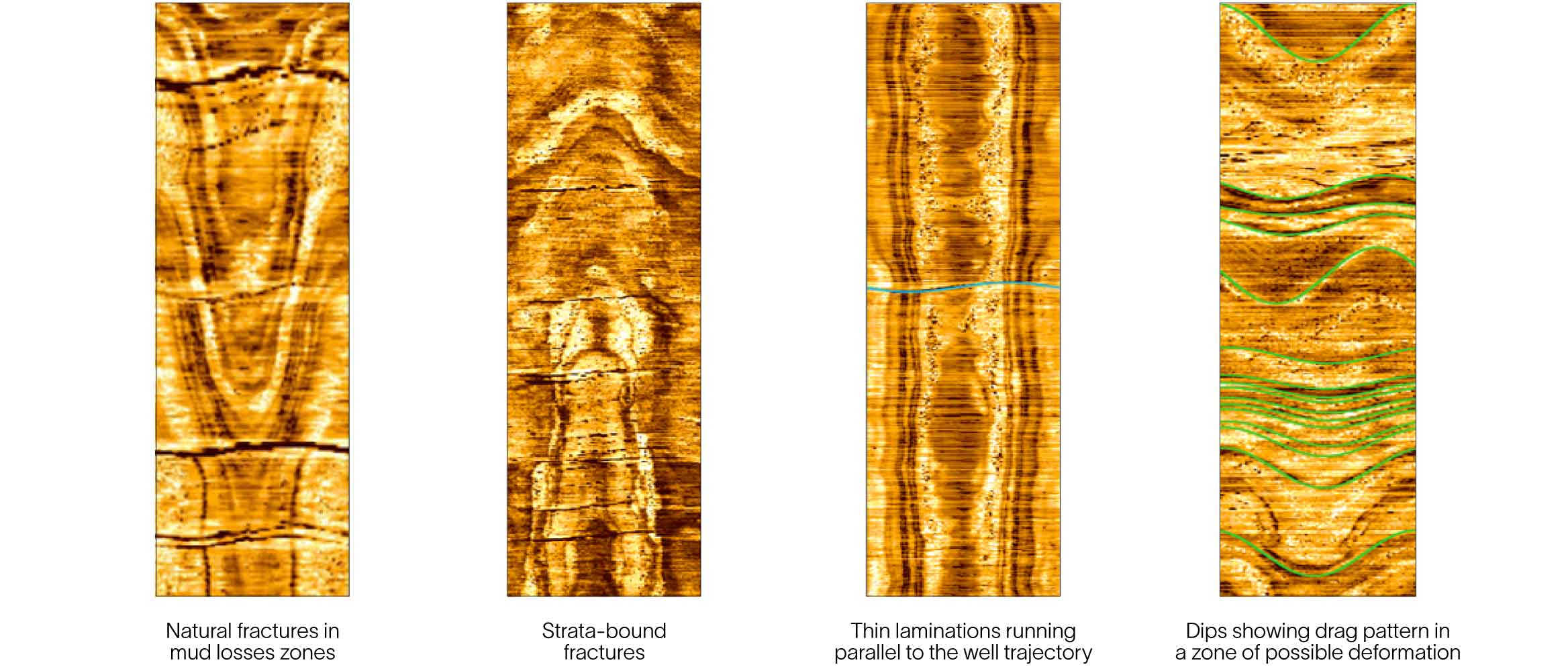
For the first time, high-frequency cutter force data can be translated into detailed borehole images.
Industry’s first at-bit imaging system successfully images over 5,300 ft of wellbore
Using the groundbreaking Retina™ at-bit imaging system, an operator in the Midland Basin imaged over 5,300 ft in a horizontal well, achieving unprecedented geological insights. This innovative high-resolution imaging solution enabled the identification of natural fractures and thin laminations, enhancing reservoir characterization and future planning without compromising drilling performance or adding operational complexity.
To ensure optimal reservoir characterization and well planning, a major operator in the Midland Basin aimed to identify fine-scale geological features in a horizontal well—such as fractures and laminations—before borehole degradation occurred. Traditional imaging tools often fall short due to mud-type compatibility limitations and delays between drilling and logging, which can result in the loss of critical formation data. Consequently, the operator sought a high-resolution formation imaging solution that could deliver insights without altering drilling parameters, reducing the ROP, or requiring additional BHA tools or runs.
To address the challenge, the Retina system was selected. This industry-first technology embeds compact, ruggedized sensors into the cutting structure of a PDC drill bit. The sensors capture high-frequency cutter–rock interaction forces and convert them into azimuthally resolved, depth-referenced borehole images. As drilling progresses, the system provides continuous 360° coverage and high-resolution imaging at the bit.
In total, the Retina system imaged over 5,300 ft of wellbore, identifying natural fractures and thin laminations with superior clarity. These insights enabled correlation of mud losses observed during drilling with the mapped fracture zones, supporting more informed reservoir characterization and planning for future projects. Additionally, the system delivered high-frequency shock and vibration data, providing valuable drilling-dynamics insights and helping to maintain smoother operations without compromising ROP or adding complexity to the BHA.