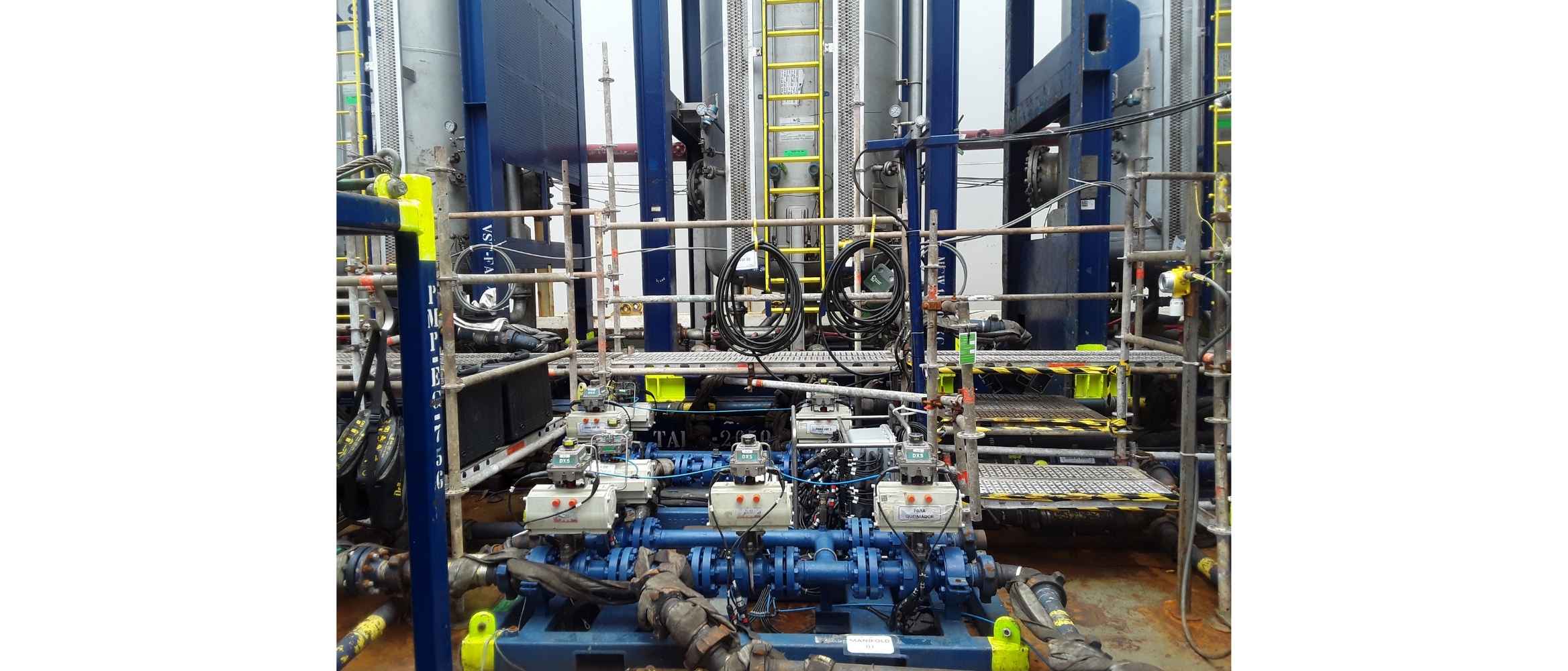
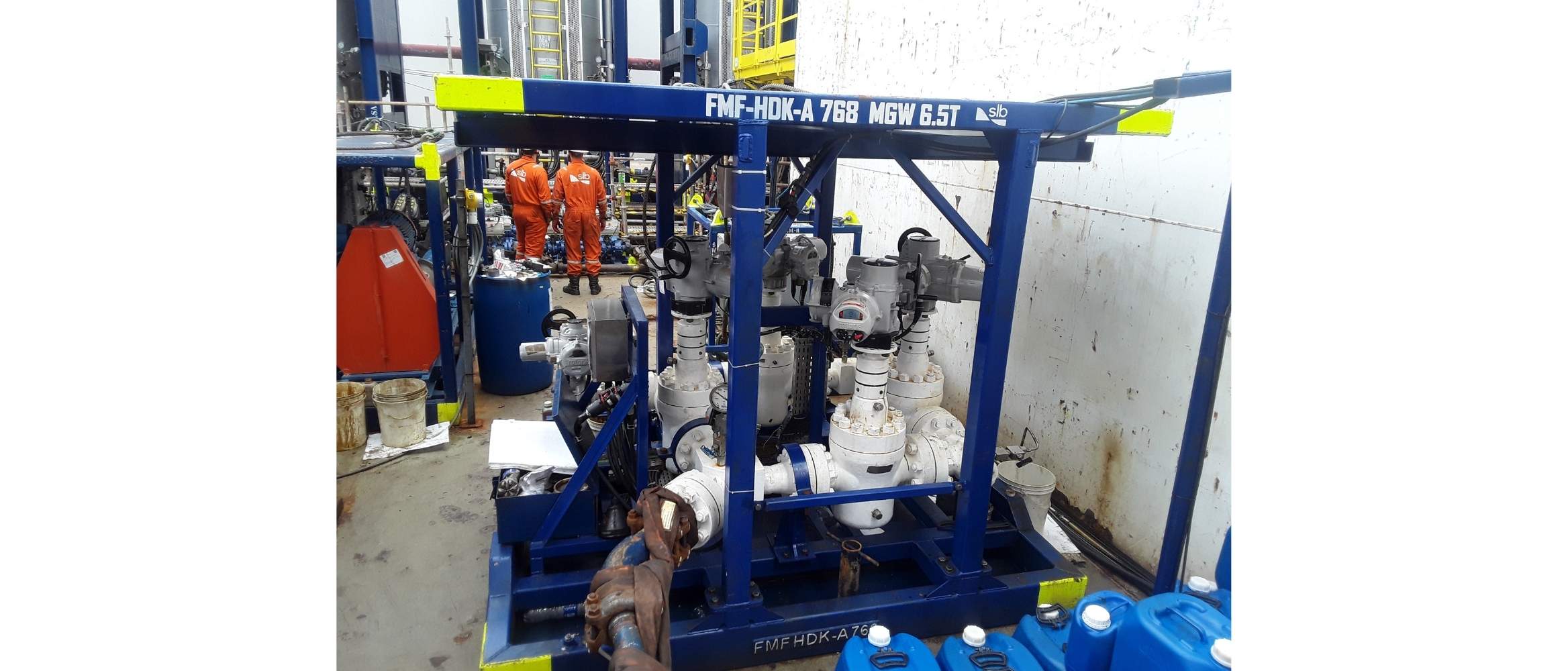
SLB designed and delivered an automation solution for Petrobras by retrofitting and integrating key components of the surface well test package to enable remote operation. The well testing area on the ABS-certified Valaris DS-4 deepwater drillship was adapted to accommodate a suite of equipment, including a 15,000-psi flowhead, automated choke manifold, oil manifolds, radar-instrumented surge and gauge tanks, and a real-time gas monitoring system.
The automation package included a choke manifold retrofitted with actuators and an adjustable choke to enable remote operation. Oil manifolds were upgraded with actuated valves and integrated controllers, allowing remote switching and monitoring. Radar level transmitters installed on surge and gauge tanks enabled remote level monitoring and improved tank management.
All automated components were integrated through DACM and ATFM modules, providing power distribution, control logic, and data transfer. The system connected to the acquisition cabin through a human machine interface (HMI) for remote operation, with the well testing acquisition system used for data visualization and operational support.
Existing equipment was integrated into the automation system, reducing replacement requirements and deployment time. SLB also provided training for well testing personnel. The automated package was deployed offshore and operated successfully. Remote actuation supported more consistent response during flow changes. Choke adjustments were more controlled, contributing to improved data quality, reduced pressure disturbance, and more stable test conditions.
Overall, the operation reduced manual intervention, improved personnel exposure conditions, and increased operational control compared with conventional workflows. The approach to automation—focusing on key control points and supporting them with instrumentation—can be applied to similar well testing operations with limited modification.