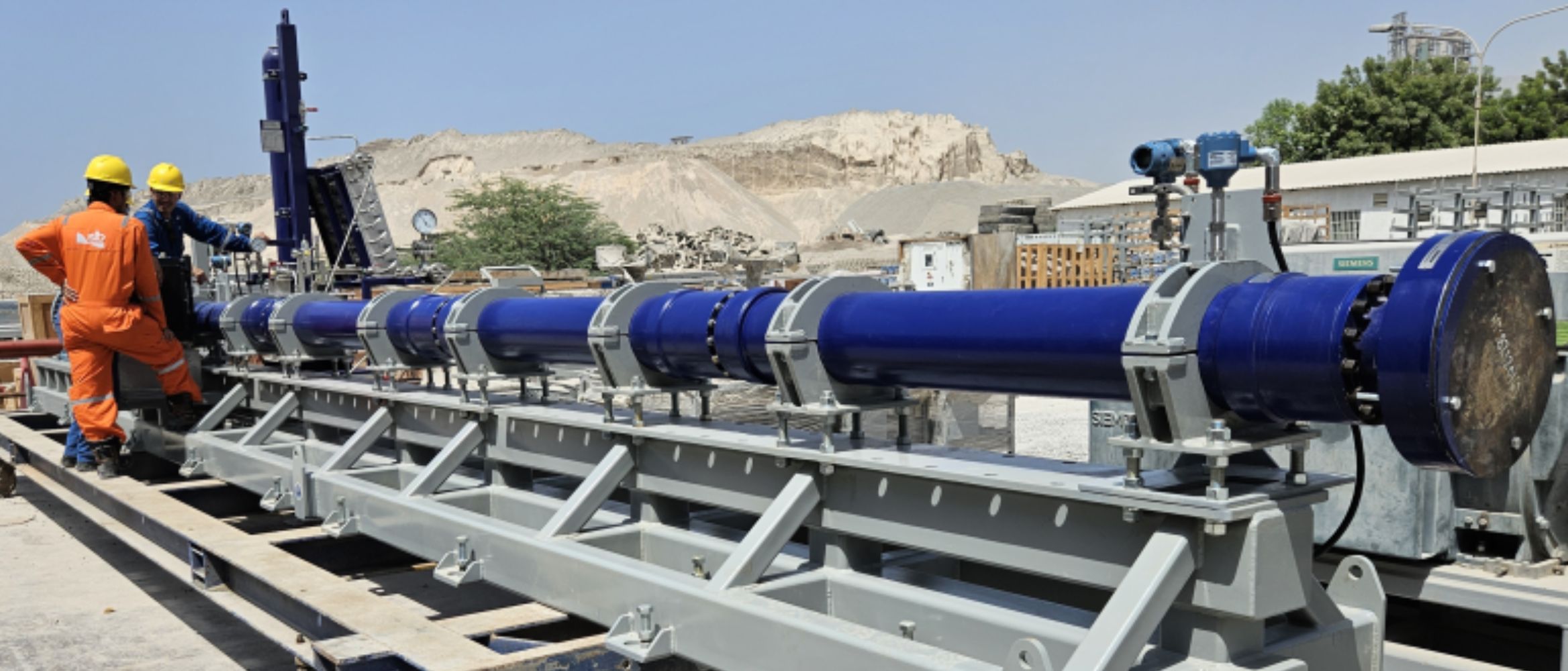
Handles up to 90% gas volume fraction; used for zero-flaring well tests, well cleanup, and production boosting.
Zero‑flaring well reactivation in the UAE using a surface multiphase boosting solution
SLB collaborated with a national oil company in the Middle East to restore production from inactive wells in a mature onshore field. Using a mobile surface multiphase boosting solution from Production Express™ rapid production response solutions, the team overcame challenging conditions, including high flowing temperatures and a high GOR. The approach delivered a 300‑psi pressure boost, enabled production rates of more than 3 MMscf/d of gas and over 7,000 bbl/d of liquids, and achieved zero flaring, significantly lowering carbon emissions.
The operator sought to reactivate shut‑in wells but faced technical and operational obstacles. High flowing temperatures and an elevated GOR had limited the success of previous attempts, and conventional methods such as separator testing required flaring, generating avoidable emissions.
The objective was to increase well productivity using a surface multiphase boosting solution while eliminating flaring and minimizing surface footprint and operational complexity. SLB recommended Production Express solutions with mobile surface multiphase boosting technology, following a systematic production enhancement candidate screening.
The surface multiphase boosting deployment increased wellhead pressure by 300 psi, enabling the well to overcome backpressure in the production line that previously restricted natural flow. As a result, the well delivered more than 3 MMscf/d of gas and over 7,000 bbl/d of liquid, restoring stable, continuous production.
The mobile configuration provided an efficient, low-impact method for reactivating cease‑to‑flow wells without subsurface intervention. The optimized equipment layout minimized surface footprint while accelerating time to production.
A key achievement of the operation was zero flaring, which reduced Scope 3 emissions for SLB and Scope 1 and 3 emissions for the operator. This success has established a qualified pathway for future zero‑flaring and multiphase boosting projects across additional wells onshore and offshore, beginning in 2025. The solution will support use cases including production debottlenecking by reducing surface pressure constraints and enabling zero‑flaring flowback operations.
By adopting this approach, the customer now benefits from improved production performance and lower environmental impact, supporting more efficient and sustainable operations.