CO2-resistant cement system delivers reliable zonal isolation in exposed wells

minus
Italy, Europe, Offshore, Onshore

An operator in Italy faced challenges ensuring long-term zonal isolation in CO2-exposed wells using conventional cement systems. The SLB’s EverCRETE™ CO2-resistant cement system successfully delivered durable plugs, validated barrier integrity with pressure tests up to 34.47 MPa [5,000 psi], and enabled efficient plug-and-abandonment (P&A) operations across multiple wells. This solution reduced operational risks, improved efficiency, and set a precedent for future well decommissioning projects.

An operator in Italy was preparing for a series of P&A operations across multiple onshore and offshore wells. However, the conventional portland-based cement systems they had been using were proving inadequate for long-term zonal isolation in wells exposed to CO2. This limitation raised concerns about the durability of the barriers, regulatory compliance, and the overall confidence in executing abandonment operations.

To address these challenges, the operator conducted an internal laboratory testing program to evaluate potential solutions. Their goal was to identify a cement system capable of withstanding CO2-related degradation while ensuring reliable, long-term isolation. The operator sought a robust and dependable solution that could be deployed across multiple wells, reducing operational risks and ensuring compliance with decommissioning regulations.

SLB introduced the EverCRETE system as the primary solution to address the operator’s challenges. The system was deployed in a 1.82 sg formulation across multiple wells, ensuring predictable performance under field conditions. The design underwent rigorous laboratory validation, including blend and slurry formulation testing, sedimentation evaluation, and compatibility checks with wellsite fluids such as calcium chloride (CaCl2) brine, potassium chloride (KCl) brine, and water-based mud (WBM).

For wells requiring coiled tubing applications, the EverCRETE system was further optimized with GASBLOK™ gas migration control additive that adjusted rheology for reliable pumping through constrained tubing geometries. This customization ensured efficient placement of the cement plugs, even in challenging well conditions.

The EverCRETE system enabled the operator to execute multiple abandonment operations-a total of 30 plug jobs across 14 wells-with consistent plug placement and verified barrier integrity. The operator was able to complete the P&A campaign with confidence, achieving a significant reduction in operational risks and improved efficiency. The solution also enabled the operator to meet regulatory requirements for well decommissioning, setting a new standard for future projects.

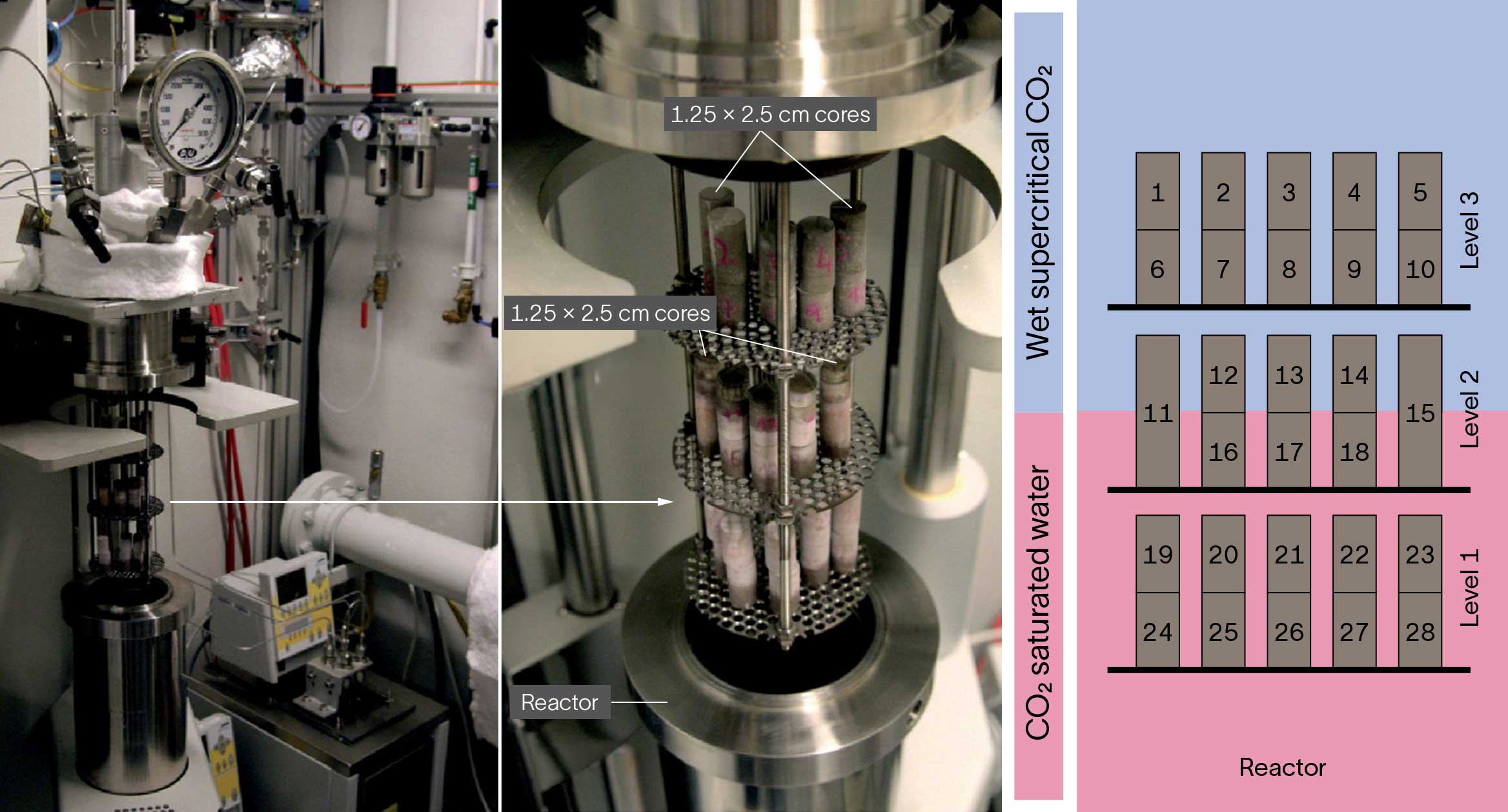
Experimental setup showing CO2 exposure testing equipment, cement core samples inside a reactor, and a diagram of sample placement levels in wet supercritical CO2 and CO2-saturated water environments.
Figure 1. Equipment to evaluate cement degradation. Picture of the CO₂ equipment (left). Focus on the CO₂ reactor in open position with the cement cores placed on three levels (middle). Simplified scheme showing the disposition of the 28 samples within the reactor during an experiment (right). They are exposed either to wet supercritical CO₂ or to CO₂ saturated fluids (water/brine).
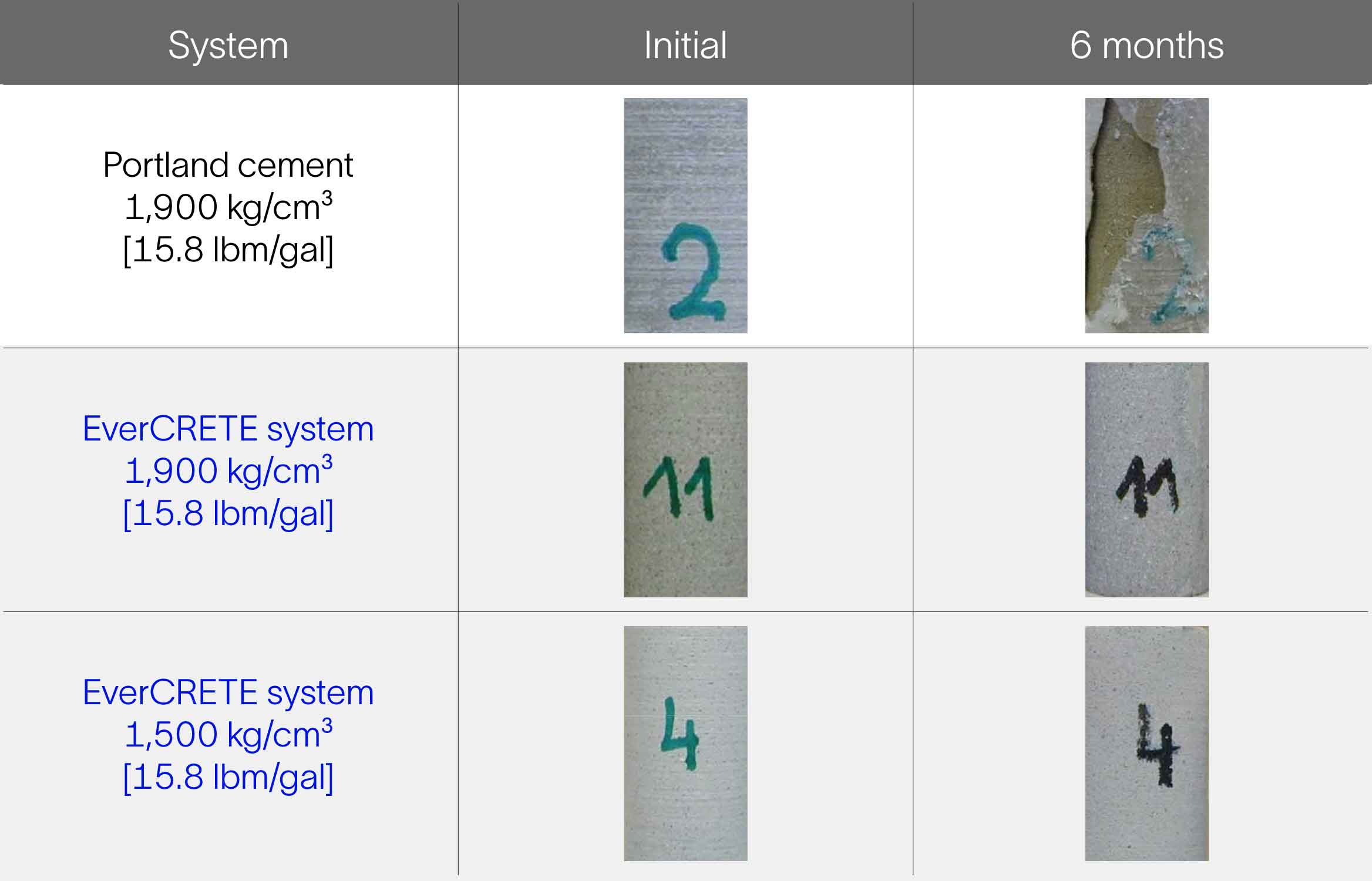
Comparison table showing Portland cement and EverCRETE cement system samples before and after six months of CO2 exposure, highlighting visible degradation in Portland cement and maintained integrity in EverCRETE samples.
Figure 1. Physical aspect of conventional portland and EverCRETE system before and after six months on carbon dioxide environments at 28 MPa and 90 degC [4,060 psi and 194 degF].
Products Used