SLB at CERAWeek 2026
Published: 03/23/2026

SLB at CERAWeek 2026
Published: 03/23/2026
Welcome to the SLB CERAWeek 2026 Newsroom! Here you'll find daily updates featuring exclusive photos from our live event participation, insightful highlights, and key messages from our speakers. Follow this page throughout the conference for fresh perspectives and behind-the-scenes moments as we share the latest news and ideas shaping the future of energy.
Summary: SLB at CERAWeek 2026
At CERAWeek 2026, SLB highlighted how the global energy industry is undergoing a major transformation driven by AI, digital technologies, and stronger cross-industry partnerships, all while balancing rising energy demand and the transition to lower-carbon solutions.
Energy system in transition
- Global energy demand continues to grow, and oil and gas will remain essential for decades.
- The challenge is delivering energy that is secure, affordable, and lower in emissions.
- Technology, especially digital and AI, is now central to unlocking supply and improving efficiency.
AI as the key disruptor
- AI is described as a “once-in-a-generation” transformation for the energy sector.
- It enhances—not replaces—human expertise by improving decision-making, automating workflows, and increasing operational speed.
- The industry is shifting from experimenting with AI to scaling it for real business impact (productivity, cost, performance).
From tools to integrated systems
- True transformation requires combining physical infrastructure, digital platforms, and AI into a unified “full-stack” system.
- Success depends on redesigning energy systems—not just adding new tools—to enable better performance and scalability.
Toward autonomous operations
- The long-term vision includes AI-driven, increasingly autonomous energy systems, potentially including unmanned production platforms.
- Connected data and breaking down silos are critical to achieving this future.
Workforce and organizational change
- A multigenerational workforce is seen as a strength, enabling innovation and knowledge transfer.
- Strong culture, talent development, and inclusive leadership are key to resilience during transformation.
Resilience and discipline in a volatile market
- Companies must maintain operational discipline, diversification, and long-term investment strategies to perform across commodity cycles.
- Digital technologies and local supply chains and sourcing help companies stay resilient amid uncertainty.
Challenges and opportunities in decarbonization
- Technologies like carbon capture are viable today, but cost remains a major barrier.
- AI may accelerate innovation in areas like materials and energy efficiency.
- Collaboration across the industry is essential due to the system’s complexity.
Bottom line
SLB’s message at CERAWeek 2026 is that the future of energy will be shaped by AI-enabled, highly integrated systems that improve performance and scalability—while the industry simultaneously works to meet growing demand and advance decarbonization.
Top Highlights
Day Three
- Gavin Rennick emphasized that scaling geothermal requires simultaneous progress across permitting, infrastructure, partnerships, technology, and economics. He noted that while drilling improvements can come quickly, the bigger opportunity is in maximizing reservoir performance and system efficiency. He also highlighted the importance of partnerships and real-world deployment to accelerate learning and reduce costs.
The Big Picture: Geothermal scale will come from coordinated execution—not a single breakthrough.
Day Two
- Olivier Le Peuch reinforced that AI and digital integration are driving a new phase of execution in the energy sector, where scale and speed of adoption are becoming key differentiators.
- Rakesh Jaggi emphasized measurable business impact, showing how AI is moving beyond pilots to deliver real gains in productivity, cost efficiency, and asset performance.
- Demos Pafitis highlighted the evolution of business models, where technology is enabling more agile, data-driven, and outcome-focused approaches across the industry.
The Big Picture: The conversation is shifting from potential to execution — companies that successfully scale AI and digital capabilities are translating innovation into tangible performance and competitive advantage.
Day One
- Olivier Le Peuch set the tone for the week, emphasizing that technology and integration are now central to delivering a balanced, resilient energy system.
- Agnieszka Kmieciak highlighted the multigenerational workforce as a strategic advantage, where diverse perspectives drive innovation and adaptability.
- Steve Gassen reinforced the importance of discipline and operational strength to perform consistently across commodity cycles.
The Big Picture: Resilience — across systems, operations, and people — is defining success in today’s energy landscape.
Full Updates
Day Three
Gavin Rennick | President New Energy
Session: Unlocking Geothermal at Scale
SLB: Unlocking Geothermal at Scale
Gavin Rennick focused on what it will actually take to scale geothermal — arguing that success depends on coordinated progress across technology, infrastructure, and economics, not just subsurface innovation. He pointed to SLB’s partnership with Ormat as a model for bringing together surface and subsurface expertise for developers ready to scale. Rennick also noted that scale, standardization, and productization could accelerate these gains further.
Scaling requires multiple “buckets” to move together“It’s not just about subsurface technology—permitting, infrastructure, partnerships, technology, and economics all need to progress in parallel.”
Permitting and infrastructure as key enablers“Project approvals, grid connections, and access to water are critical gating factors for deployment.”
Partnerships to accelerate delivery“Combining capabilities is essential to move faster and deliver integrated solutions.”
Technology focus: repeatability and reservoir performance“There are two big dimensions—drilling consistently and efficiently, and maximizing energy extraction from the reservoir.”
Building confidence through innovation and IP“SLB is investing and filing intellectual property, reflecting confidence in geothermal’s long-term potential.”
Above ground vs. below ground: both matter“Above ground, we need the infrastructure and scale that enables shale. Below ground, there are still real technical challenges—but they are solvable.”
Drilling optimization can improve quickly“AI in drilling is already reducing costs—even in mature geothermal regions.”
The harder challenge: energy extraction and system efficiency“The bigger technical opportunity may be improving how much energy we extract and how efficiently surface plants operate.”
Learning by doing: pilot, test, scale“The industry needs to deploy projects, run demonstrations, and learn quickly over the next few years.”
Economics drive everything“Costs must come down enough to attract capital—once that happens, it will unlock further innovation and deeper developments.”
No one-size-fits-all solution“Economics depend on resource temperature, geology, and local demand.”
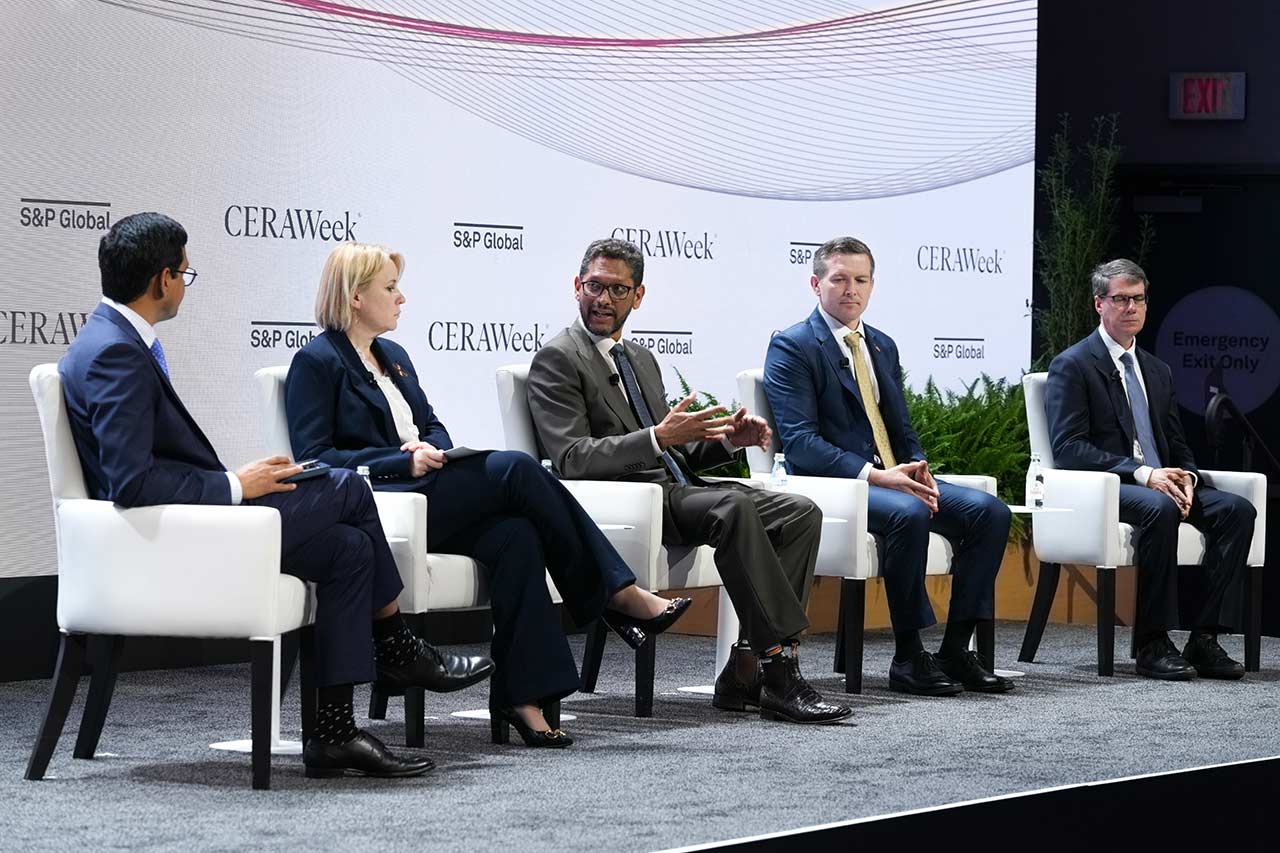
Day Two — A Defining Moment: AI Reshapes the Energy Industry
Olivier Le Peuch | Chief Executive Officer
Session: The CEO Blueprint | AI and Digital
SLB: CEO Playbook on AI and Digital Transformation
In day two of CERAWeek, Olivier Le Peuch described today’s moment as a once-in-a-generation transformation driven by the convergence of compute power and AI—unlocking new ways for the energy industry to operate, decide, and scale.
A unique inflection point in technology“This is a unique moment—the convergence of compute and generative AI is transforming the industry.”
"AI stands apart from past technology waves by continuously learning, improving decision-making, and amplifying human expertise in real time."
AI as a strategic lever for scale and talent“AI is a toolbox that can profoundly change how we operate, scale, and deploy talent.”
"From internal automation to industry-wide digital platforms, AI is reshaping how resources, data, and expertise are deployed across thousands of assets."
Augmenting expertise, not replacing it“AI will not replace domain experts—it will augment and enhance their decision-making.”
"While experts remain central, AI enables automation of workflows and optimization of operations—making each cycle faster, more efficient, and lower cost."
Measuring success through operational outcomes“The true measure is performance in the field—productivity, efficiency, and outcomes.”
The next decade: autonomous energy systems"AI-driven systems will increasingly optimize the full energy lifecycle, scaling from individual assets to entire basins."
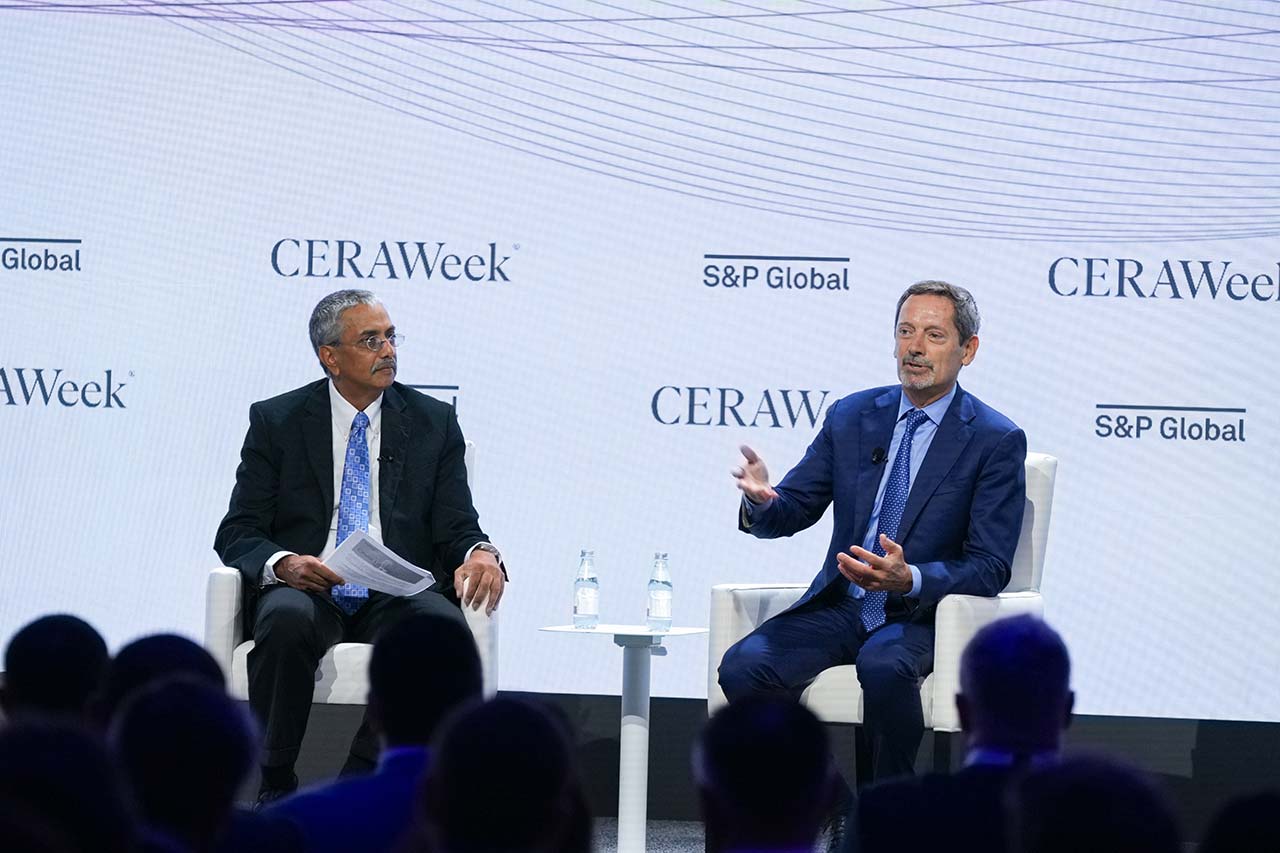
Rakesh Jaggi | President D&I
Session: Is AI Increasing Energy Industry Profitability?
SLB: AI and Profitability—Where Digital Delivers Real Impact
In day two of CERAWeek, Rakesh Jaggi focused on a critical shift for the industry: moving beyond AI experimentation to where “the rubber meets the road”—scaling solutions that deliver measurable profitability and operational impact.
From experimentation to scale“The real challenge is not deploying AI—it’s scaling it.”
What it takes to unlock value“Customers, data, and domain-specific AI—that’s where the value is.”
Domain expertise as the differentiator“If it sounds simple, it’s not understood—our industry is complex.”
Rethinking the operating model“The biggest opportunity is starting from a blank canvas—with AI built in from day one.”
AI as an enabler—not a threat“AI is an assistant—it makes decisions better and faster, not replaces people.”
Breaking silos and unlocking the future“We must connect data and break silos to unlock the full value of AI.”
The next decade: autonomous operations“We should aim for fully unmanned production platforms.”
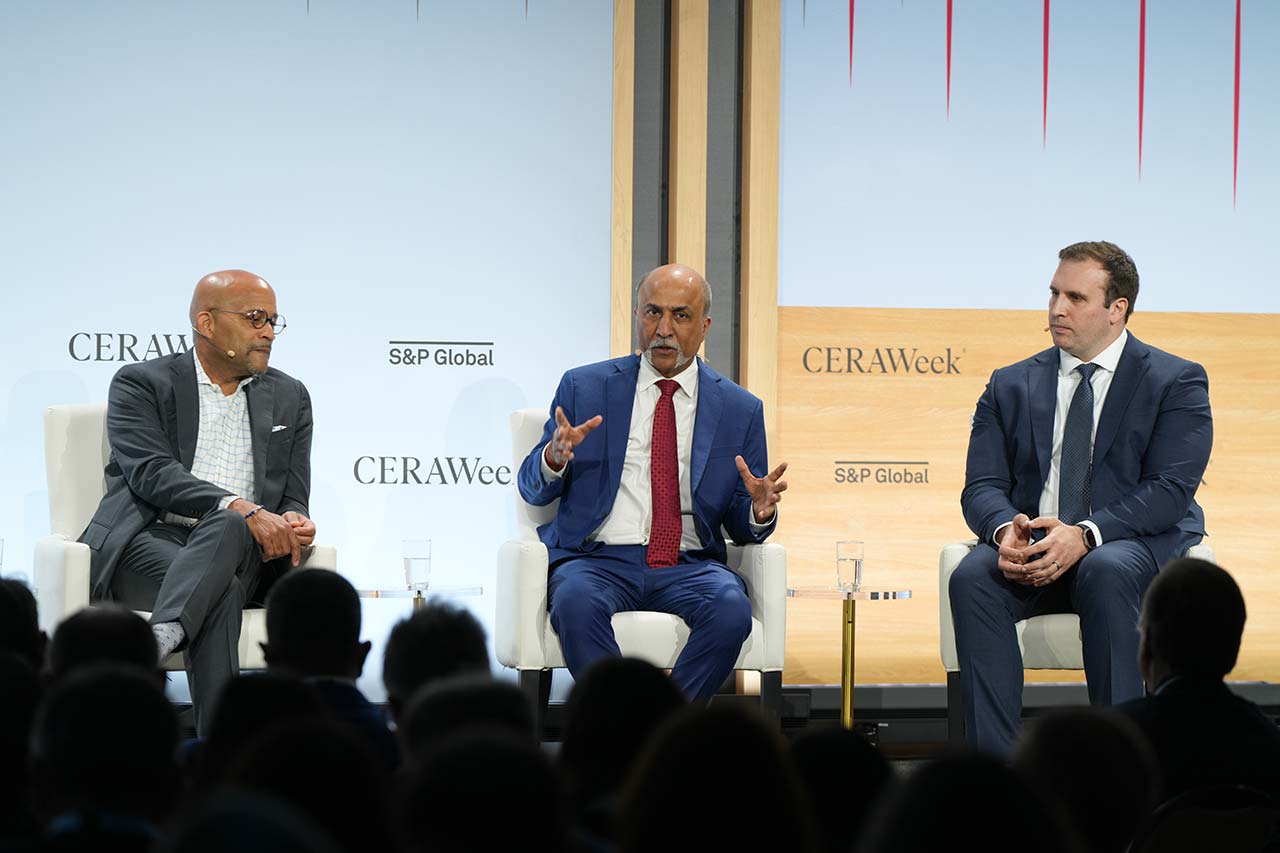
Demos Pafitis | Chief Technology Officer
Session: Technologies Transforming the Energy Industry and Business Models
SLB: Building the Full Stack: Rethinking Energy Systems for the AI Era
Demos Pafitis focused on the integration of physical systems, digital technologies, and AI—emphasizing that real transformation comes from designing them together, not in isolation.
Integration starts with the physical world“Digital and AI only work if the underlying physical systems are designed to enable them.”
From tools to full-stack architecture“It’s not about software or AI alone—it’s about building a properly architected technology platform across the full stack.”
Redesigning systems for performance“You can’t make a bus drive like a Ferrari. Physics gets in the way.”
AI and talent: shifting where value is created“AI should take on routine work so experts can focus on where they add the most value.”
Beyond efficiency: reshaping workflows“The real opportunity is using AI to rethink how experts work through complex, messy information.”
CCS: real today, but cost is the barrier“The cost of capture is the biggest challenge.”
AI’s role in materials innovation“AI can help discover and design new materials—testing ideas virtually before building them.”
Collaboration as a necessity“No one can do this alone—the complexity requires deeper collaboration across the industry.”
Balancing global scale and local solutions“We need to balance scalable global platforms with solutions tailored to specific basins.”
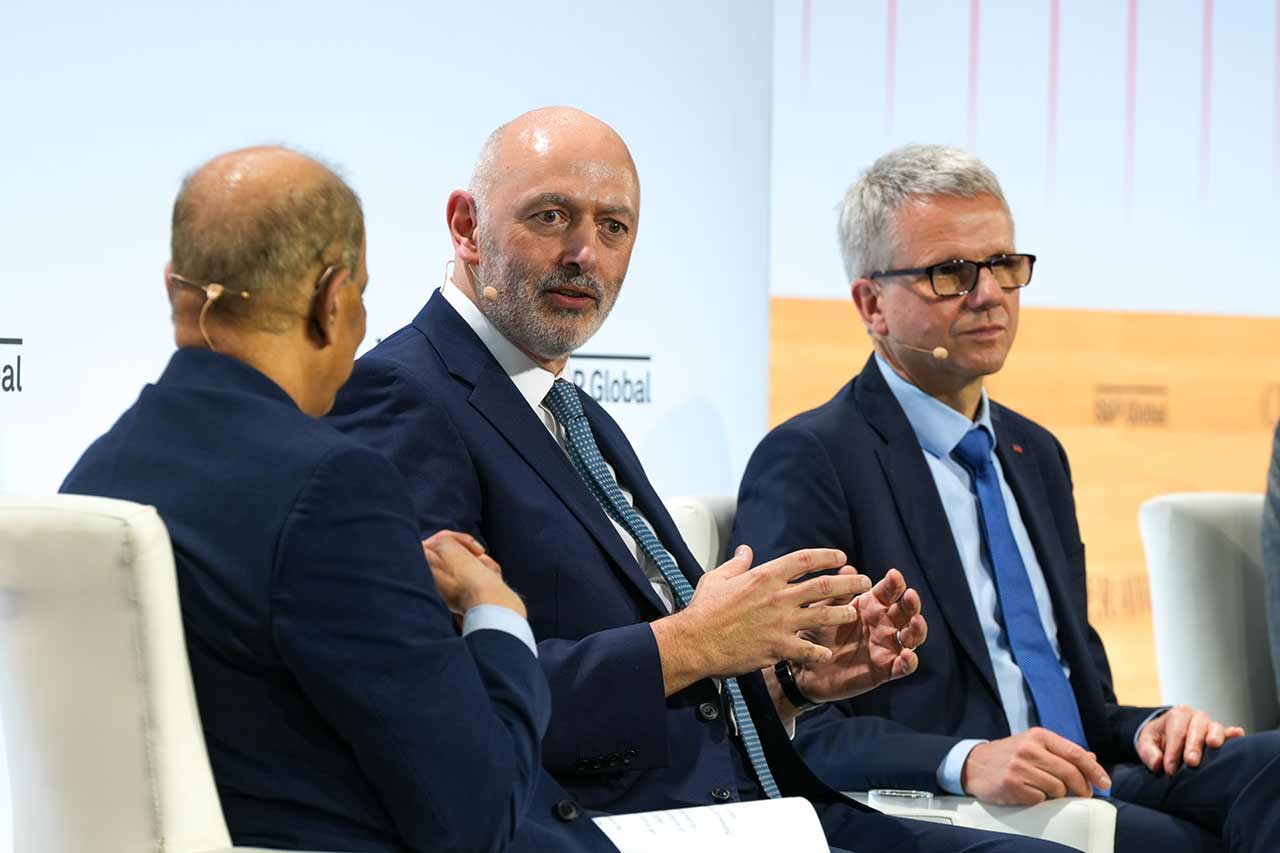
Day One — Leadership, Workforce, and Industry Resilience
Olivier Le Peuch | Chief Executive Officer
Session: Company Strategies for a World in Transition
Topic Focus: Building resilient, technology-driven energy systems
Key Takeaway: Energy demand continues to grow, and meeting it responsibly will require technology, integration, and long-term resilience across the global energy system.
In Focus: Olivier discussed how the industry’s technology transformation—years in the making—is now central to every aspect of energy development. Digital innovation, AI, and integrated solutions are helping companies deliver energy that is secure, affordable, and increasingly efficient.
SLB at CERAWeek: Driving Performance and Innovation in a World in Transition
At CERAWeek, Olivier Le Peuch outlined how the industry must respond to a world in transition—where energy demand continues to grow, resources are becoming more complex, and technology is reshaping what’s possible. He emphasized the enduring role of oil and gas, the need to unlock supply through innovation and integration, and the accelerating impact of AI on performance and scalability.
Unlocking supply in a complex energy landscape“The role of oil and gas in the energy system is more recognized today—and it will remain for decades to come. So, we must unlock supply.”
Building resilience through local scale and integration“We are a local-global company—getting closer to our customers and enabling agility. When we partner locally, we invent solutions locally.”
AI as the next frontier of transformation“The emergence of generative and agentic AI is where we can transform the industry to new heights—it can completely change the game.”
Global reach, tailored locally“Being globally diversified means tailoring technology to each local area and resource set—at scale.”
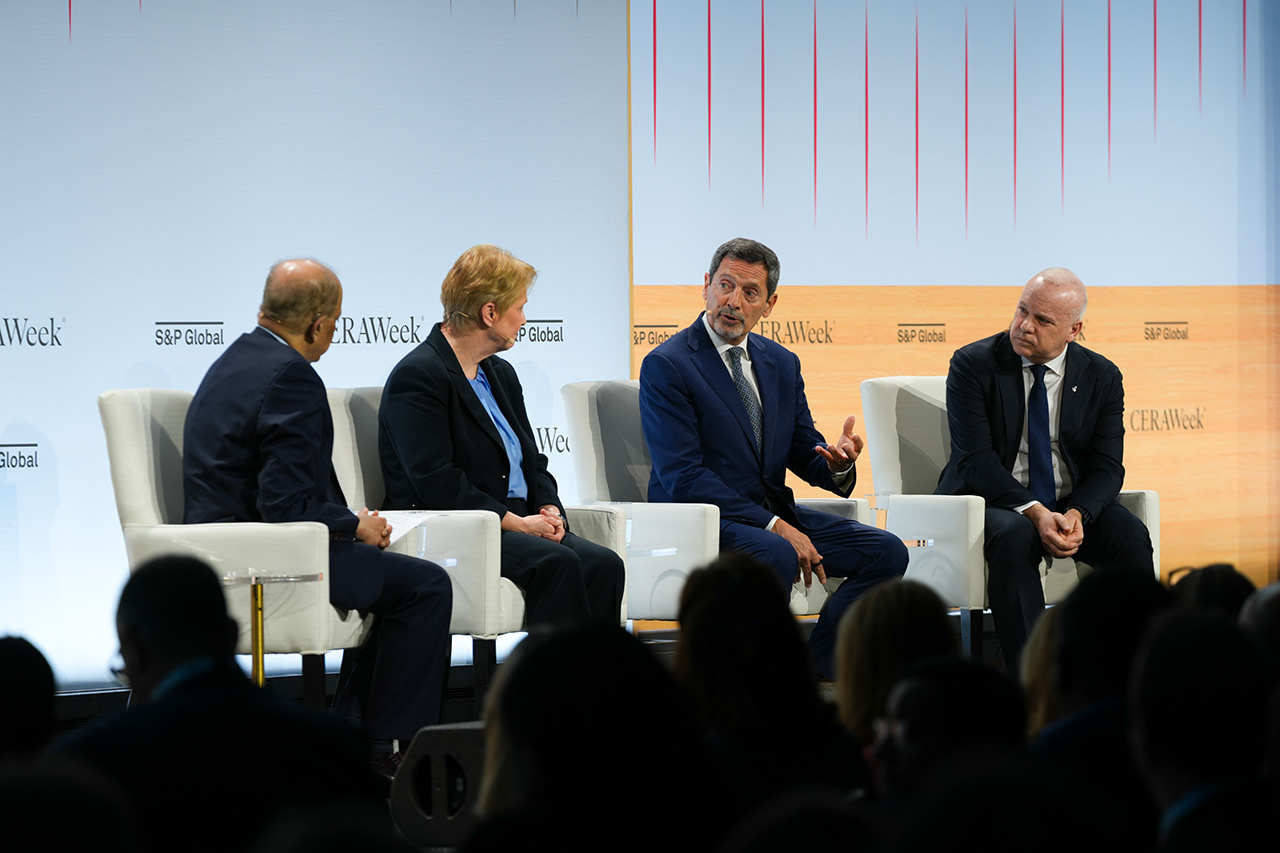
Agnieszka Kmieciak | Chief People Officer
Session: Cultivating Resilience: The Multigenerational Workforce
Topic Focus: Leveraging a diverse workforce for innovation and performance
Key Takeaway: Organizations that successfully connect experience with new perspectives will build the strongest and most resilient teams.
In Focus: Agnieszka emphasized how a multigenerational workforce strengthens collaboration and innovation. By fostering inclusive leadership and continuous learning, companies can unlock the full potential of their people while navigating rapid industry transformation.
Cultivating Resilience: The Multigenerational Workforce
At CERAWeek, Agnieszka Kmieciak shared her perspective on how organizations can build a resilient workforce in an evolving energy landscape—highlighting the importance of intentional talent strategies, multigenerational balance, and a clearly defined, operationalized culture.
Defining a resilient workforce“For every company, resilience looks a little different—but the real differentiator is culture and talent strategy.”
The value of a multigenerational workforce“When you build an intentional pipeline across generations, you avoid gaps and ensure steady knowledge transfer.”
Culture as the unifying force“Culture is the glue that brings a multigenerational workforce together.”
Operationalizing culture to drive resilience“Operationalizing culture is critical—it’s not just what you say, it’s what you consistently do.
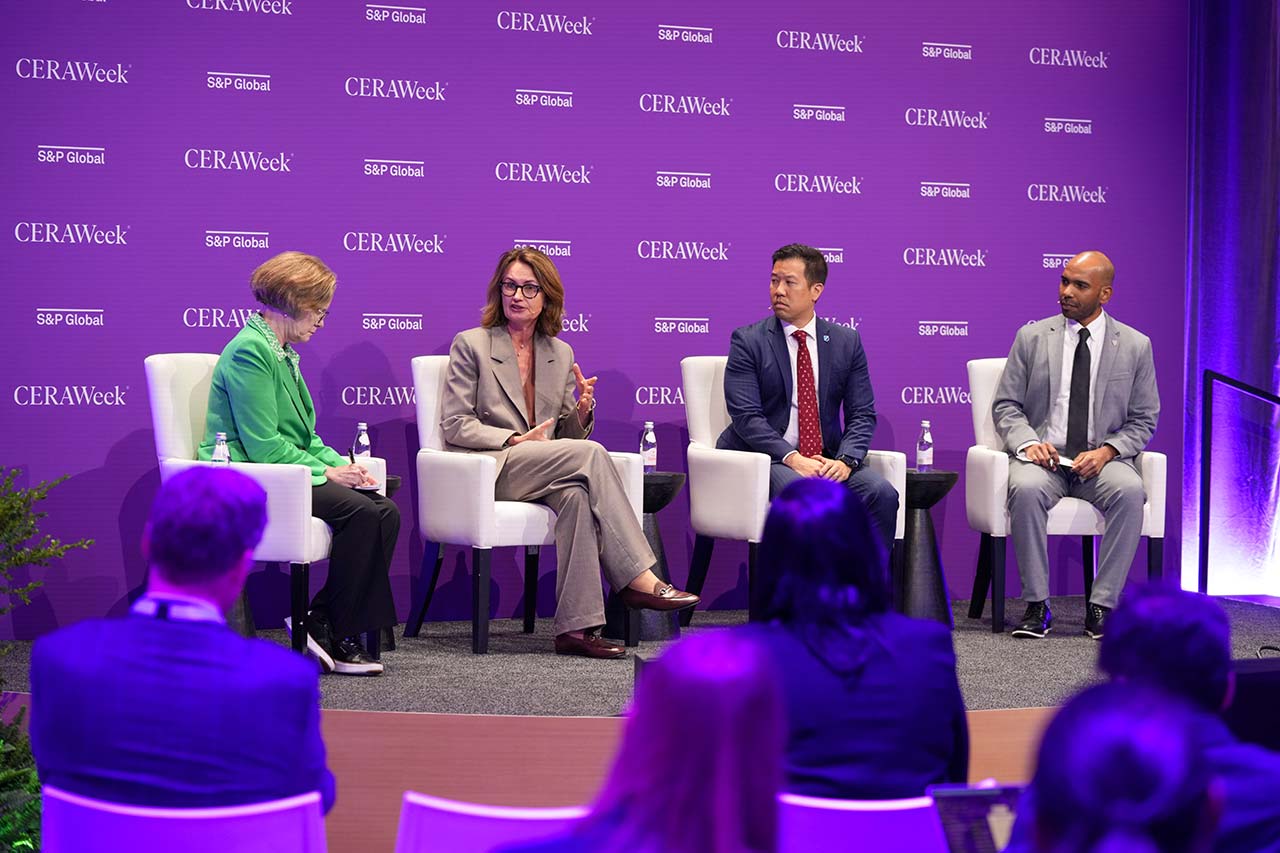
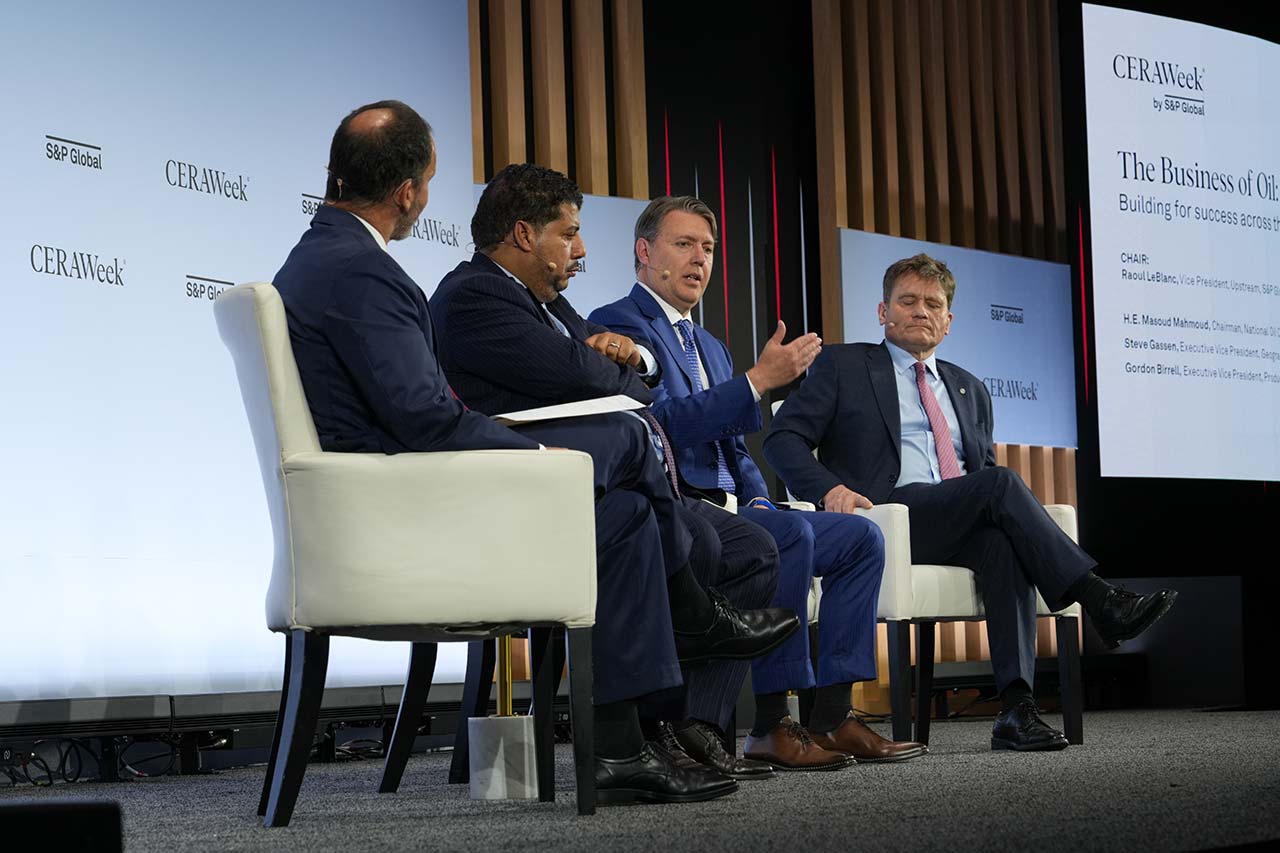
Steve Gassen | Executive Vice President, Geographies
Session: The Business of Oil: Building for Success Across the Commodity Cycle
Topic Focus: Operating with discipline across market cycles
Key Takeaway: Sustained performance in the energy industry depends on long-term discipline, operational efficiency, and resilience through market volatility.
In Focus: Steve highlighted how companies can succeed across commodity cycles by focusing on strong operations, technology adoption, and strategic investment. Maintaining this discipline enables the industry to deliver reliable energy while navigating changing market conditions.
Building Resilience Through Diversification and Discipline
At CERAWeek, Steve Gassen shared perspectives on how the company is navigating uncertainty in the energy landscape—emphasizing diversification, disciplined investment, and the growing role of digital technologies in driving long-term resilience.
Resilience in an uncertain environment“Uncertainty is not new to this industry—what matters is how you plan for it and build a business that can perform across cycles.”
Diversification as a strategic foundation“For SLB, resilience comes from diversification—across geographies, technologies, and the full asset lifecycle.”
Balancing global scale with local execution“Our global footprint is a strength, but the real differentiation comes from how we tailor solutions to specific customer challenges at the local level.”
Maintaining capital discipline“We align our investments closely with customer activity, ensuring we don’t get ahead of demand while remaining ready to capture opportunities.”
The enduring role of oil and gas“Oil and gas will remain a critical part of the energy mix for decades, with increasing focus on maximizing recovery from existing assets.”
Digital and AI as the next efficiency frontier“The next step-change in performance will come from scaling digital and AI—particularly in drilling automation and production optimization.”
Expanding into adjacent opportunities“We’re leveraging our core capabilities to grow in areas like geothermal and data centers, extending our strengths into emerging markets.”