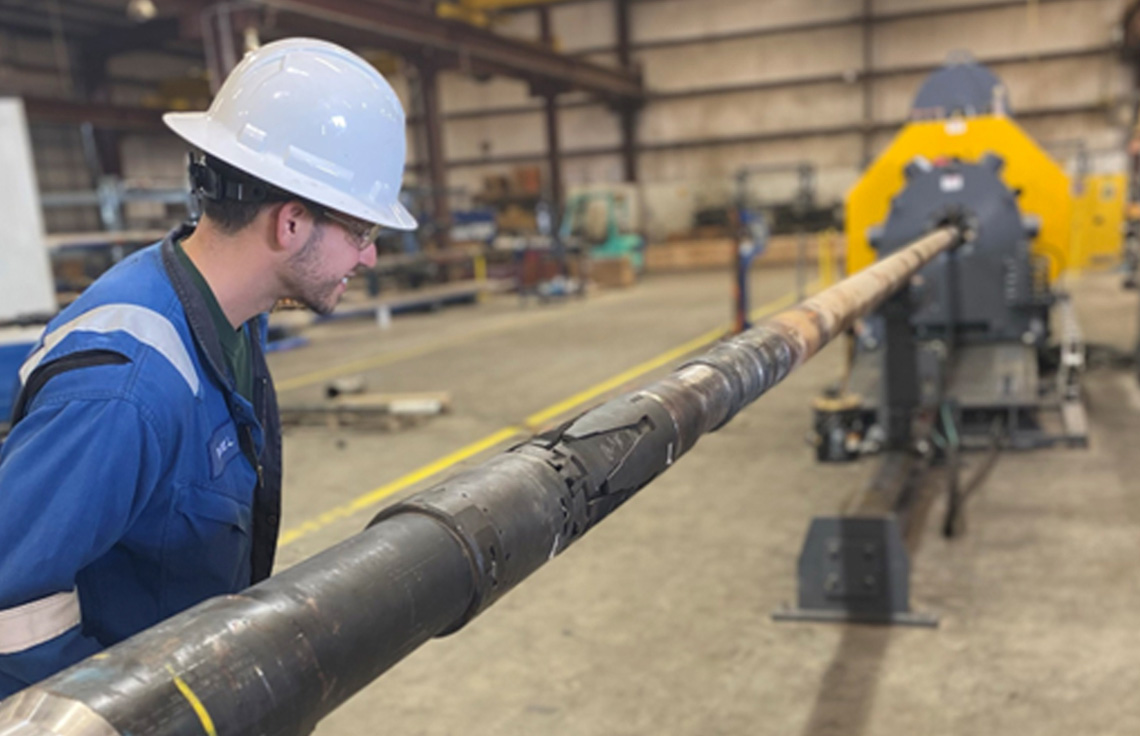
Following a series of technical and operational reviews, the Xcelis liner hanger system was selected for the job. Specifically engineered for HPHT deepwater environments and qualified to API Spec 19LH, the system has a fit-for-purpose design. A 33.66% increase in hydraulic cylinder pressure rating enhances setting reliability while the 15.14% increase in bypass area reduces equivalent circulating density (ECD) and minimizes the risk of losses during liner deployment.
Comprehensive torque and drag simulations were conducted using ERA (Extended Reach Architecture) Wellpath Builder and DrillPlan™ coherent well planning and engineering solutions to define safer running envelopes and optimize run-in-hole speeds. The cementing design incorporated optimal slurry density and pump rates together with spacers containing lost circulation material to address losses and gas migration.
The liner was run to TD, with bleeding through the choke line at regular intervals to maintain the required mud cap and ensure continuous well control. While running in hole, active measures were required following a kick; the well was conditioned with the BOP closed, enabling controlled displacement of hydrocarbons and gas from the wellbore.
After the liner hanger was set and running tool released according to plan, the cement job was performed, with plug bump achieved at the expected displacement volume. Subsequently, the liner was pressure tested to 13.8 MPa [2,000 psi] for 5 min, confirming float integrity, and the liner top packer was set and pressure tested to 10.3 MPa [1,500 psi]. The running tool was retrieved and a visual inspection confirmed that all tools were in good condition.
This successful deployment validated the robustness, efficiency, and suitability of the Xcelis liner hanger system for extreme HPHT deepwater environments. The operation reinforces SLB’s leadership in executing complex, high-risk offshore well construction projects and establishes a proven execution model for future HPHT deepwater developments.