Facies-based 3D modeling of boron mineralization using autonomous logging platform in colemanite deposits

minus
United States, North America, Onshore

Boron is a critical element with unique properties and is commonly found in evaporite minerals. Boron mineralization in colemanite deposits is often associated with nodular facies within evaporitic–lacustrine sequences; however, their lateral continuity and spatial distribution remain difficult to predict in subsurface exploration. To efficiently acquire comprehensive data for boron evaluation in a lateral well, SLB deployed FMI™ fullbore formation microimager, advanced multimode dipole sonic logs, triple-combo logs, and Pulsar™ multifunction spectroscopy service logs in a single toolstring using the OnWave™ autonomous logging platform, a novel, autonomous, wireless, through-the-bit horizontal well logging system.

The main objective is to identify intervals with the highest boron concentration in the lateral well and use this information to build a model to support exploration and appraisal plans. The customer initially considered drilling a pilot well and correlating it with existing data. SLB recommended drilling a lateral well through the evaporitic section to improve data coverage. A key concern was the efficiency of lateral logging and the associated operational risk. The OnWave platform addressed this concern by eliminating cable deployment and reducing rig time.

Although differentiating and quantifying some of the more complex minerals was challenging, it was possible to identify measured depth intervals containing colemanite with high confidence based on sigma response. Results were quality controlled through comparison with inductively coupled plasma mass spectrometry (ICP-MS) analysis of cuttings.

Based on borehole images, facies were classified into three main groups: nodular, laminated, and massive. The nodular facies, characterized by irregular resistive textures, was identified as the primary boron host based on petrophysical analysis.

Using the SLB digital platform Wellbore Insights, a 3D structural model was created to propagate facies derived from the image logs. The resulting model delineates discrete nodular pods and stratiform layers within the colemanite sequence, providing predictive insight into boron prospectivity beyond the wellbore.

The model captures the distribution, continuity, and clustering of nodular units and provides clear stratigraphic context for well placement. This facies-based approach reduces uncertainty in targeting mineralized zones, supports volumetric resource estimation, and improves drilling efficiency in subsequent wells.

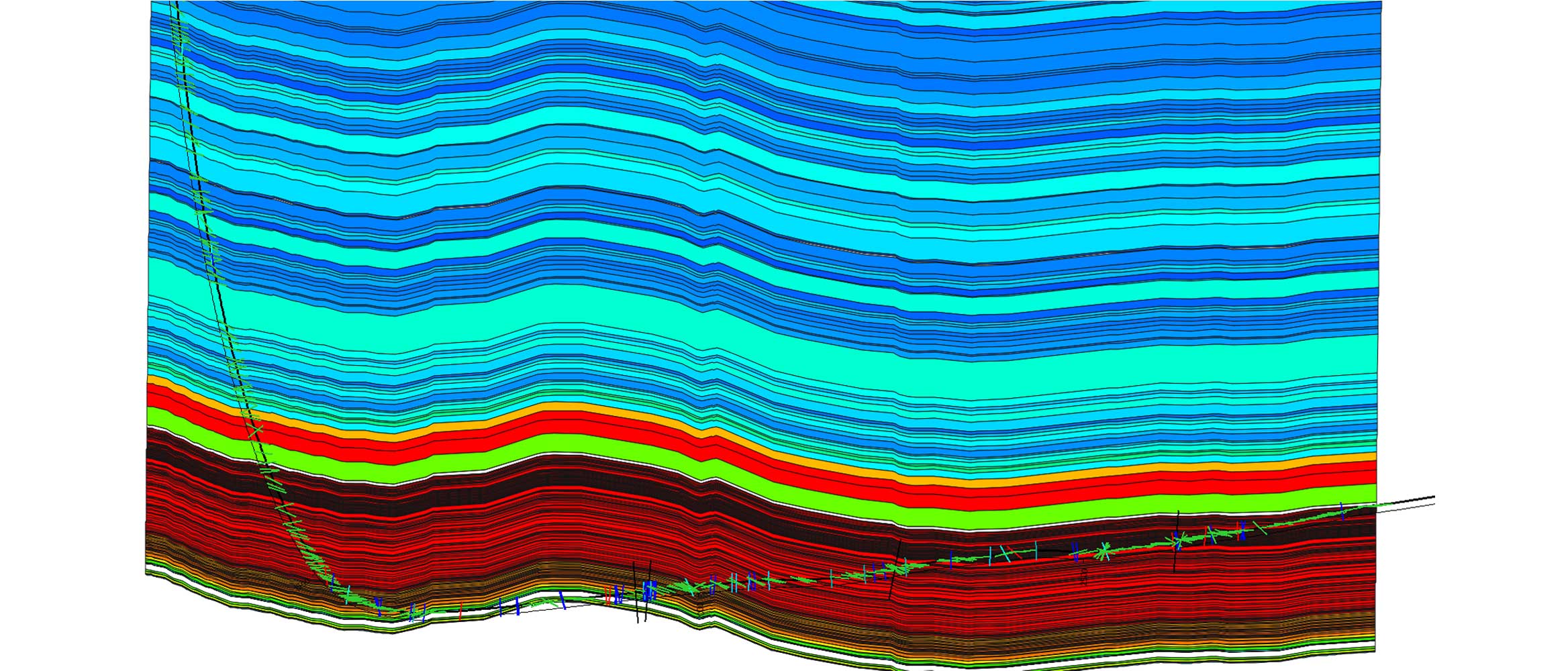
Sigma response modeled on a 2D structural model
Figure 1. Sigma response modeled on a 2D structural model, indicating the highest sigma (thermal neutron capture), which reflects boron concentration within colemanite-rich layers throughout the lateral section.
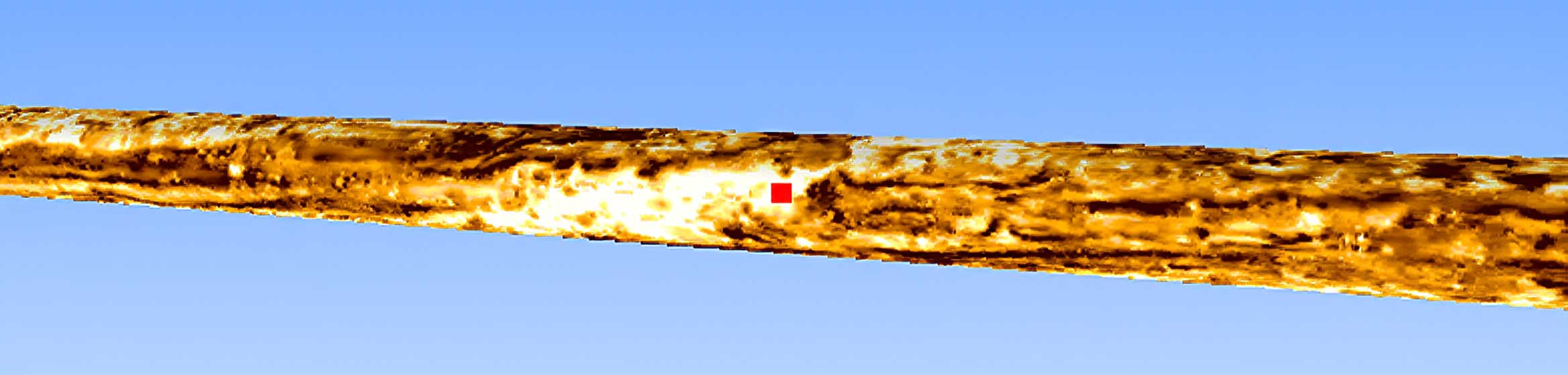
Using FMI microimager images, depositional facies can be extracted laterally
Figure 2. Using FMI microimager images, depositional facies can be extracted laterally. Nodular facies (light color) represent the highest concentration of colemanite based on petrophysical evaluation within an evaporitic–lacustrine depositional sequence.
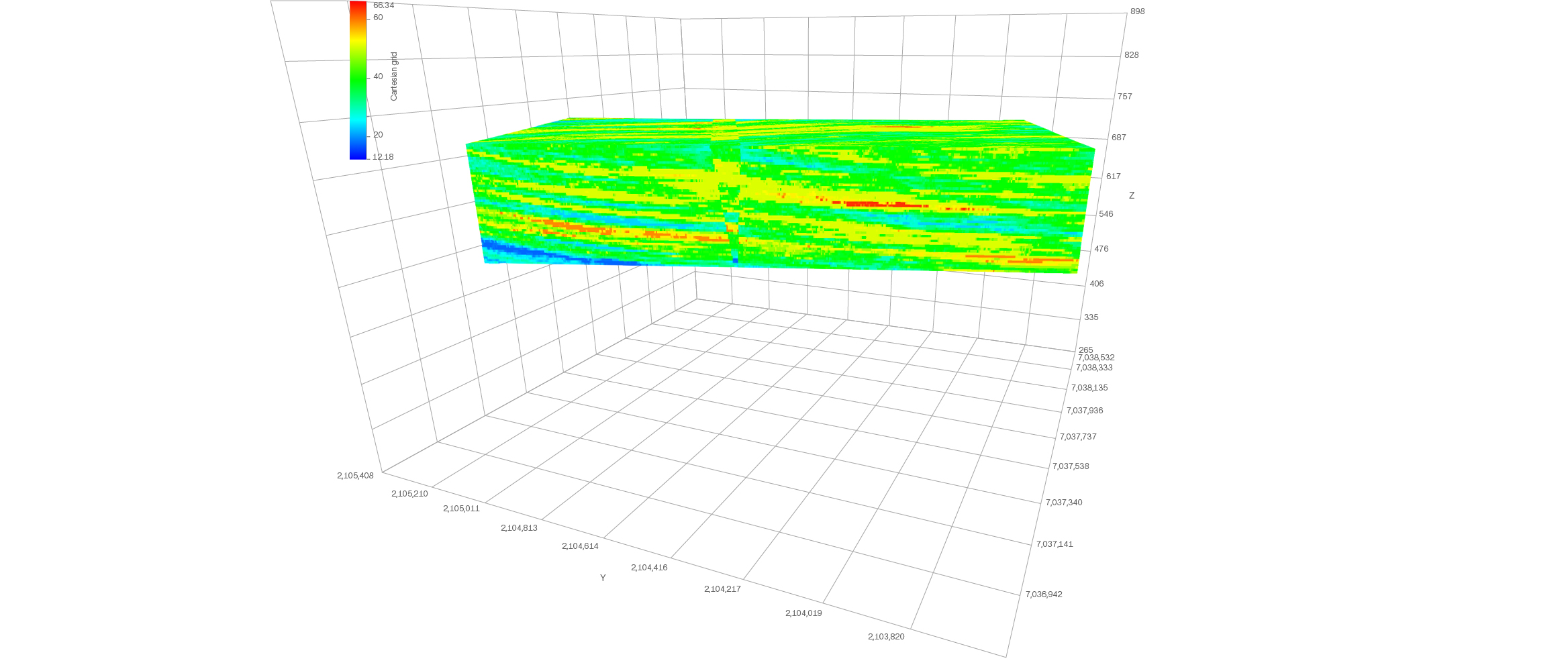
Colemanite distribution in 3D derived from high-resolution borehole image-based depositional facies along the lateral
Figure 3. Colemanite distribution in 3D derived from high-resolution borehole image-based depositional facies along the lateral. Nodular facies represent the highest concentration of colemanite based on petrophysical evaluation within an evaporitic-lacustrine depositional sequence. The structural model shows two antithetic faults, supporting the interpretation that colemanite formation was likely diagenetically induced by hydrothermal fluids percolating through the fault system.
Products Used