Focused wireline sampling and tracer technology deliver high-quality aquifer samples for CCS

minus
North Sea, Europe, Offshore

This case study highlights the successful execution of a shallow aquifer sampling operation for a CCS project in the Southern North Sea. Utilizing a wireline formation tester with focused probe technology, combined with a low-toxicity tracer (C-Dye 530), the team achieved ultraclean fluid samples in a WBM environment. The integrated sampling approach delivered contamination levels well below the 5% threshold, setting a new benchmark for aquifer characterization under CCS site requirements.

CCS site characterization requires accurate aquifer water sampling, especially in jurisdictions with strict regulatory demands. However, acquiring high-quality samples in WBM environments is inherently challenging due to fluid miscibility, which can obscure formation water chemistry. Traditional resistivity-based contamination tracking may be unreliable when formation water and WBM share similar electrical properties.

The objective was to enable low-contamination aquifer sampling using advanced wireline formation testing tools equipped with a focused probe, allowing for real-time control over fluid cleanup. To support this, a low-toxicity tracer (C-Dye 530) was developed and incorporated into the mud system, enabling effective monitoring of WBM contamination through downhole fluid analysis (DFA) sensors.

The sampling was performed using a wireline formation tester equipped with a focused probe, allowing differentiation between guard and sample line flows to accelerate cleanup and isolate representative formation fluids. To support this process, a low-toxicity tracer (C-Dye 530) was added to the circulated WBM system to enable visual detection of invaded mud filtrate during cleanup operations and provide reliable real-time contamination monitoring. This ensured accurate identification of clean formation fluid and optimal sampling points

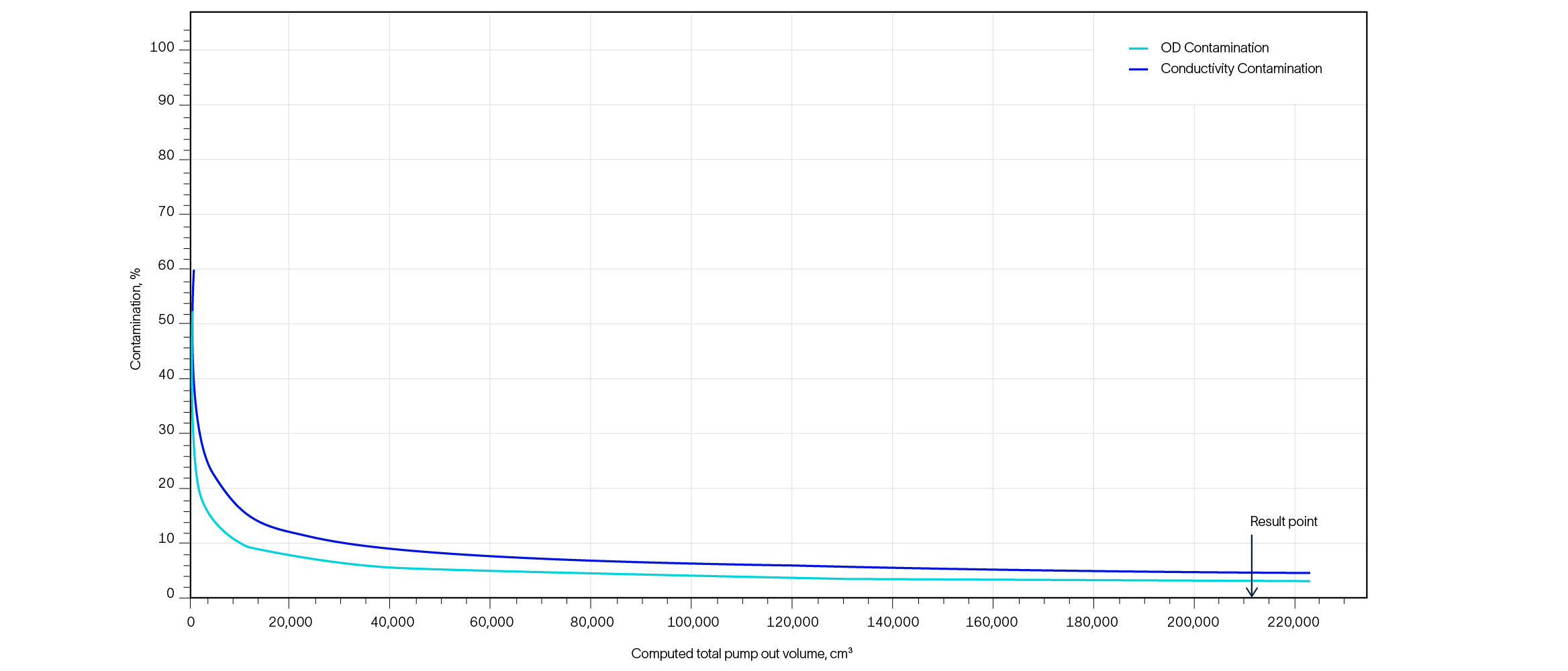
As a result, all wireline fluid samples were captured below 3% contamination, exceeding the operational success criterion of <5%. Contamination levels confirmed via laboratory analysis ranged between 0.4% and 2.4%. Salinity measurements from the fluid samples ranged from 48,000 to 89,000 ppm, displaying a clear depth-dependent trend and aligning well with results from core extractions and pressure gradient–derived estimates.

Quantifiable benefits of combining this dye technology with focused sampling include improved real-time contamination monitoring, higher sample purity, reduced environmental impact, and enhanced data accuracy for CCS site characterization. This tracer approach supports more precise assessment of aquifer conditions and advances CCS project evaluation.

Real-time multisensory estimate of contamination from downhole fluid analyzer outputs
Real-time multisensory estimate of contamination from downhole fluid analyzer outputs.
Products Used