Novel sidewall coring technology reduced uncertainty on the asset recovery

minus
Middle East, Onshore

A fit-for-purpose solution using sidewall coring and oil viscosity assessment acquired critical fluid property data. This solution significantly reduced uncertainties related to viscosity gradients and permeability and offering critical inputs for improved asset recovery.

An operator faced significant challenges in a thermal enhanced oil recovery (EOR) development project. The reservoir, characterized by highly viscous, biodegraded heavy and extraheavy oil, presented complex vertical and lateral compositional changes. These complexities made it difficult to acquire essential fluid property data, as no downhole fluid samples were suitable for analysis. Without this data, the dynamic modeling required for field development strategies remained highly uncertain.

Understanding the viscosity gradients and permeability was critical, especially when the dynamic modeling indicated better mobility in new areas of the field compared with previous locations. The absence of fluid samples and core acquisitions added another layer of difficulty, necessitating an innovative approach to generate the required data.

To address these challenges, SLB developed a fit-for-purpose geochemical interpretation workflow. SureRock™ enhanced sidewall coring solution obtained large samples, which enabled direct permeability measurements. Subsequently, ProxVisc™ geochemical oil viscosity assessment provided a model, leveraging molecular proxies and chemometrics from Malcom™ interactive fluid characterization software, to predict viscosity gradients from solvent extracts.

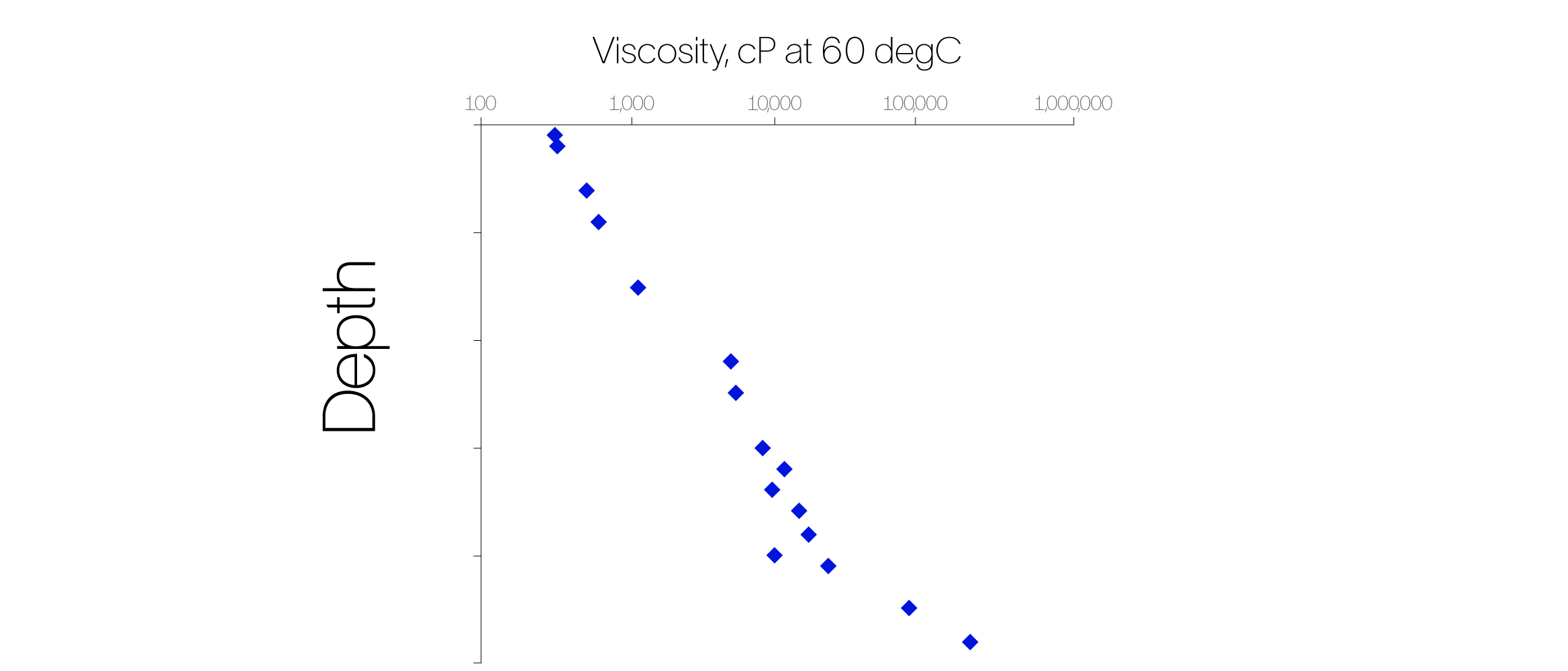
The obtained data revealed significant viscosity gradients with changes up to two orders of magnitude, alongside excellent (Darcy-plus average) permeability. These findings were validated through simulation history matching, confirming the reliability of the model. This approach reduced uncertainties in oil viscosity gradients and permeability, providing key inputs for dynamic modeling.

This innovative solution enabled better-informed field development strategies, facilitating initial recovery predictions and water‑cut development. The results underscored the importance of understanding viscosity gradients in biodegraded oil accumulations, demonstrating the effectiveness of this workflow in generating critical data in the absence of traditional fluid samples.

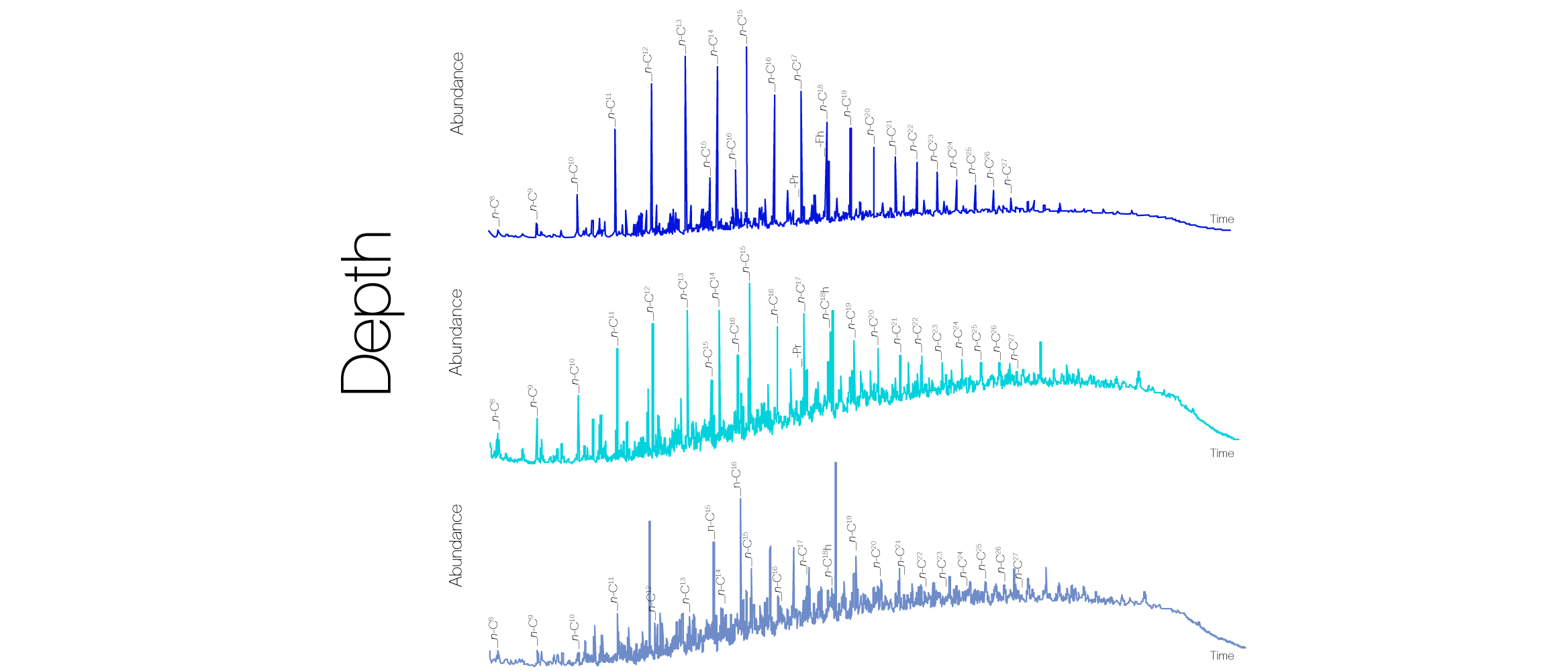
The geochemical oil viscosity assessment’s compositional gradient with increasing biodegradation.
Compositional gradient with increasing biodegradation.
Graph of predicted viscosity gradients from ProxVisc geochemical oil viscosity assessment.
Predicted viscosity gradients from ProxVisc geochemical oil viscosity assessment.
Products Used