Chemical Management
Protecting people, products, and the planet through robust chemical management practices
SLB implements a chemical management process to mitigate risks associated with chemicals used in our activities, products, and services, protecting SLB employees, customers, contractors, suppliers, property, and the environment. This process ensures compliance with regulatory and contractual requirements.
As part of our global chemical standard, this management process covers the life cycle of a chemical from development through sourcing, procurement, manufacturing, and sale, to use and safe handling, transportation, and storage, to the end of the life cycle at disposal. The objective of the standard is to eliminate or mitigate the impact of chemical-related incidents, including those affecting biodiversity, by assessing and controlling risks across all phases—whether chemicals are sold as products, used in service delivery, or processed by SLB.
Analytical evaluation for cleaner chemistries
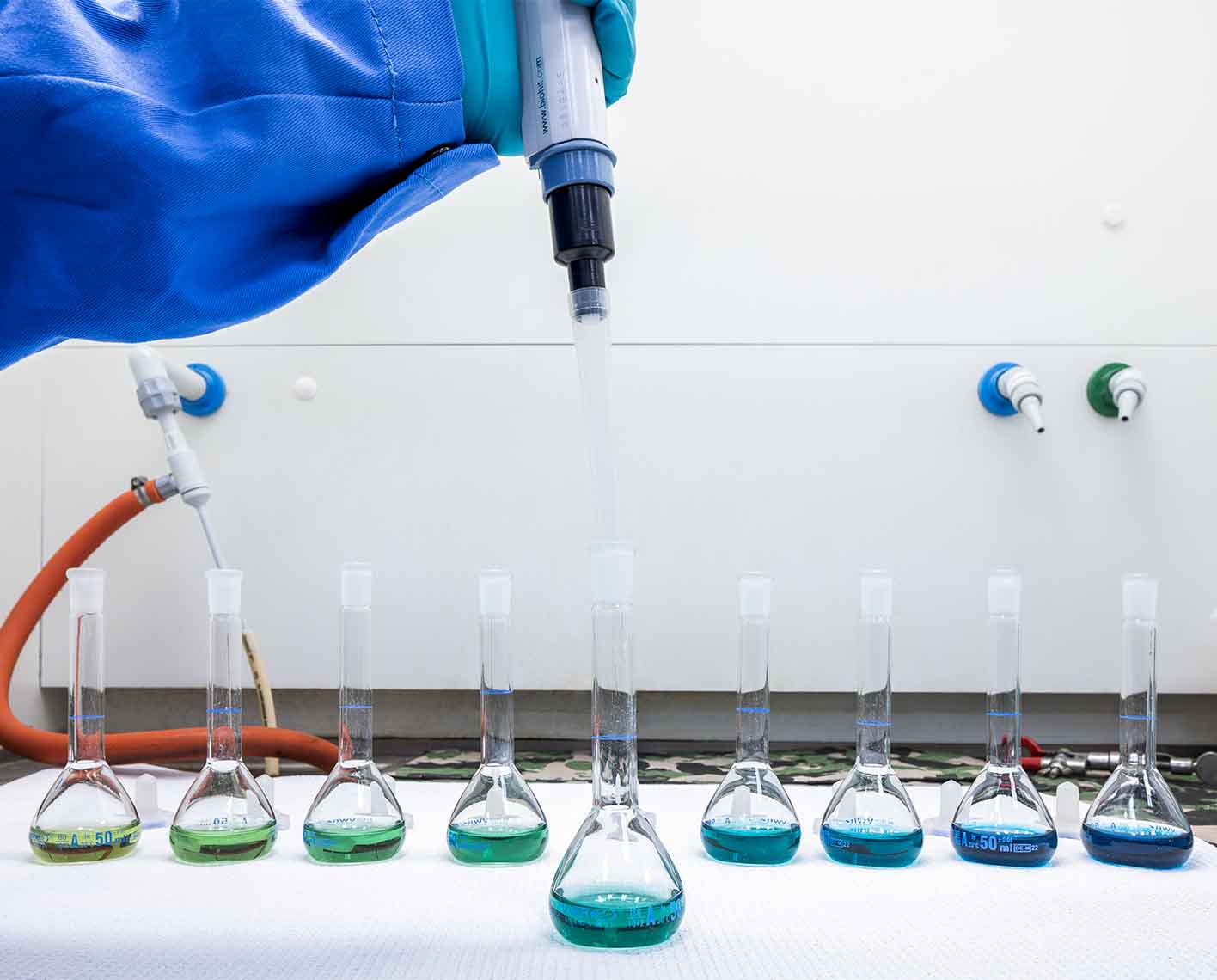
In alignment with the UN Sustainable Development Goals (UNSDGs), we focus on waste reduction and promoting less hazardous materials and cleaner chemistry. We employ a risk-based approach to assess our chemistry portfolio within the chemical standard and approval processes. Recently, we enhanced our evaluation with more robust scoring to set improvement targets aimed at reducing or replacing hazardous chemicals. Supporting these efforts, our automated chemical inventory tracking system enables us to identify risks and hotspots, pinpoint areas for improvement, and set targets to reduce or replace hazardous chemicals.
Product and Environmental Stewardship
SLB is committed to advancing product stewardship and environmental responsibility. We utilize automated tools to visualize our chemical product portfolio, enabling us to identify and reduce hazardous substances and materials. This proactive approach supports safer operations and reinforces our sustainability goals.
While SLB has long maintained robust measures and safeguards across these areas, we now employ a streamlined, digitalized approach to quickly identify and close any potential gaps in our processes.