Navigating well control challenges in CCUS wells
Published: 03/11/2026

Navigating well control challenges in CCUS wells
Published: 03/11/2026
As of today, no credible emissions pathway for limiting global warming to below two degrees exists without the inclusion of engineered carbon capture, utilization, and storage (CCUS) technologies. We will inevitably overshoot our emissions budget by mid-century, and CCUS and carbon-negative technologies will be instrumental in bringing us back to net zero.
For industrial emitters, CO2 concentrations are relatively high (30–70%).
This makes engineered capture more effective and efficient compared to post-emission removal from the air, where CO2 is diluted. CCUS is part of the solution for the hard-to-abate industries—cement, chemicals, steel, glass, fertilizers etc—where, by virtue of chemistry, there really is no other option.
However, scaling CCUS operations introduces technical and operational challenges. For instance, any well control incidents could have a significant negative impact on activity, jeopardizing the ability to produce decarbonized products and meet net-zero commitments, many of which are legally binding. Consequently, it is imperative that these operations are performed safely to preserve market access and ensure long-term business resilience and credibility.
How is well control in CCUS wells different from traditional oil and gas wells?
Historically, well control protocols have been based on hydrocarbon systems, but when looking at CCUS, well design and mitigation procedures must be reevaluated to account for the distinct pressure–volume–temperature (PVT) behavior and properties of CO2 and CH4.
As well as the need for subject-matter experts to assess the nuances involved, suitable software is also required to scale up well planning, the evaluation of procedures for cost and performance optimization, training, and emergency response procedures.
Although CO2 is not explosive, its presence still complicates well control—any noxious gas release could not only pose environmental concerns, but also have serious safety implications, such as asphyxiation for rig crew.
The combination of high flowrates, extreme expansion, and the expansion cooling due to the Joule-Thomson effect, can lead to the formation of hydrates or dry ice, adding further complexity. The presence of impurities in CO2 can also cause significant corrosion, and when coupled with the effects of low temperatures that increase steel casing brittleness, the potential for well integrity issues becomes a heightened concern.
How do we solve this?
The market urgently needs digital tools that enable companies to design and manage CCUS wells safely, precisely and efficiently. These tools must also tackle the unique challenges of CO2 behavior, equipping project teams with the know-how to enable smarter planning and faster responses to risks.
To meet the moment, SLB has partnered with industry leaders—Equinor, Chevron, and GASSNOVA—in a joint-industry partnership (JIP) to develop planning, training, and operational well control support for CCUS wells.
The CCUS workflow has been developed using Drillbench XD™ dynamic drilling simulation software, and utilizes the Olga™ dynamic multiphase flow simulator, with its 15-year legacy in CO2 projects and modeling.
The development of the CCUS workflow within Drillbench XD software has allowed for comparison studies between the behavior of CH4 and CO2 in well control situations, to better inform well designs and operational procedures for CCUS wells. This cloud-based well-control software enables parallelization using a high-performance cluster, combined with the automation of well-control workflows. The outcome is a scalable and efficient solution that meets the needs of well-control engineers.
So, what factors should be considered?
The behavior of CO2 varies depending on PVT conditions. Above 1074psia and 88 degF, it will transition into a supercritical fluid, meaning that the liquid and vapor phases are indistinguishable from each other.
In this state, CO2 is highly compressible, and its compressibility increases as pressure and temperatures decrease—the higher the compressibility, the greater the volume expansion for a given pressure drop. Wells in deeper water depths with higher hydrostatic pressures are more likely to have CO2 in the supercritical phase. At low temperatures (below 50 degF), liquid and gaseous CO2 will form hydrates.
When looking at well control, dynamic kick tolerance, and blowout control for CCUS wells, the following questions must be considered:
- Are the temperature conditions likely to result in the formation of hydrates or dry ice?
- What is the impact of supercritical to gaseous phase transition and the associated volume expansion?
- Has the varying compressibility of both gas and supercritical CO2 been taken into account?
- Is circulation or bullheading a more appropriate method for the removal of unwanted influxes?
- How should early kick detection be handled?
- Is managed pressure drilling (MPD) required to control CO2 expansion and free gas breakout?
- For surface gas handling, what volumes are likely to be encountered, and will this impact safe zones?
- Is it feasible to use an existing capping stack to contain a blowout, or is dynamic kill through a relief well required?
Addressing these complexities is at the heart of the solutions developed through our JIP. Our tools and workflows have been purpose-built to help operators navigate the unique challenges presented by CCUS wells with confidence and control.
The road forward: strengthening well control for a netzero future
As global momentum for a net-zero future accelerates, the critical role of well control in CCUS operations cannot be overstated. Safely navigating the unique challenges posed by CO2 behavior requires a combination of technical expertise, cutting-edge technology, and rigorous adherence to best practices.
By leveraging innovative solutions like Drillbench XD software, and fostering collaborative industry partnerships, we can mitigate risks, enhance operational efficiency, and ensure the long-term success of CCUS projects.
Ultimately, mastering well control in CCUS wells is not just about managing risks—it is about enabling a sustainable energy transition and safeguarding the path to a cleaner, more resilient future.

Related resources
-

Intersect reservoir simulator
Industry-leading reservoir simulator for every assetIndustry-leading reservoir simulation technology—with the physics, performance and resolution you need for every asset.
-

Digital CCUS
Leverage digital to scale CCUS around the worldLeverage trusted technologies and proven experience to deliver end-to-end carbon capture and storage (CCS) projects.
-
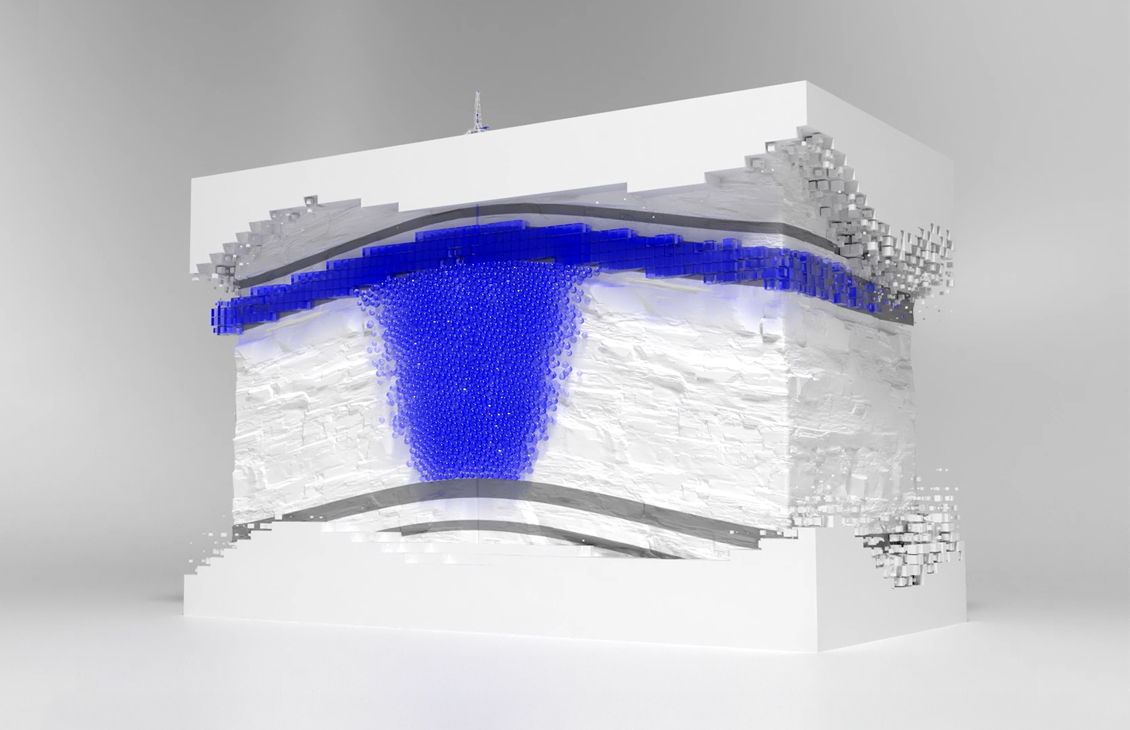
Carbon Storage
Be storage confident with Sequestri carbon storage solutionsIntegrated solutions for selecting, planning, constructing, operating, and monitoring carbon storage sites.
-

SLB Collaborates with Northern Lights JV and Microsoft to Digitalize Carbon Capture and Storage Value Chain
-
Next generation CO2 storage modeling and simulation
Better simulation and field management solutions for your subsurface CCUS workflowsBetter simulation and field management solutions for your subsurface CCUS workflows
-

Digital delivers CCUS at speed and scale for climate action
Digital tech can turn CCUS into a powerful component of your company's climate action strategy.

