Obtain accurate pressure and mobility measurements on the first logging run—in less than a minute.
Fiber-optic logging for efficient VSP in an offshore Norway CCS vertical well
Equinor leveraged cutting-edge fiber-optic logging technology to conduct a vertical seismic profile (VSP) survey within a CCS well offshore Norway. The deepwater project, targeting clastic formations, achieved outstanding efficiency, completing the survey in just 1 hour compared to the 9 hours typically required with conventional methods for this well depth. This milestone underscores the potential of innovative technologies to accelerate carbon capture initiatives while optimizing operational performance in challenging offshore environments.
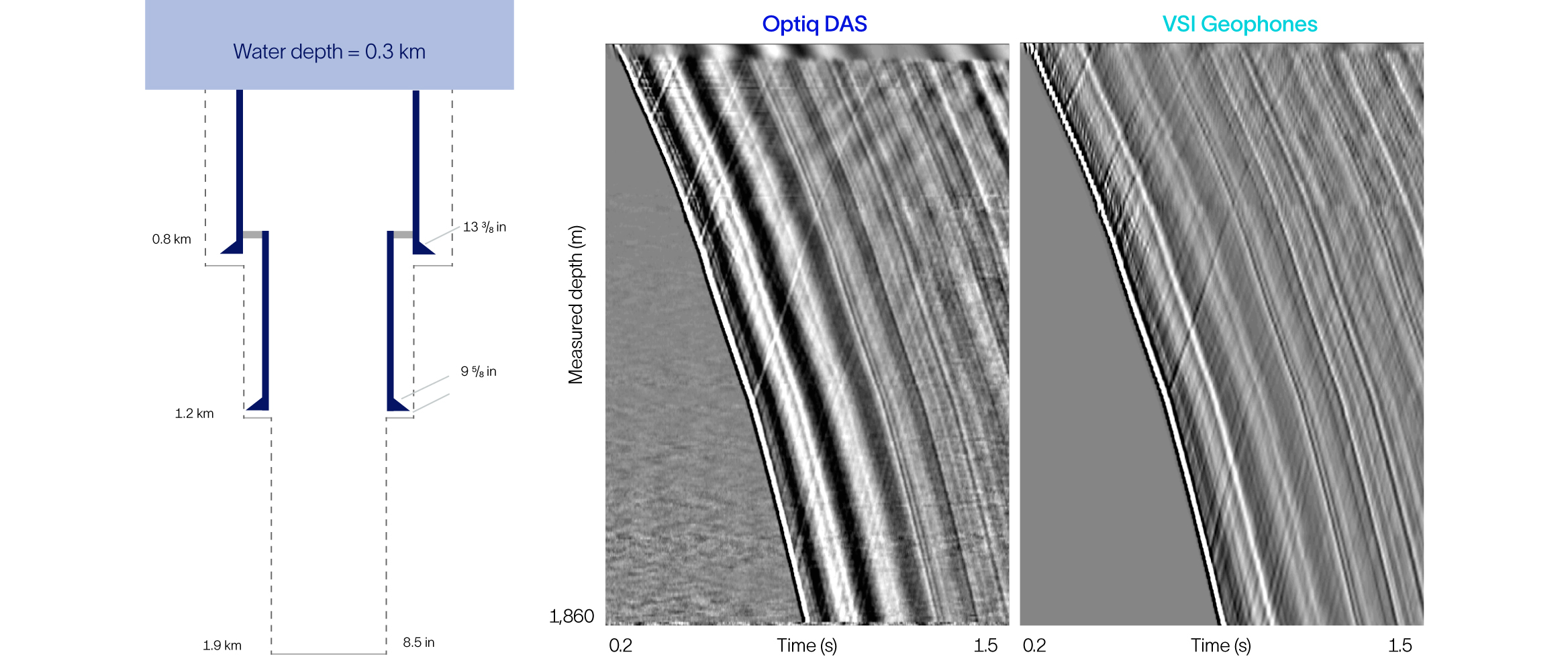
Equinor sought to address multiple challenges while drilling an appraisal carbon capture well in 318 m of water to a TD of 1,870 m. The operator needed precise rock velocity data and seismic responses to establish a reliable well-to-seismic tie and to calibrate sonic logs and seismic velocity models.
Achieving these objectives was critical for ensuring robust formation evaluation. However, traditional VSP surveys using geophones are prone to lengthy operational times exceeding 9 hours and are susceptible to weather related downtime, which hamper efficiency and increase operational risks.
In line with its commitment to enhancing operational efficiency, improving safety, and reducing its carbon footprint, the operator sought an innovative solution to overcome these challenges. By adopting the Optiq TuffLine™ torque-balanced fiber-optic wireline conveyance system, featuring fiber-optic distributed acoustic sensing (DAS) technology, the operator aimed to significantly reduce survey time while meeting its technical and environmental objectives.
By adopting the Optiq TuffLine™ torque-balanced fiber-optic wireline conveyance system, featuring fiber-optic distributed acoustic sensing (DAS) technology, the operator aimed to significantly reduce survey time while meeting its technical and environmental objectives.
To optimize VSP density and operational efficiency, SLB deployed an integrated suite of advanced technologies. The CMR-Plus™ combinable magnetic resonance tool, PressureXpress™ reservoir pressure-while-logging service, and Litho Scanner™ high‑definition spectroscopy service were operated in tandem and conveyed using the Optiq TuffLine conveyance system.
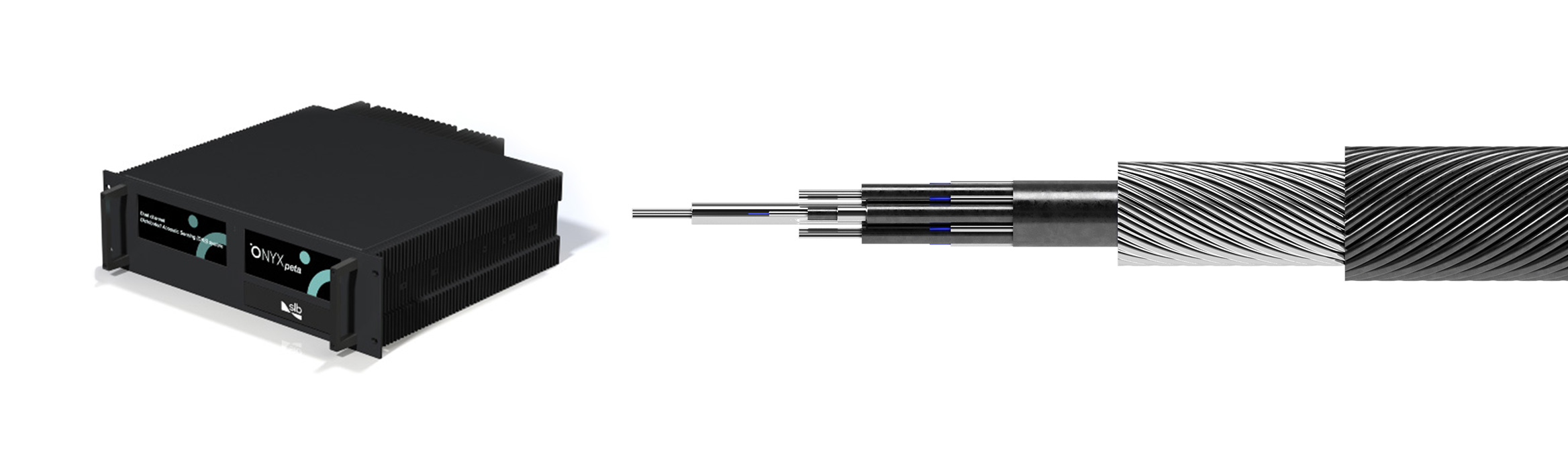
This innovative fiber-optic cable, featuring a safe working load of 18 klbf, combined with the latest-generation ONYX™ quantitative DAS interrogator, delivered high-quality DAS data in both the open and cased sections of the vertical well, enabling accurate measurement of seismic velocities and the formations reflectivity response.
A triple G-gun rig source was autotuned within 0.5 ms using the TRISOR™ acoustic source control system. The ONYX DAS laser interrogator parameters were carefully optimized to enhance the signal-to-noise ratio across the seismic bandwidth, including a gauge length of 11 m, pulse frequency of 10 kHz, and pulse width of 4 m.
Additionally, the second single-mode fiber available was simultaneously recorded using a gauge length of 5 m, further improving efficiency by simultaneously recording two independent DAS datasets.
Technical Representative
Wireline Evaluation Services Equinor
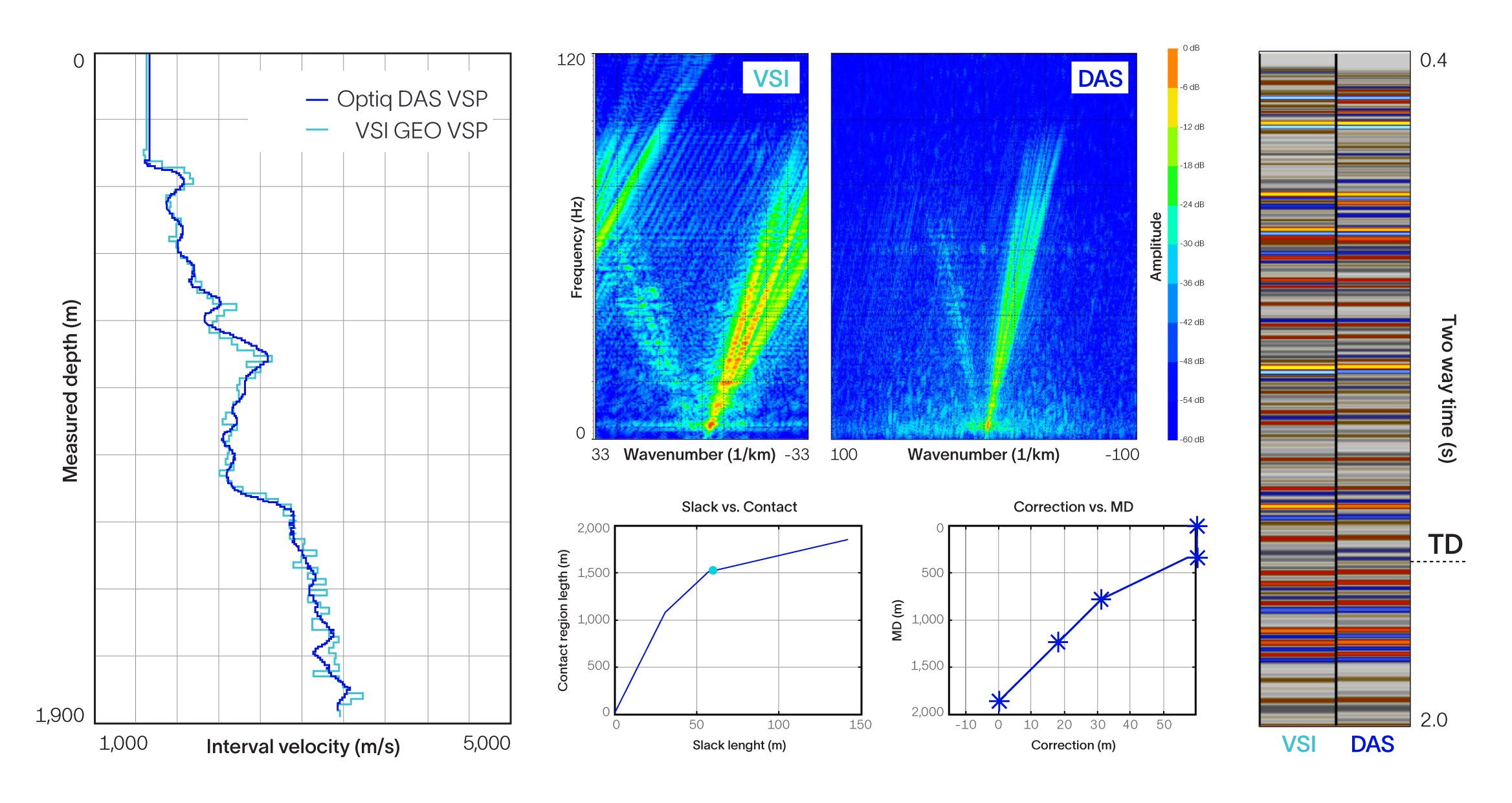
SLB innovative technical solutions successfully addressed the operator’s challenges, delivering significant operational and environmental benefits. The Optiq™ fiber-optic solutions DAS VSP survey was completed in under 1 hour, a marked improvement compared to the 9 hours required for a conventional VSP survey using the VSI™ versatile seismic imager in a 4‑shuttle configuration, which was also run to qualify the Optiq solutions technology. Real-time monitoring confirmed the exceptional data quality and its excellent correlation with the sonic log acquired during a previous run, validating the technology’s accuracy and reliability.
The high-density DAS VSP data, with traces recorded every 5 m, achieved a bandwidth of 4–80 Hz at a TVD of 1.9 km. The DAS results were in close agreement with the surface seismic and VSI imager geophone data ensuring a robust well‑to‑seismic tie and reliable formation evaluation. This marked the first application of this advanced logging technology for the operator in Norway, showcasing the improved optical specifications of the ONYX DAS interrogator and enhanced data acquisition procedures.
The integration of this technology enabled borehole seismic data to be acquired efficiently without requiring a dedicated run, reducing the number of seismic shots and minimizing the impact on marine mammals. In addition, the significant time savings—an estimated 8 hours of rig time—translated into a reduction of approximately 30 metric tons of greenhouse gas (GHG) emissions for the semisubmersible rig used in the study.
These results met the operator’s objectives, setting a precedent for future wells and reinforcing the value of deploying fiber-optic logging technology to improve operational efficiency, enhance data quality, and reduce environmental impact.
The success of this case study has positioned the operator to apply this technology to subsequent projects, driving continued innovation and sustainability in CCS operations.
Optiq, Optiq Tuffline, VSI, CMR-Plus, Litho Scanner, PressureXpress, and TRISOR are SLB marks. ONYX technology co-developed by SLB and Sintela.